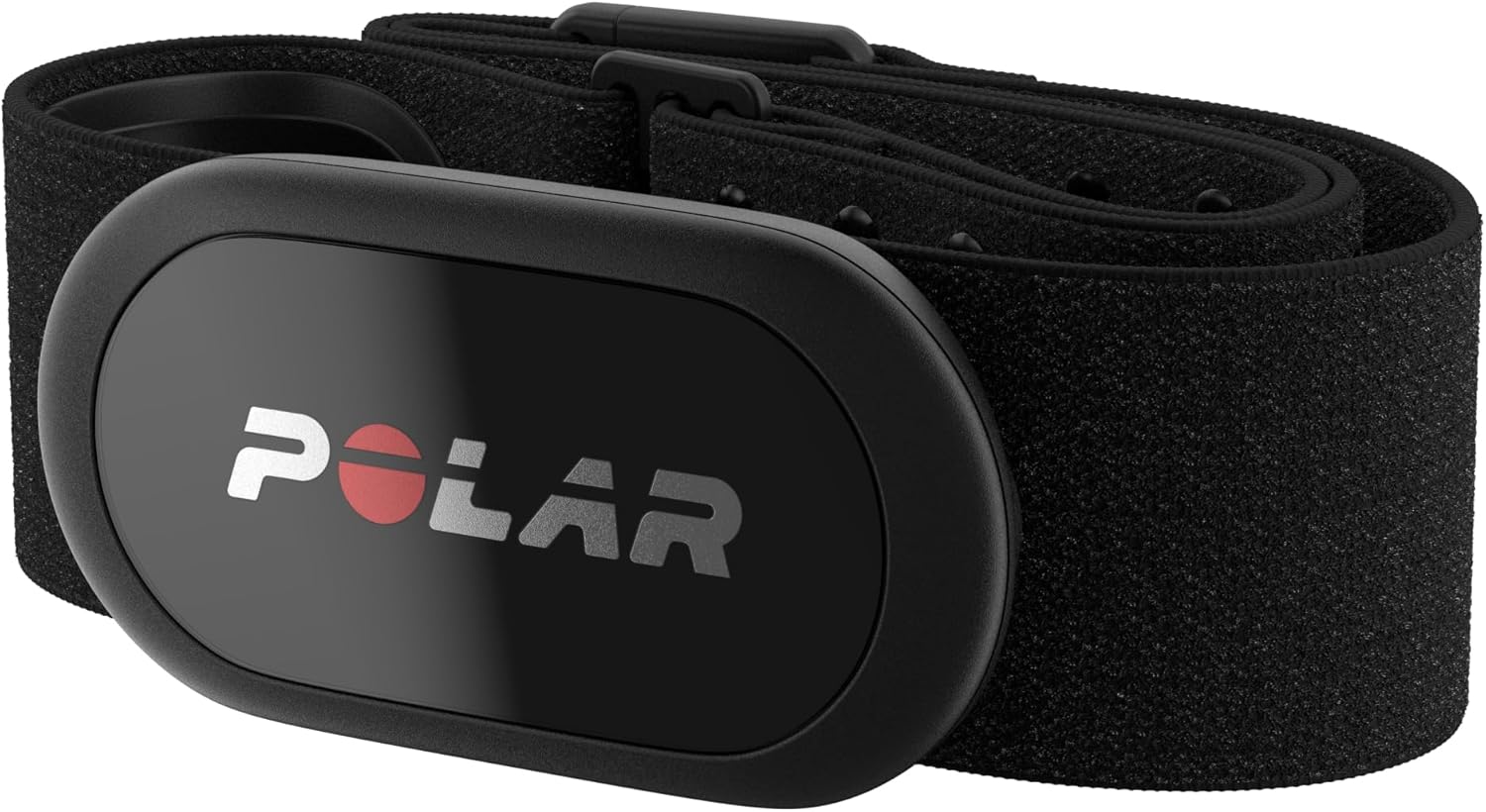
Design and build
The Polar H10 sensor module clips directly onto the proprietary Polar Pro Chest Strap, constructed from 71 percent polyester and 29 percent spandex. To minimize slippage during heavy perspiration and repetitive motion, Polar lined the reverse side with silicone friction dots alongside broad, flexible ECG electrode pads. The closure utilizes a mechanical buckle rather than an interlocking hook, providing a firm latch across varying torso circumferences. Water resistance is rated to 30 meters, permitting surface swimming and sweat resistance without housing compromise. Internally, the transmitter is powered by a standard CR2025 coin cell accessible via an o-ring sealed rear hatch. The manufacturer explicitly notes that substituting alternative battery thicknesses risks permanent terminal damage. Overall construction reflects utility over ornament: the plastic transmitter pod is lightweight, sits low against the sternum to avoid snagging technical garments, and detaches cleanly so the textile strap can be rinsed after sessions to prevent salt accumulation and premature electrode decay.
Real-world performance
Optical wrist monitors inherently lag behind sudden shifts in cardiovascular exertion because they measure peripheral blood volume changes rather than direct cardiac electrical activity. The Polar H10 bypasses this physical bottleneck by recording electrical impulses directly across the chest, tracking short-burst interval efforts and high-intensity training with immediate responsiveness. Transmission versatility is an asset: the unit broadcasts concurrently across ANT+, two discrete Bluetooth Low Energy channels, and legacy 5 kHz analog Gymlink frequencies. This architecture allows simultaneous streaming to a primary bike computer, a smartwatch, and third-party gym cardio equipment without dropped packets. The integrated onboard memory is strictly limited to one standalone training session, meaning athletes engaging in non-watch sessions like swimming or martial arts can record an activity via the companion software and offload it post-workout. However, users must remember to start and sync that session via the mobile application, as the sensor lacks automated standalone capture.
Value for money
Priced at $104.90, the Polar H10 commands a modest premium over basic ANT+ straps, but its broadcast redundancy and field performance substantiate the expense. Unlike some wearable ecosystems that gate advanced physiological metrics, recovery analytics, or heart rate variability logs behind proprietary subscription paywalls, the H10 operates as an open-standard sensor. It freely pairs with standard third-party fitness applications, training platforms, and sport watches from competing manufacturers. The non-rechargeable CR2025 coin cell format eliminates the planned obsolescence typical of sealed lithium-ion devices, achieving up to 400 operating hours per cell before replacement. The 4.1 out of 5 aggregate rating across more than 27,000 recorded consumer reviews reflects widespread adoption, though textile wear remains an ongoing operational cost: the chest strap itself will eventually degrade through sweat exposure and require periodic standalone replacement, an expense prospective buyers should factor into long-term ownership calculations.
Who should skip it
Athletes seeking an automated, set-and-forget wearable should look elsewhere. The H10 requires manual pre-wetting of the electrodes to establish solid electrical conductance, followed by thorough strap rinsing after each workout to prevent salt crusting and sensor deterioration. Users who dislike chest-constricting bands during long endurance sessions may prefer optical armbands, provided they can tolerate minor interval lag. Additionally, those who require extensive standalone activity tracking without a paired phone or watch nearby will find the internal memory limiting; the device stores exactly one workout file before requiring synchronization to Polar software. If you routinely forget to sync between consecutive unlinked training bouts, data from the initial session will be overwritten or lost. Finally, casual gym-goers whose regimens consist primarily of steady-state cardiovascular training will likely find their existing wrist-based optical sensors adequate, rendering the additional strap and $104.90 expenditure unnecessary for basic heart rate tracking.