We analyze the top cordless water flossers to find models that balance effective gum care, reservoir capacity, and long-term maintenance costs.
By the Niche Picks editorsUpdated November 8, 20268 min readDrawn from our 34 research-based oral care devices reviews
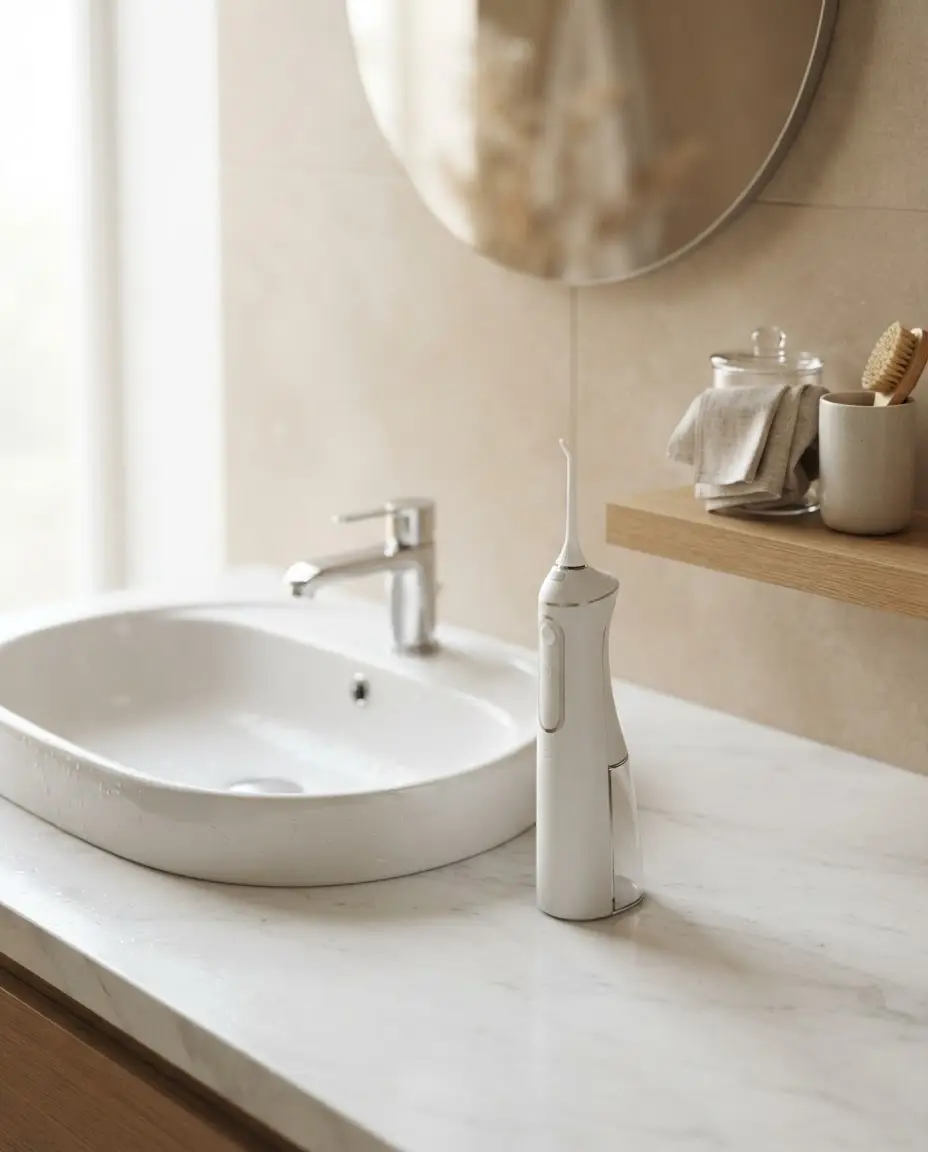
AI-generated editorial illustration; not a product or test photograph.
Short answer
The best cordless water flosser depends on your preference for portability versus reservoir capacity. While the COSLUS C20 is our top-rated pick for its 300ml tank and ADA-accepted reliability, the Waterpik Cordless Pulse 3100 remains a favorite for its established tip compatibility. Regardless of the brand, always prioritize consistent maintenance by accounting for replacement tip costs, as these will often exceed the initial price of the handle over three years of regular use.
6
Product listings discussed; not hands-on tests
6/6
Discussed listings with a recorded price
$19.90–$93.99
Recorded listing price range; not a complete setup cost
Key takeaways
Integrated pressure sensors protect delicate gum tissue better than extra modes.
The 300ml tank size is the industry standard for completing a full-mouth flossing session without needing a mid-session refill.
Replacement nozzles are a mandatory recurring cost that often surpasses the flosser handle's price over a three-year period.
ADA acceptance provides a baseline assurance of safety and plaque-removal efficacy for portable irrigation devices.
Cordless units are excellent for travel and small bathrooms but require regular cleaning to prevent mineral buildup in the reservoir.
Products discussed in this article
Editorial scores and recorded prices are reference points, not measurements of suitability for every use. Read each review's specifications and limitations.
COSLUS ADA Accepted C20 Water Dental Flosser Pick8.0
Waterpik Cordless Pulse 3100 Portable Water Flosser7.3
COSLUS C30 Water Dental Flosser, Upgraded DIY Mode7.6
Onlyone Water Flosser with Adjustable Water Pressure7.7
Waterpik Cordless Advanced Portable Water Flosser7.1
Nicwell Water Dental Flosser Pick for Teeth: 4 Modes6.9
Recorded price (USD)
COSLUS ADA Accepted C20 Water Dental Flosser Pick$35.98
Waterpik Cordless Pulse 3100 Portable Water Flosser$29.99
COSLUS C30 Water Dental Flosser, Upgraded DIY Mode$19.95
Onlyone Water Flosser with Adjustable Water Pressure$19.90
Waterpik Cordless Advanced Portable Water Flosser$93.99
Nicwell Water Dental Flosser Pick for Teeth: 4 Modes$45.99
Top Cordless Water Flosser Comparison
Product
Tank Volume
Our Score
Price
Best For
COSLUS C20
300 ml
8.0
$35.98
Compact Bathrooms
Waterpik Pulse 3100
6 oz
7.3
$29.99
Tip Compatibility
COSLUS C30
300 ml
7.6
$19.95
Budget Beginners
Onlyone FC5090
300 ml
7.7
$19.90
Minimalist Budget
Waterpik Advanced
7 oz
7.1
$93.99
Frequent Travelers
Nicwell W01
200 ml
6.9
$32.28
Budget Portability
Why reservoir capacity matters for your routine
The most common frustration for users transitioning to cordless irrigation is the need to refill mid-session. Our research indicates that smaller reservoirs, such as the 6-ounce capacity found in the Waterpik Cordless Pulse 3100, frequently require at least one refill to cover both upper and lower dental arches effectively. If you want to avoid the annoyance of pausing your cleaning flow, look for units with at least a 300ml (roughly 10-ounce) reservoir.
Units like the COSLUS C20 and the COSLUS C30 offer this larger capacity, allowing for a consistent 60-to-90-second cleaning cycle. This capacity is not just a luxury; it ensures you do not rush the process because you are afraid of running out of water. When you are forced to stop and refill, the likelihood of skipping hard-to-reach posterior molars increases significantly. For those with limited counter space, these larger cordless models provide the necessary volume without the bulky base station of a traditional countertop irrigator, making them a smart middle ground for modern bathrooms. Always check the budget for ongoing maintenance, as you will be using more water than with traditional string floss, which is part of establishing a healthy oral care habit.
Many cordless flossers tout five or six different pressure modes as a premium feature. However, our analysis suggests that a single, well-regulated stream is superior to a dozen unreliable modes. The real safety differentiator is the inclusion of an active pressure sensor. While none of the portable cordless units we reviewed feature a perfect automated pressure-relief sensor, you can mitigate damage by choosing devices with simple, consistent intensity levels.
If you have sensitive gums, look for models like the Onlyone Water Flosser, which offers adjustable pressure settings to help manage sensitivity. Without a sensor, it is entirely up to you to judge how close to hold the tip to your gum line. Applying too much pressure in a periodontal pocket can lead to tissue abrasion or even recession over time. If you are new to this type of cleaning, visit our guide to oral care to understand the proper angle of the nozzle. Remember that the primary goal of any flosser—be it the Waterpik Cordless Advanced or a budget Nicwell unit—is to disrupt plaque along the gumline without damaging the delicate tissue that secures your teeth. For a more comprehensive approach, consider how this fits into your overall oral care routine.
The price of a handle is often the smallest part of the three-year cost of ownership. Check the availability of replacement tips for your model before you buy.
Understanding the true cost of ownership
It is tempting to look at a sub-$30 price tag and assume you have found a bargain. However, the initial purchase price is only the entry fee. The mandatory replacement of nozzles every three to six months is the real long-term cost. Over a three-year lifespan, the cumulative price of these small, plastic tips will often exceed the original cost of the handle.
Before you commit to a specific model, search for the cost and availability of replacement packs. Some brands, such as Waterpik, benefit from standardized tip designs, whereas generic budget brands may make it difficult to source compatible parts a year or two down the line. When buying, always account for the cost of replacements in your budget to avoid hidden expenses. You can also compare the long-term maintenance of different models. If you opt for a cheaper unit like the Nicwell, verify that you can still find replacement nozzles easily. By investing in a brand with widely available, long-term support, you avoid the risk of having to replace the entire unit simply because the manufacturer stopped producing the specific nozzle fit your model requires. Always check mistakes to avoid when buying, specifically the error of ignoring recurring consumable expenses.
Cordless water flossers are marvels of modern convenience, but they are not the only solution. If you have the luxury of permanent counter space, the Waterpik Aquarius remains the gold standard for a reason. Its 22-ounce reservoir is significantly larger than any cordless model, allowing you to clean thoroughly without even a thought about running out of water.
Furthermore, the Aquarius offers 10 pressure settings, providing a much wider range of control for those with specific orthodontic needs or varying sensitivity levels. While we emphasize cordless portability for travelers and compact bathrooms, the trade-off is almost always battery longevity and water volume. A corded unit like the Sonic-Fusion combines brushing and flossing into one, further decluttering your space. If you find that you simply cannot get a clean feel without constant pressure and a high volume of water, do not force yourself into a cordless unit. There is no shame in sticking with a corded base if it ensures you actually keep up with your oral care hygiene habits. You can find more discussions on this in our FAQ section or explore best water flosser alternatives to see if a countertop unit fits your life better than a handheld one.
Avoid units with extremely high PSI levels if you have sensitive gums. Always start on the lowest setting to allow your gum tissue to adjust.
Maintenance tips for lasting performance
Because these units are used in moisture-rich environments like bathrooms and showers, they require proactive maintenance. Mineral buildup from hard water can clog the internal pump, reducing pressure over time or leading to premature failure. Even with IPX7 waterproof ratings, which allow the units to be rinsed or even submerged, you must properly dry them after use.
Detach the reservoir daily and allow it to air dry fully. Once a month, perform a deep clean by running a mixture of water and white vinegar through the system, then rinsing thoroughly with clear water. This simple step removes mineral deposits and keeps the motor pumping efficiently. Additionally, never leave the unit charging in a location where it might be knocked into standing water. For those who travel with their units, such as the Waterpik Cordless Advanced, use a protective travel pouch to prevent debris from entering the nozzle port. Proper oral care maintenance is just as important as the flossing itself. If you are ever unsure, consult the manufacturer's instructions for your specific model; treating the device with care ensures that the oral care benefits extend well beyond the first few months of use. Keeping your device clean prevents bacteria from building up in the reservoir, ensuring every flossing session is as hygienic as possible.
Integrating a cordless water flosser into your life is only half the battle. To see real improvements in gum health, you must use it correctly every single day. Always lean over the sink with your lips slightly closed to prevent splashing, but leave enough room to allow water to drain. Start at the back molars and follow the gumline, pausing briefly between teeth to allow the pressurized water to do its work.
Consistency is the secret to oral care. A, thorough 60-second session once a day is far more effective than a rushed 20-second session twice a day. If you have braces, bridges, or implants, use the specialized tips included with many kits, like the COSLUS C20, to ensure debris is cleared from under those hard-to-reach areas. If you find your gums bleeding, do not stop flossing; instead, reduce the pressure setting or switch to a softer mode. The bleeding should subside as your gum health improves over time. For more detailed technique advice, you can read our guide on how to use an electric toothbrush and apply similar principles of quadrant pacing to your flossing. You can also see our best electric toothbrush picks to ensure your brushing and flossing work in harmony, as these two actions are the pillars of oral care.
1Fill the reservoir with lukewarm water to prevent temperature sensitivity.
2Select the lowest pressure setting if you are a first-time user.
3Lean over the sink and place the tip into your mouth before turning on the power.
4Direct the stream at a 90-degree angle toward your gumline.
5Work methodically from back teeth toward the front, lingering between each tooth.
6Adjust the pressure level gradually as your gum health improves.
7Empty the reservoir after every use to prevent mold and bacteria growth.
8Replace the nozzle head every three to six months to maintain pressure efficacy.
Quick checklist
Verify the unit has at least a 300ml reservoir for a complete clean.
Confirm that compatible replacement nozzles are easy to purchase online.
Check if the device is IPX7 rated for safe use in the shower.
Look for a battery indicator to avoid running out of power mid-session.
Confirm your unit includes an ergonomic grip for steady control.
Ensure you have a 5V USB charging port available, as most lack a wall block.
Frequently asked questions
How often should I replace my water flosser tip?
Dental professionals recommend replacing your flosser tips every three to six months. Over time, the plastic can degrade, and bacterial biofilm may accumulate that is difficult to remove through standard rinsing. Regularly replacing tips also ensures that the internal seals remain tight, preserving the unit's consistent water pressure.
Is a cordless water flosser as effective as a countertop model?
Cordless models are highly effective for daily plaque disruption, especially when paired with proper technique. However, countertop models generally offer larger water capacities and a wider range of pressure adjustments, making them more convenient for users who prefer long, uninterrupted sessions or those with complex orthodontic hardware like full braces.
Can I use mouthwash in my cordless water flosser?
Always check your owner’s manual. Some manufacturers allow a diluted mixture of mouthwash, but others warn that specific chemicals can damage the internal pump or seals. As a safe default, stick to water for the device and use mouthwash separately to avoid mechanical failure.
Why does my cordless flosser run out of water so quickly?
Cordless flossers prioritize a compact footprint, which limits the size of the water reservoir to keep the unit handheld and portable. Most 6-ounce or 200ml tanks last about 45 seconds, which is typically enough for one arch but not a full-mouth cleaning. Choosing a 300ml tank model can help you complete the session in one go.
Do I still need to use traditional string floss?
Water flossers are excellent for dislodging debris and cleaning along the gumline, but they may not replace the mechanical friction of string floss in every single tight contact point. Many dentists recommend using a water flosser as a complement to, rather than a total replacement for, standard flossing.
Amazon links are affiliate links; we may earn a commission at no cost to you.
Shortlists in this category
Ranked lists from our oral care devices reviews, limited to listings whose titles confirm the product type, with budget cuts where enough recorded prices sit on both sides of the line.
This page summarizes our research reviews of Amazon listings, listed specifications and captured buyer ratings. It is not a hands-on test. Scores are editorial assessments, not measured performance; prices are recorded snapshots and may change. A category can include both main products and accessories, so its overall price range is not the cost of a complete setup.
Most recent product record update: September 29, 2026. Individual records may be older; this is not a verification date for every claim. Prices on this page were read from the listings Nov 8, 2026.
Choose the product type first. These groups require a match in the listing title; an import search term alone is not enough. Scores rank our recorded research assessments within each group, not independently measured performance.
Values are shown as recorded, without unit conversions or inferred compatibility. Not recorded means unknown, not absent. Prices are snapshots, not current offers. Editorial scores are research judgments, not lab results. Amazon links are affiliate links.
Before treating a comparison as complete
Which details are still unknown?
A specification appearing in a listing is not independent verification. These counts show which shortlisted records contain the same field; a blank record does not mean the product lacks the feature.
Item Dimensions
Recorded for 2 of 2 shortlisted models
Present in every shortlisted record. Check units, exact variants and the current manufacturer documentation before relying on it.
Power Source
Recorded for 2 of 2 shortlisted models
Present in every shortlisted record. Check units, exact variants and the current manufacturer documentation before relying on it.
Pressure sensors protect gums more than extra modes do.
Replacement head cost over three years often exceeds the handle.
Tank size decides whether a flosser finishes one session.
If a specification, certification or compatibility detail is absent, mark it as unknown and ask the seller or manufacturer. Do not substitute a star rating, an editorial score or a different model's specification.