Design and build
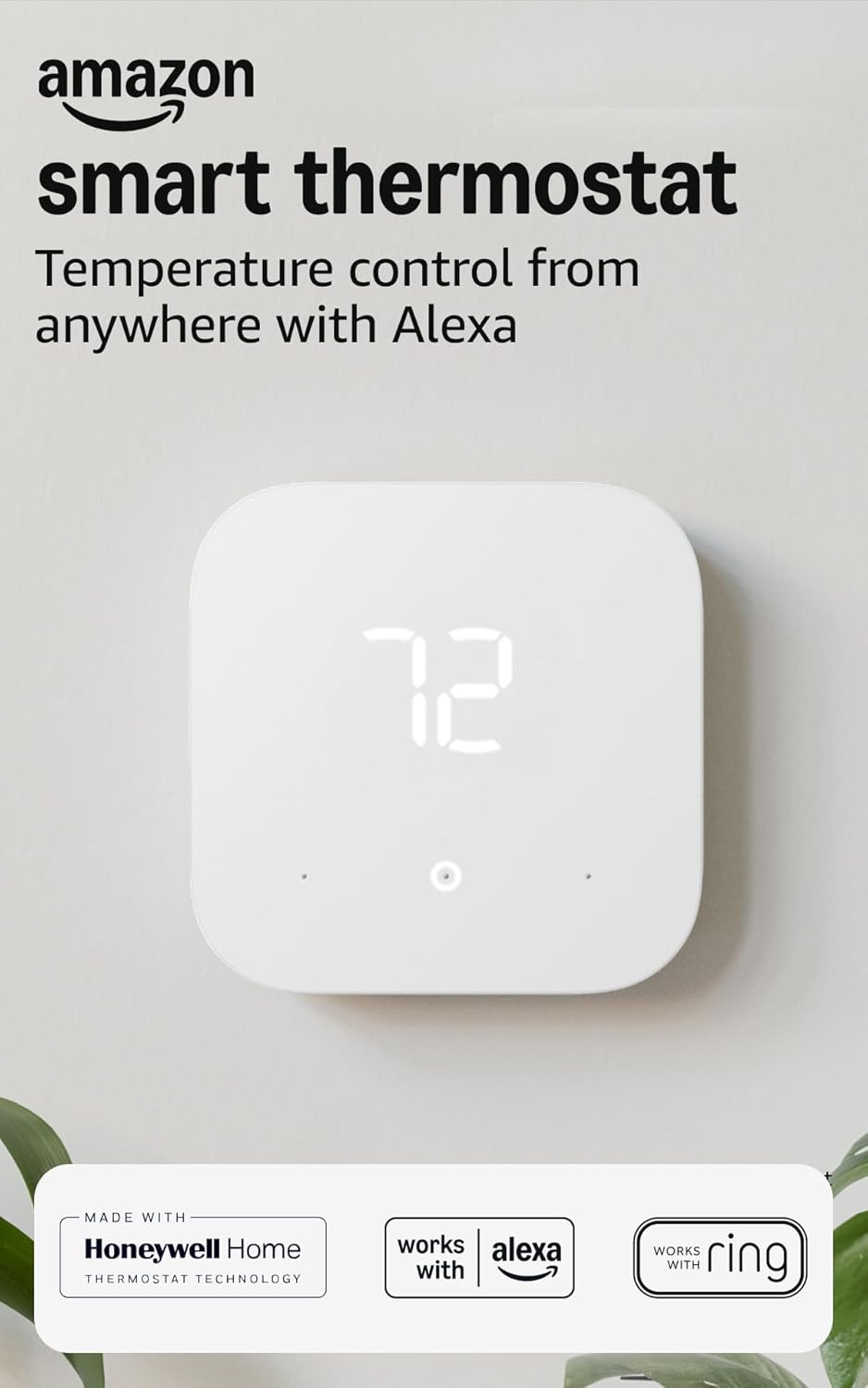
The Amazon Smart Thermostat adopts a clean, minimalist profile designed to blend into standard residential interiors without visual disruption. Internally, Amazon bypassed unproven hardware by partnering with Resideo, incorporating Honeywell Home thermostat technology that brings over a century of climate control manufacturing experience to the platform. The front interface provides essential numerical feedback for current temperature and operating states, though comprehensive technical measurements regarding display resolution, chassis materials, and operating thresholds remain unspecified in official documentation. Buyers should inspect their current thermostat baseplate before purchasing, as this hardware strictly requires a C-wire connection to deliver continuous power. The lack of an integrated power extender in the listing means homes lacking a dedicated common wire must budget for an adapter or alternate wiring. The physical construction is functional rather than premium, prioritizing utilitarian service life over the high-end glass and metal components found on higher-priced competitors.
Real-world performance
Daily operation centers entirely on scheduling and automation managed through the Alexa application. The system enables users to configure distinct home, away, and sleep profiles, with the added capability of using select Alexa hardware for presence detection to automate setpoint changes. In practice, this setup allows multi-room presence triggers to alter heating or cooling outputs without manual intervention. However, the system relies almost entirely on cloud-based command parsing and scheduling logic. While the underlying Honeywell circuitry retains core baseline temperature regulation safely during disconnections, the advanced routine management, remote adjustments, and comfort zone orchestration cease to function if home internet connectivity drops. For users seeking resilient automation that runs entirely on local area networks, this cloud tether presents an operational compromise. Performance data is backed by an Energy Star certification, which aligns with general EPA calculations estimating an average fifty-dollar reduction in annual residential energy expenditures under typical domestic conditions.
Value for money
At $109.99 for a two-pack, this package represents one of the lowest capital outlays per unit for a certified smart thermostat from a major platform. At roughly fifty-five dollars per zone, it undercuts proprietary offerings from dedicated HVAC manufacturers while delivering comparable scheduling functionality. The overall economic proposition is further bolstered by its Energy Star rating, which often qualifies purchasers for municipal or energy provider rebates that can substantially offset the initial hardware cost. Nevertheless, the total cost of ownership must account for potential infrastructure adjustments. If your home lacks a C-wire, sourcing an external power adapter or hiring an electrician increases the net investment. For households already populated with Alexa smart speakers and Ring security hardware, the software integration extracts significant functional utility from the hardware without requiring recurring subscriptions, representing high baseline value for customers willing to operate exclusively within Amazon's digital perimeter.
Who should skip it
Prospective buyers committed to cross-platform interoperability should pass on this hardware. With no listed support for Matter or Thread, this thermostat fails to protect buyers against ecosystem lock-in, rendering it unsuitable for environments run primarily on Apple Home or Google Home systems. Additionally, users prioritizing local control must look elsewhere; our core buying criteria favor devices capable of functioning independently of third-party cloud servers, whereas this model depends heavily on active Amazon server connections for anything beyond static wall-unit changes. Homes with older low-voltage HVAC systems that lack a dedicated common wire should also avoid this bundle unless they are prepared to run new wiring or install supplemental power kits. Finally, multi-stage or complex heat pump configurations should be verified against technical documentation prior to ordering, as the lack of detailed stage compatibility specifications makes installation in non-standard systems a potential liability.