Design and physical configuration
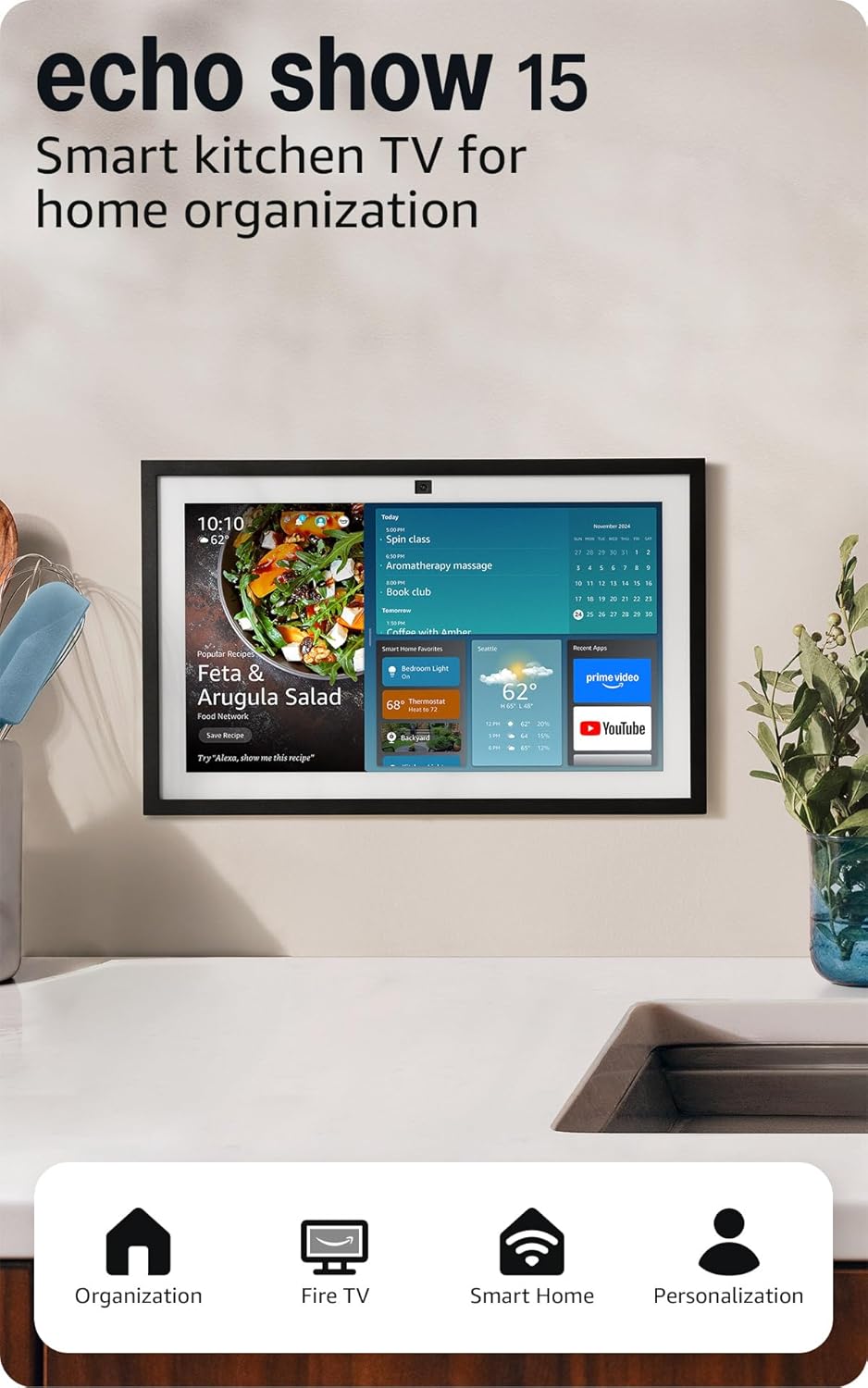
The Echo Show 15 is conceptualized as a landscape or portrait wall display, featuring a clean frame designed to blend into kitchen or communal spaces. Its headline profile is defined by a 15.6-inch 1080p panel, equipped with a mechanical camera shutter and microphone mute button for foundational hardware-level privacy. However, buyers should take note of conflicting manufacturer data sheets: the listing specifications cite a 5.5-inch screen with dimensions of 5.8 by 3.6 by 3.2 inches, mirroring a compact desktop unit rather than an expansive wall mount. Prospective buyers must confirm that the delivered unit matches the 15.6-inch full-size enclosure before installing mounting brackets. When properly configured, the chassis houses an auto-framing camera with 3.3x digital zoom and integrated speakers. The build prioritizes communal visibility, giving households a consolidated visual board for calendars and smart devices, though the physical footprint requires dedicated wall anchors or a substantial counter stand.
Real-world performance and integration
In daily operation, the display functions as both a Fire TV media receiver and an Alexa control terminal. Widget organization allows families to view synchronized calendars, shared lists, and real-time weather alongside live camera streams from connected security hardware. Media playback benefits from the included Fire TV remote and platform software, supporting major third-party streaming applications alongside Amazon's native services. Video calls make effective use of the centered wide-angle camera with noise reduction and automated subject framing. However, users should remain mindful of platform constraints. The device operates within Amazon's cloud architecture, meaning smart home routines and interactive voice tasks will stall if internet connectivity drops. Local network processing is minimal compared to dedicated local hubs. Additionally, while the smart home dashboard conveniently organizes lighting and security feeds on a single screen, platform-agnostic standards like Thread or Matter border routing are not confirmed in the specifications, requiring verification for cross-platform smart homes.
Value for money
Carrying an official price of $349.99, this model commands a substantial premium over conventional smart displays and basic streaming monitors. The cost reflects dual functionality: users receive an Alexa voice display coupled with an app-capable Fire TV terminal that includes a dedicated remote. Market response remains favorable, reflected by a 4.4 out of 5 rating across 6,310 customer reviews and over 7,000 units purchased monthly. Nevertheless, the return on investment depends on how extensively a household utilizes its multi-purpose layout. For users needing a simple recipe reader or radio, the expenditure is disproportionately high. Furthermore, accessing the full potential of its streaming and home surveillance monitoring requires ongoing third-party subscriptions, which adds continuous overhead to the initial purchase price. If your daily routines do not actively combine wall-mounted calendar management, video intercom capabilities, and kitchen television viewing, the $349.99 price tag provides modest practical value per dollar spent.
Who should skip this device
Smart home enthusiasts who prioritize local-first network control should pass on this display. Because Alexa depends primarily on cloud connectivity, this device does not satisfy installations designed to operate during wide-area network outages. Buyers invested in open, multi-platform ecosystems like Apple Home or Google Home will find the proprietary Alexa environment restrictive. The product is also ill-suited for budget-conscious consumers who simply need a digital picture frame or a compact counter assistant, given the $349.99 price and significant physical footprint. Furthermore, households unwilling to navigate paid subscriptions should steer clear; without paid streaming services, the Fire TV features remain underutilized, and camera surveillance integrations often incur recurring cloud storage fees. Finally, those requiring verified Matter-over-Thread border routing must pause until Amazon explicitly confirms those protocol specifications on this specific hardware revision.