Design and build quality
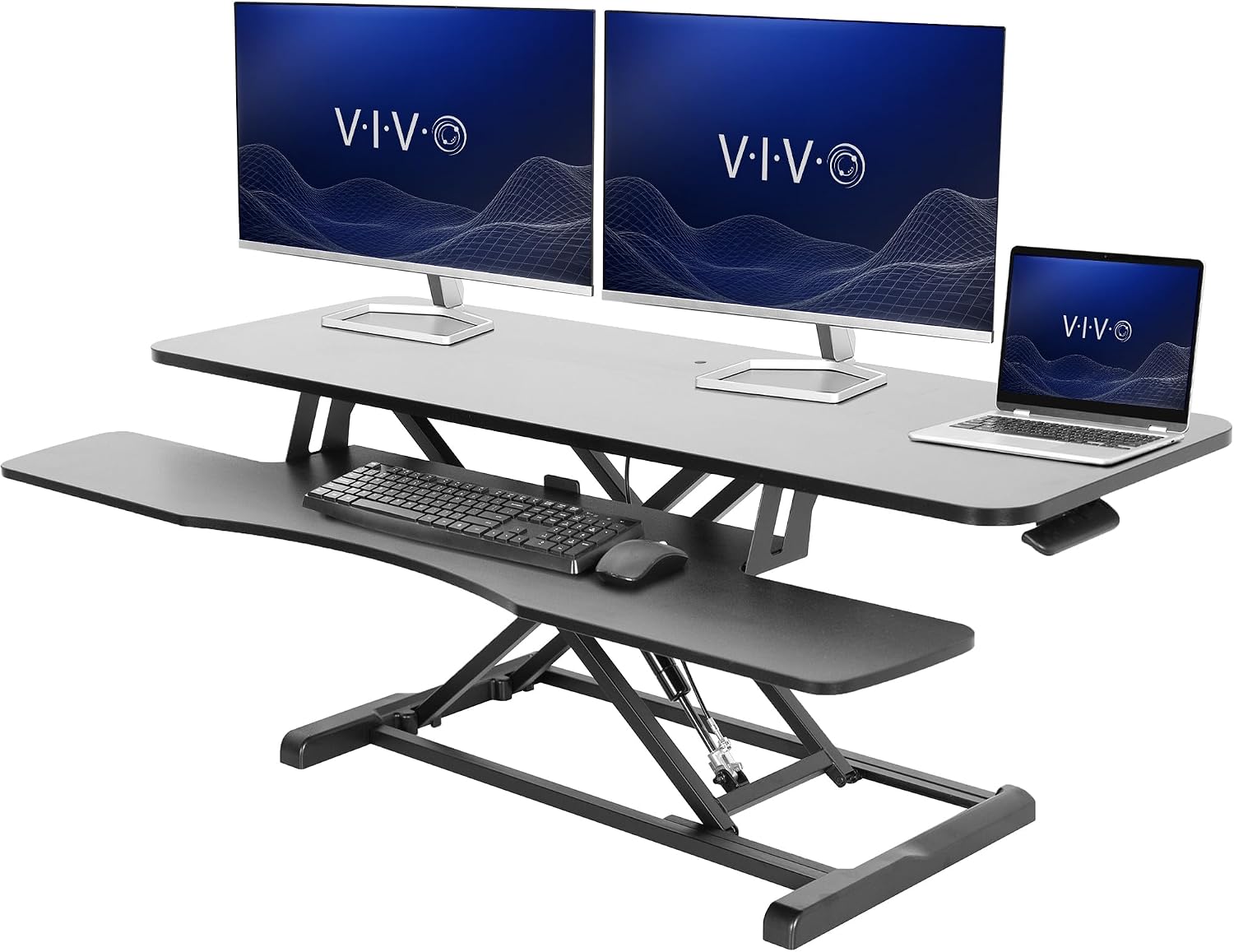
The VIVO DESK-V048KB centers on a dual-tier framework constructed from powder-coated steel and laminated particleboard. With a primary surface spanning 47.6 inches wide by 15.7 inches deep, the layout provides ample lateral room for two standard office monitors or a display alongside an open laptop. The lower keyboard deck matches the width at 47.6 inches, tapering to 10.2 inches in the center, which yields sufficient clearance for a full-size keyboard and mouse. Structurally, the converter relies on an X-frame scissor geometry that lifts straight upward rather than arcing outward toward the user. This vertical travel minimizes the overall footprint, preventing desktop overhang during adjustment. While the 0.7-inch tabletop thickness is sufficient for typical desktop tasks, the laminate finish is standard utility grade, prioritized for basic scratch resistance over tactile warmth. Assembly demands are minimal, as the frame mechanism arrives pre-assembled, leaving only the bracketed keyboard platform to be fastened before the unit is ready for use on an existing workstation.
Real-world performance
Evaluating desktop converters requires examining stability at full elevation, where mechanical leverage naturally exposes structural play. At its maximum 20-inch height, the VIVO frame exhibits slight lateral movement during aggressive typing, though the straight vertical scissor mechanism maintains reasonable fore-and-aft stability. The lift-assist system operates via a manual locking lever, counterbalancing loads up to 33 pounds on the main tier and 4 pounds on the keyboard platform. Prospective buyers must carefully tally the weight of their monitors, desktop mounts, and cables against this 33-pound limit. A pair of contemporary 27-inch monitors will function without issue, but combining them with heavy aftermarket clamp-on monitor arms can rapidly approach the upper threshold. Operating the manual lever near maximum capacity requires noticeable physical assistance to initiate upward travel. Because this model uses a mechanical assist rather than an electric motor, long-term reliability hinges on the durability of the internal gas spring and lock engagement, which should be inspected periodically.
Value for money
Retailing at $219.99, the DESK-V048KB holds a competitive position within the high-capacity manual converter segment. Backed by an aggregate rating of 4.6 across more than 15,000 recorded customer evaluations, the market reception indicates dependable baseline execution. At this price point, full electric standing desk frames become an alternative consideration; however, those alternatives demand full workspace disassembly and floor space. This converter circumvents that friction by augmenting existing furniture while offering a substantial 48-inch tier that rivals complete standing workstations in width. The absence of an electric motor also eliminates electronic failure points, reducing long-term maintenance vulnerability at the expense of automated push-button convenience. For budget-conscious users prioritizing a broad horizontal display surface without replacing an existing credenza or non-adjustable executive desk, the price-to-utility equation remains solid. You receive a durable steel framework and competent mechanical lift assist without paying the premium associated with motorized height systems.
Who should skip it
Users with extensive hardware setups should pass on this converter. The 33-pound load limit on the upper tier and 4-pound cap on the keyboard tray directly preclude heavy professional gear, such as cast-iron studio monitor speakers, ultra-wide curved screens, or bulky multi-monitor mounting arrays. Additionally, individuals seeking hands-free, push-button adjustment will find the manual locking handle inconvenient, particularly when loaded close to its operational limit. The desk converter is also ill-suited for shallow home-office surfaces. Although the top tier depth measures 15.7 inches, the addition of the keyboard tray requires a deeper primary desk to ensure the base sits firmly without awkward cantilever overhang. Finally, taller operators who work at higher desk surfaces should verify that the combined baseline desk height and the 20-inch peak extension align with their neutral elbow angle, as exceeding ergonomic thresholds will compromise posture over extended standing intervals.