Design and build
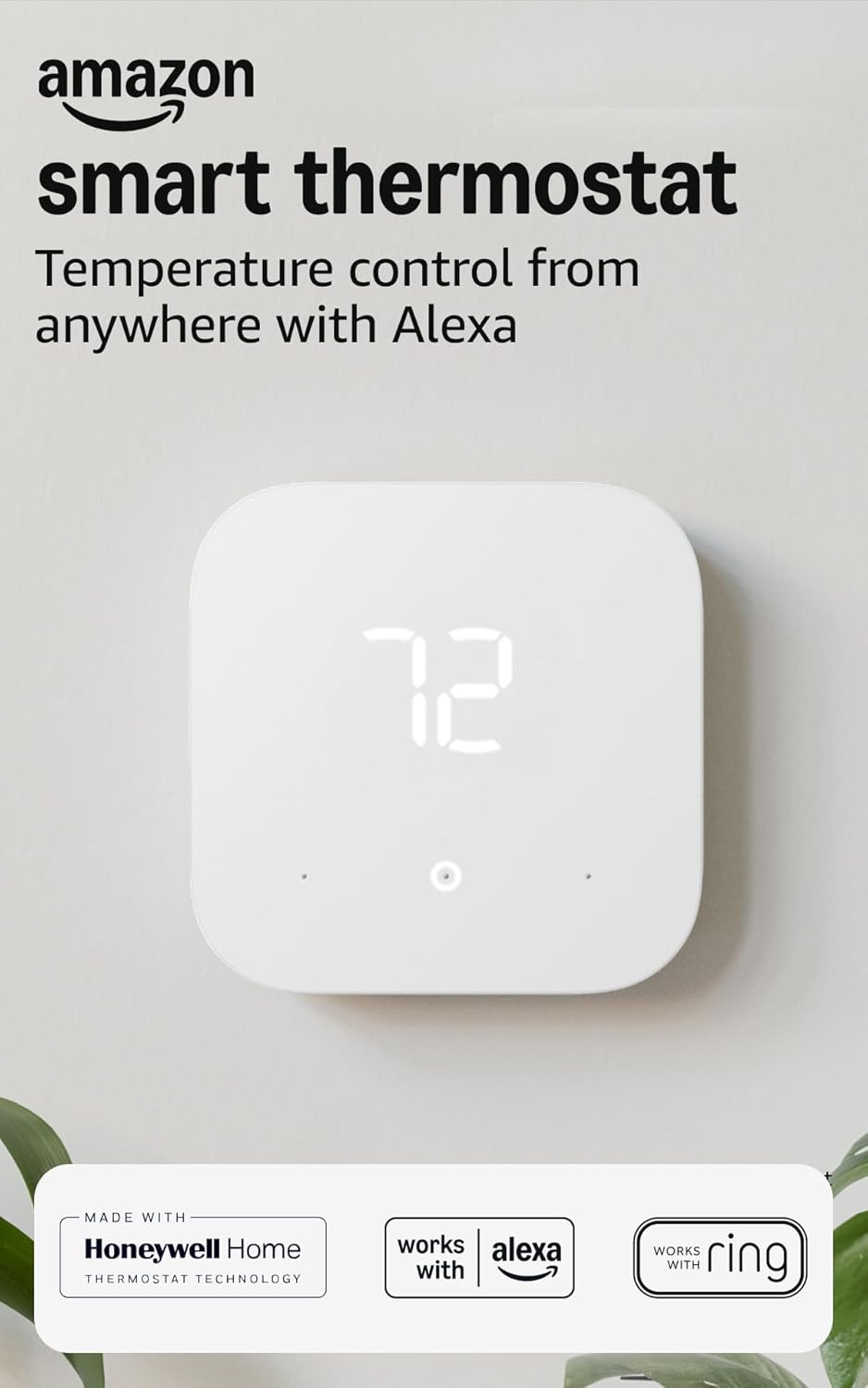
The physical construction of the Amazon Smart Thermostat reflects a functional approach managed by Honeywell Home, a firm with significant background in HVAC engineering. The exterior chassis presents a minimal, squared profile with a segment-style digital readout that displays current and target temperatures. The internal switching relays handle standard single-stage and multi-stage heating and cooling platforms, yet prospective buyers must verify their existing wall wiring before attempting a swap. A dedicated continuous power terminal, known as a C-wire, is an absolute prerequisite for installation; passive power harvesting is not supported. While the physical assembly feels stable once mounted flush against drywall, the unit deliberately lacks advanced on-device touch interfaces or manual rotary selectors found in higher-tier hardware. Most configuration logic is deferred to external software interfaces, which keeps the on-wall footprint small but forces users to interact with connected mobile applications for non-trivial climate adjustments.
Real-world performance
Daily climate management relies on Energy Star-certified algorithms designed to lower electrical consumption. The Environmental Protection Agency projects that compliant devices save an average of $90 annually on utility expenses through scheduled adjustments. During continuous operation, temperature modulation operates reliably via predefined Home, Away, and Sleep schedules. Extended functionality, branded as Alexa+, enables hands-free voice adjustments and cross-device automated routines. Room-specific comfort zones can be constructed, provided you integrate secondary Alexa hardware to supply remote presence detection and secondary ambient thermal data. That reliance introduces operational friction: occupancy tracking is only as consistent as the spatial coverage of your peripheral smart speakers. Crucially, configuration commands route entirely through Amazon web servers. If your residential broadband connection drops, the thermostat reverts to static local scheduling, preventing real-time remote commands or automated presence-based changes until connectivity is fully restored by your service provider.
Value for money
Priced at $56.99, this thermostat delivers high nominal value within the budget climate category, reflected in a 4.0 out of 5-star aggregate rating from more than 25,000 recorded consumer evaluations. In addition to the modest retail cost, Amazon facilitates post-purchase outreach regarding local utility rebates, which can offset a substantial portion of the initial hardware expense depending on municipal energy program rules. The tradeoff for this sub-$60 price ceiling centers on software ownership and system independence. Competing units command higher premiums to deliver platform-agnostic radios, offline application interfaces, or onboard sensing packages. If you are already operating an Alexa-centric infrastructure, the hardware cost amortizes rapidly across multiple heating seasons. Buyers must weigh the low upfront financial commitment against the structural liabilities of single-vendor cloud dependency and the mandatory requirement for a compatible modern wiring configuration.
Who should skip it
Consumers prioritizing open-standard, future-proof smart environments should avoid this unit. In line with modern buying recommendations, the absence of Matter and Thread support renders this hardware vulnerable to obsolescence if Amazon adjusts its home automation roadmap. It cannot natively communicate with alternate ecosystems like Apple Home or Google Home, reinforcing strict vendor lock-in. Homes constructed without an existing C-wire or accessible HVAC control board will incur auxiliary adapter expenses or electrician fees, neutralizing the initial hardware savings. Additionally, smart home operators who demand absolute local network control must look elsewhere; this thermostat offers minimal functionality independent of cloud servers. If your domestic deployment requires independent sensor networks, local API calls over Home Assistant, or platform neutrality across disparate control applications, standardizing on this Alexa-bound thermostat represents an architectural dead end that compromises multi-ecosystem interoperability.