Design and Build Specifications
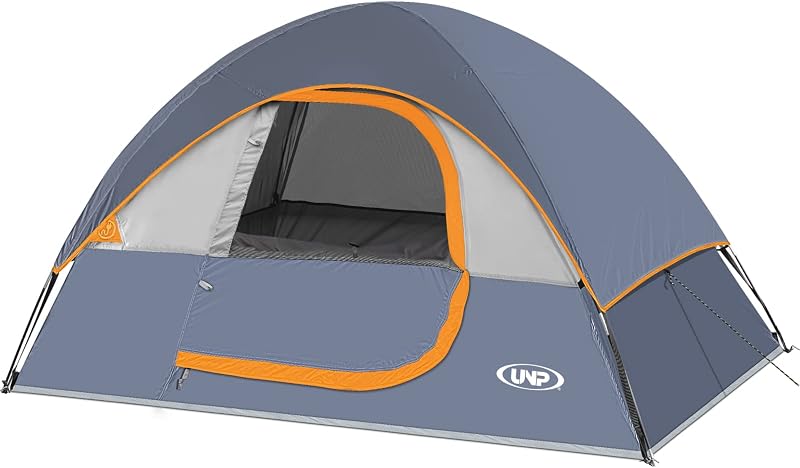
The UNP dome tent is constructed around a standard two-pole freestanding framework, yielding floor dimensions of 84 inches in length by 60 inches in width, with a 45-inch center height. The manufacturer labels the shelter as tear-resistant polyester accompanied by a removable rainfly, ceiling mesh skylight, single gear pocket, and a single zippered entryway. Buyers should note that while the product title mentions two to four occupants, the listed footprint of 35 square feet can only accommodate two standard sleeping pads side-by-side or a single full air mattress. The structural poles and stake materials are not explicitly detailed in the specifications, meaning buyers should verify pole material type upon arrival to evaluate flex strength. A single door design requires occupants to climb over one another during night exits, and internal storage remains minimalist with only one sewn pocket provided for small personal effects.
Real-World Weather Performance
The shelter carries a 1500 mm hydrostatic-head rating, which denotes adequate baseline water resistance for moderate precipitation. However, real-world dryness depends heavily on seam construction, guyout tension, and proper fly clearance over the interior canopy mesh. The factory specification lists only one guyline, which significantly limits anchoring security during sudden wind gusts and elevates the risk of the fly pressing against the inner tent body. Despite the listed four-season designation, the open mesh ceiling and minimal vestibule coverage disqualify this shelter from sustained sub-freezing use, high winds, or heavy snow loads. Furthermore, maintaining interior comfort requires pairing the tent with an adequately insulated sleeping pad and a temperature-matched sleeping bag, as thin polyester walls offer no thermal barrier. Ventilation via the roof panel aids in reducing condensation, provided external humidity and wind conditions allow airflow across the peak.
Value Assessment and Market Context
Retailing at $39.99 with an aggregate consumer score of 4.3 out of 5 stars from over 3,100 reviews, the UNP tent positions itself firmly in the budget segment. For casual weekend outings, backyard use, or dry-weather music festivals, the investment risk is remarkably low. Cost cutting is evident in the simplified geometry, single-door layout, and generic hardware, yet the core dome platform remains functional for basic utility. It provides adequate floor space for a solo camper with excess gear or two adults with minimal duffels. Higher-priced three-season tents offer full-coverage vestibules, pre-bent aluminum poles, multiple entry points, and factory-taped seams tested to higher hydraulic thresholds. At this sub-forty-dollar threshold, buyers are paying strictly for basic enclosure and overhead coverage, which is a fair exchange if used within reasonable weather limits.
Who Should Skip This Shelter
Backpackers tracking every ounce should look elsewhere, as the 4.8-pound packed weight is disproportionately heavy for a minimalist shelter without extensive interior volume. Wilderness travelers facing exposed terrain, autumn squalls, or alpine conditions should avoid this shelter due to its limited guyout architecture, single-point door design, and partial rainfly coverage. Additionally, parties of three or four cannot physically sleep inside this 60-inch-wide footprint; purchasing it for group expeditions will result in severe overcrowding. Anyone anticipating multi-day rain events should also bypass this tent unless prepared to manually seal exterior seams and supplement the stock staking kit with heavier guylines. If your outings prioritize structural durability under harsh meteorological loads or dual vestibules for foul-weather gear management, invest instead in a certified three-season shelter engineered with higher hydrostatic thresholds.