Design and build
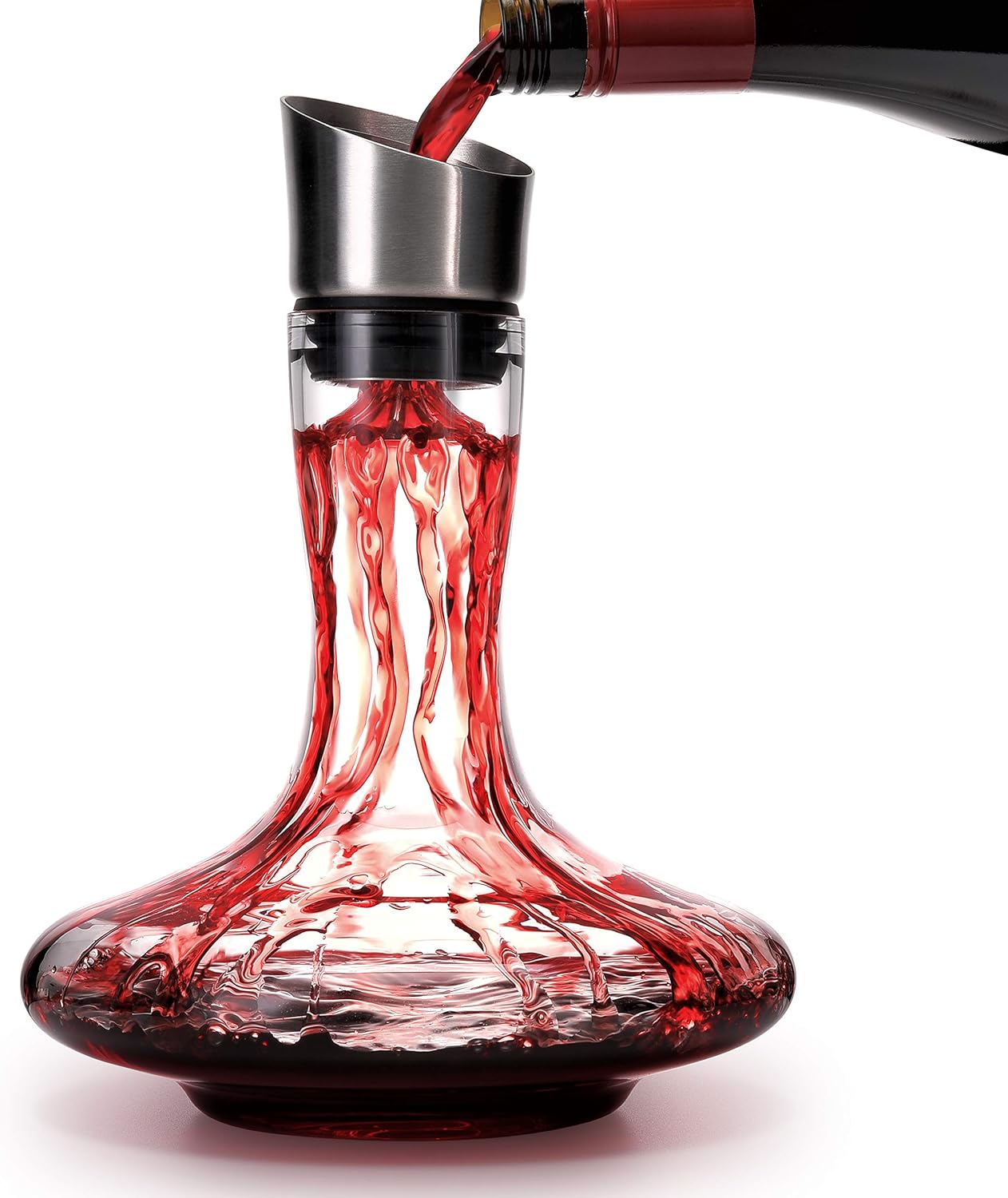
The Jiaran decanter uses a conventional broad-bottom glass silhouette mated to a narrow neck and an angled pouring rim. Fabricated from lead-free crystal glass, the vessel is sized specifically for a standard 750 mL bottle of wine. The primary structural deviation from basic glass carafes is the inclusion of an internal double-layer filter mechanism. This insert seats into the neck to break the incoming stream into multiple paths during the initial pour, exposing greater surface area to the air while screening coarse tartrates or cork fragments. The glass features an asymmetric slanted spout intended to prevent fluid shear and subsequent exterior dripping down the neck. The reduced circumference of the upper neck provides a solid purchase point when lifting a full 750 mL charge. While the crystal demonstrates decent optical clarity, the manufacturer does not specify the exact wall thickness, leaving potential buyers to evaluate impact resilience against everyday handling around solid stone surfaces.
Real-world performance
The functional core of this carafe is its mechanical aeration assembly, which the manufacturer states reduces required breathing periods to between three and five minutes. Splitting the stream upon ingress accelerates volatile evaporation compared to a static rest in a standard wide-base vessel. However, enthusiasts should maintain grounded expectations regarding fluid dynamics. In practice, thin rims change the drink more than any aerator does; the delivery of wine over the palate depends heavily on stemware geometry rather than pure pre-pour agitation. The double-layer filter captures visible solid particulate reliably when working through older vintages, but sediment separation during the reverse outward pour relies entirely on slow tilting technique. The slanted lip mitigates droplets effectively if tilted deliberately, though rapid pours can overwhelm the funnel diameter. Cleaning also demands consideration: the neck diameter limits internal access, requiring specialized sponge brushes or stainless cleaning beads, as high-heat dishwasher cycles risk compromising the narrow aperture.
Value for money
At an entry price of $41.50, the Jiaran decanter occupies an accessible mid-tier bracket among consumer wine accessories. An aggregated customer rating of 4.6 across 1,989 recorded entries reflects solid satisfaction with basic functional execution and visual clarity. Many dedicated mechanical aeration devices require separate purchase alongside a standard glass carafe, which inevitably inflates total investment. By embedding a filtration and dispersing unit directly into a glass body, this package minimizes ancillary tooling expenses. However, buyers should balance this modest price against the ongoing effort needed to keep dual-material assemblies clean and sanitary. If a drinker already owns adequate glassware and standard glass carafes, the marginal performance gain from the secondary filter insert remains modest. As an all-in-one introductory piece or replacement for chipped basic glassware, the $41.50 asking price represents reasonable utility without reaching premium glass territory.
Who should skip it
Drinkers focused on precision tasting who have not yet upgraded their stemware should bypass this purchase and prioritize quality glasses first. Rim profile fundamentally impacts the presentation of tannins and aromatics on the palate to an extent that forced aeration cannot replicate. Additionally, collectors managing aged cellars stored in dedicated compressor fridges—where delicate sediment must be kept stationary—may find the turbulent internal aerator counterproductive, as gentle decanting through a standalone funnel preserves aged structures better. Users seeking low-maintenance, dishwasher-safe utility should likewise look elsewhere; the enclosed internal filter and narrow neck shape require careful hand washing and specialized drying racks to prevent stubborn mineral spots. Finally, anyone who prefers serving whites and reds at strictly regulated temperatures might find the thin glass walls offer negligible thermal insulation, allowing chilled white wines to warm too quickly when standing on an ambient tabletop.