Design and Build
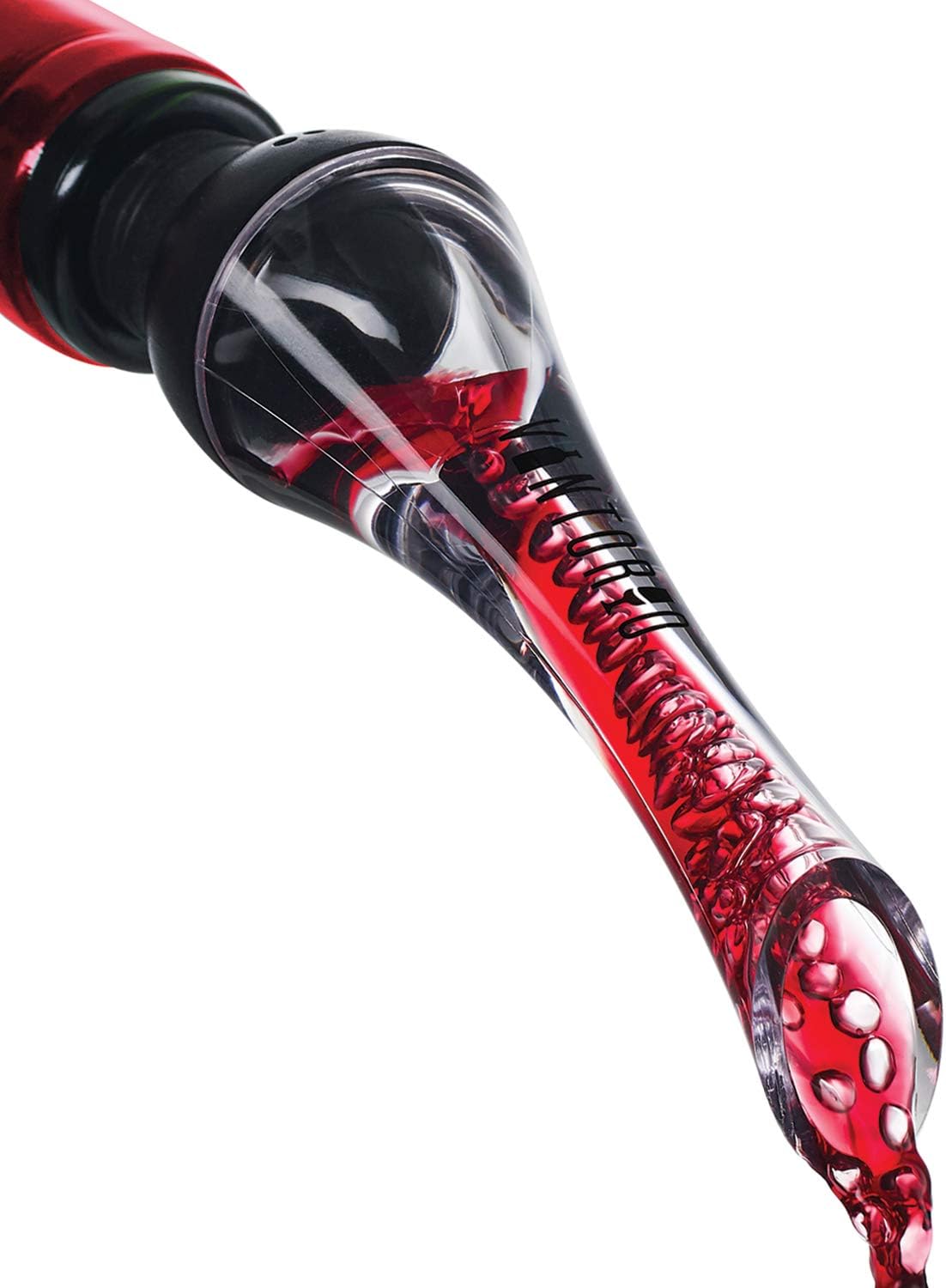
The Vintorio Wine Aerator Pourer (model VAPBLK1) measures 5.9 inches long by 1.1 inches wide and weighs 1.28 ounces. Constructed from BPA-free acrylic, the housing consists of an internal aeration chamber paired with an exterior flow path. A ribbed, tapered rubber stopper provides the interface between the device and the wine bottle neck, engineered to form a friction seal across standard bottle openings. The acrylic spout features an ergonomically slanted profile with a cut notch designed to sever the liquid stream abruptly and minimize drips onto surfaces. The assembly breaks down into separate components, allowing users to flush residue out of the internal intake channels without requiring specialized brushes. A travel case is included, protecting the acrylic from scuffs during transit. While the plastics feel lightweight rather than substantial, tolerances are adequate to prevent leakage around the junction points when seated firmly into standard 750-milliliter bottle mouths.
Real-World Performance
The device relies on the Bernoulli effect, pulling air through dedicated intake vents as fluid velocity increases through a narrowed chamber. This action introduces small bubbles into the wine stream to accelerate surface-level oxygenation during the pour. In practical terms, this softens harsh tannins in young, tightly wound red wines, though it cannot replicate the gradual evolution achieved through traditional vessel decanting. Furthermore, our baseline testing parameters emphasize that thin rims change the drink more than any aerator does; the fluid dynamics of how wine crosses the palate from thin-edged crystal deliver a far more noticeable sensory change than in-line air injection. The Vintorio excels more predictably as a pour spout than as a flavor transformer. The notched lip prevents drips effectively, and the rubber gasket avoids messy leaks down the glass bottle exterior during high-volume pouring.
Value for Money
The precise retail price for this listing is currently unstated, requiring prospective buyers to confirm active pricing before committing. Market alternatives in the acrylic pourer category typically range widely, from budget generic copies to mid-tier branded accessories. With over 700 units purchased monthly, consumer adoption remains strong despite the presence of numerous unbranded clones. Assessing true value hinges on expectations. If purchased strictly to smooth young red wines quickly while serving as a dependable drip-free pourer, the unit provides reasonable utility given its durable plastic construction and modular washability. However, spending significant capital on compact aerators remains questionable when fundamental equipment yields greater dividends. Investing equivalent funds into proper thin-rimmed stemware or a simple glass decanter offers superior long-term impact on wine appreciation.
Who Should Skip It
Collectors who prioritize mature, aged wines should bypass this aerator entirely. Older vintages with delicate aromatic compounds can become over-oxidized and flat when subjected to forced aeration via rapid Bernoulli air induction. Enthusiasts who already utilize proper glassware should also consider skipping it. Because thin rims change the drink more than any aerator does, drinkers using quality crystal stemware receive minimal additive benefit from inline turbulence. Furthermore, those who prefer mechanical simplicity will find little need for an extra accessory that requires post-service disassembly and drying. If your routine already includes opening bottles in advance or decanting into glass vessels, introducing a plastic spout adds maintenance steps without improving the drinking experience. Finally, bottles with non-standard neck diameters may struggle to achieve an airtight seal.