Design and Material Specifications
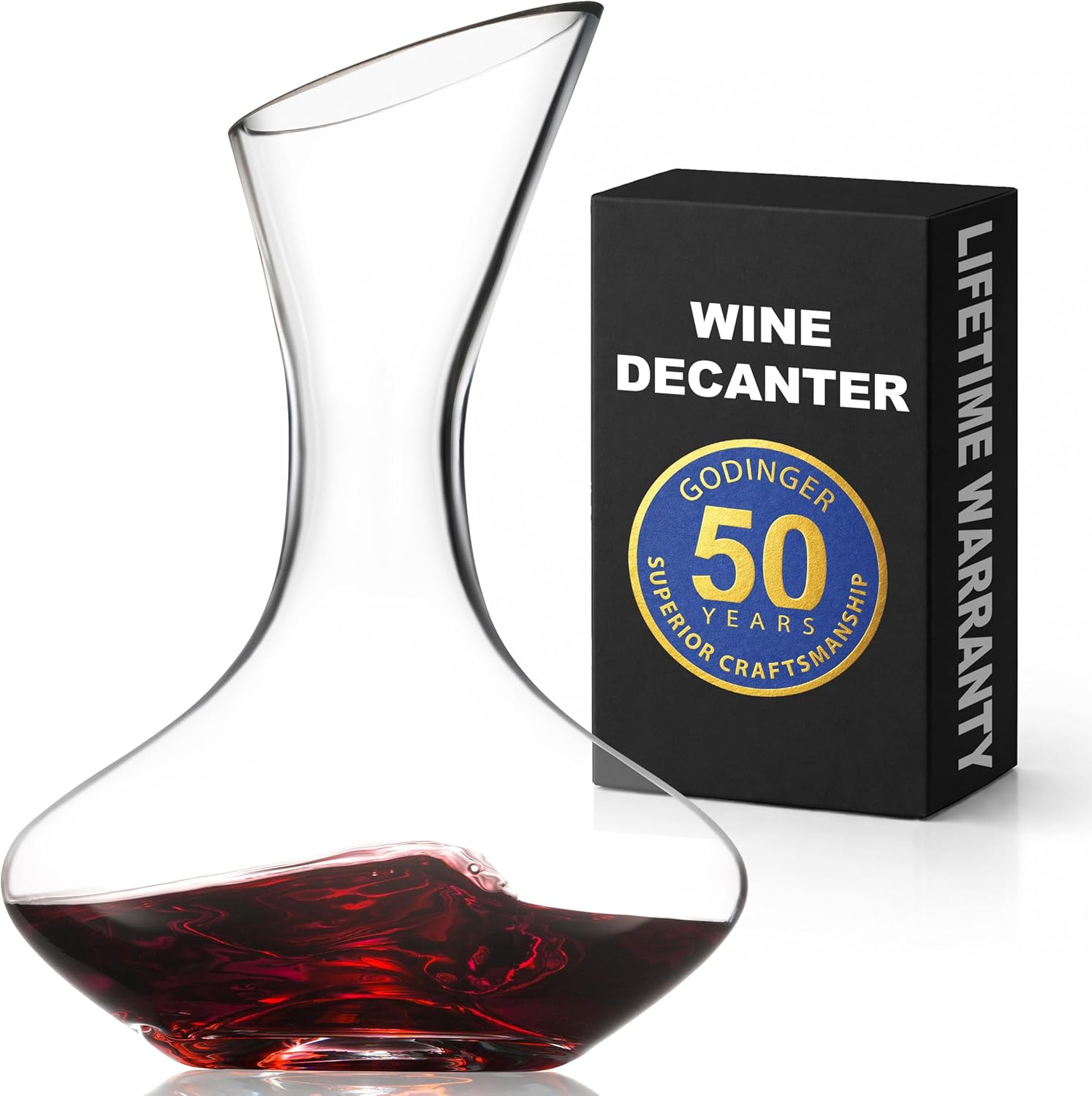
The Godinger Decanter utilizes lead-free crystal glass shaped into a traditional broad-base carafe form. Dimensionally, the unit stands 10.3 inches tall with a maximum diameter of 8.5 inches at the bottom bowl. An empty weight of 640 grams suggests adequate wall thickness for domestic use, mitigating some of the extreme fragility found in paper-thin artisanal carafes. The neck tapers inwards to restrict premature alcohol evaporation before flaring outward at the rim for pouring. Because the manufacturer specifies a hand-blown process, buyers should anticipate minor structural variances, such as slight differences in rim uniformity or microscopic air pockets within the glass matrix. While Godinger lists lead-free crystal as the primary material, the specific composition and annealing processes are not detailed. For table presentation, the glass demonstrates neutral optical clarity without noticeable tinting, permitting an accurate assessment of wine hue, clarity, and sediment suspension during service.
Real-World Performance and Handling
With a stated capacity of 750 ml, the vessel is engineered specifically to receive a single standard bottle of wine. Pouring an entire 750 ml bottle brings the liquid level directly to the widest point of the 8.5-inch base, maximizing the exposed liquid surface area to encourage oxygen dissolution. This geometry accelerates the evaporation of undesirable volatile sulfur compounds often found in youthful, reductive reds. However, once loaded with wine, the total weight approaches 1.4 kilograms. Because there is no handle or molded thumb indentation, pouring requires a secure, deliberate grip around the tapered neck and base. The slanted rim manages directional flow reasonably well, but the absence of a treated, hydrophobic drip-guard lip means occasional drops will slide down the exterior wall. Additionally, the interior geometry makes drying difficult without dedicated flexible brushes or specialized decanter drying stands, which are not included in the package.
Value Assessment and Category Context
Retailing at $33.79, the Godinger carafe sits in the entry-to-intermediate segment of non-leaded crystal barware. With an aggregate consumer rating of 4.6 across 3,317 reviews, it displays stable market satisfaction regarding basic functionality and visual appeal. When assessing value in the broader context of wine service, expectations must remain balanced. Decanting provides undeniable benefits for separating sediment in older vintages or opening tight, tannic reds. However, serious collectors should note our overarching buying rule: thin rims change the sensory experience of a drink far more profoundly than any aerator or basic carafe. Allocating capital toward quality stemware with cold-cut, laser-trimmed rims or ensuring storage within a compressor-cooled dual-zone cabinet will alter consumption quality more than decanter geometry alone. For those simply needing an aesthetically clean, wide-bottom vessel to aerate table wine, the price point represents a low-risk expenditure.
Who Should Skip This Model
Prospective buyers who routinely cellar fragile, decades-old wines should bypass this model in favor of a narrow-diameter, low-aeration carafe. The broad 8.5-inch base accelerates oxidation rapidly, which can flatten delicate secondary aromas in aged bottles within thirty minutes. Users without access to filtered rinse water or specialized cleaning accessories should also pause; tap water left in the broad base leaves visible mineral deposits that are difficult to scrub manually due to the constricted neck. Furthermore, households limited on kitchen storage space may find the wide footprint cumbersome, as the decanter cannot be safely stacked and occupies significant shelf area. Finally, consumers who prioritize single-handed pouring comfort or those serving guests with limited grip strength should look for carafes equipped with an ergonomic glass handle or a sculpted base indentation to prevent slippage during full-bottle service.