Design and Build
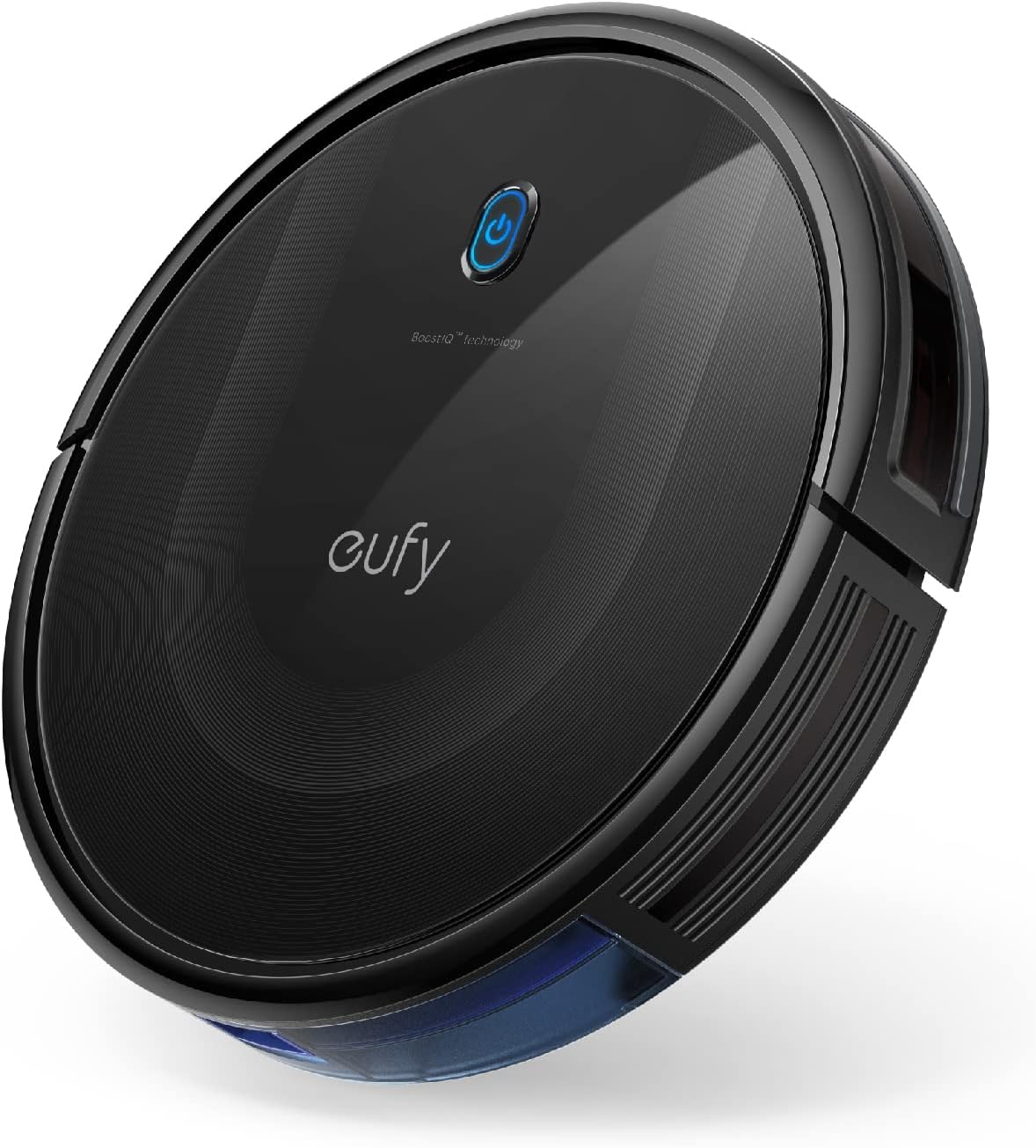
The primary mechanical advantage of the eufy 11S MAX is its 2.85-inch height. This slim profile allows the chassis to slide beneath low bedframes, credenzas, and kickboards where bulkier LiDAR-equipped vacuum turrets reliably wedge. The top plate is surfaced with anti-scratch tempered glass, offering greater resilience against cosmetic scuffs than bare injection-molded plastics. Underneath, eufy equips the unit with a 12.8-inch cleaning path width, featuring an internal roller brush alongside a solitary edge-sweeping brush. While dual-brush designs remain common in budget hardware, this single-brush layout is configured to minimize debris scatter on hard surfaces. Debris collects in a 600-milliliter internal dustbin equipped with a washable filtration assembly. Build decisions focus strictly on functional minimalism: the chassis houses standard drop-detection cliff sensors and an infrared bumper array, but it deliberately omits wireless networking radios, leaving all device commands to the bundled infrared handheld remote control.
Real-World Performance
Because the 11S MAX foregoes optical cameras and laser navigation, it traverses floors using a semi-random bounce method. In open floor plans, cleaning efficiency is lower than grid-based bots, requiring longer runtimes to ensure total room coverage. The 100-minute lithium-ion battery provides sufficient operating endurance to offset this inefficiency in standard apartments or closed rooms. Transitioning across surfaces is managed by BoostIQ technology, which detects high-resistance surfaces like medium-pile carpets and increases suction power within 1.5 seconds. The single-side brush channels grit into the main roller well on hard floors and tile, though tangled pet hair requires routine manual clearing from the brush bearings. Acoustic output sits around 55 decibels, making its operation barely louder than a modern refrigerator. Buyers with dark rugs must note that simple infrared cliff sensors may register deep black carpet patterns as floor drop-offs, halting operation prematurely.
Value for Money
Priced at $169.99, the eufy 11S MAX occupies an accessible entry tier in the robotic floor care segment. Backed by an aggregate rating of 4.3 out of 5 across nearly 60,000 recorded consumer evaluations, the platform demonstrates reliable hardware longevity within its mechanical limitations. Buyers are paying exclusively for mechanical utility, low operating sound, and minimal physical dimensions rather than digital amenities. Many competing budget models now bundle basic Wi-Fi mapping, yet those units often measure over three inches tall, eliminating under-couch cleaning access. The inclusion of a 600ml dustbin and a washable filter reduces long-term consumable costs, though owners miss out on the automated convenience of external bag docks. For buyers prioritizing zero-setup floor care without app configuration or cloud privacy concerns, the vacuum yields an honest balance of suction and durability for the retail investment.
Who Should Skip It
Households with sprawling, multi-room layouts should bypass the 11S MAX in favor of robots with laser-guided mapping. Without LiDAR or visual pathing, the unit cannot generate persistent floor maps, partition rooms, or honor digital no-go boundaries around pet bowls and cord clusters. High-shedding households will find the lack of a self-emptying base station burdensome, as the 600ml onboard dustbin requires frequent manual emptying to maintain proper airflow. Users seeking smartphone integration, voice assistant compatibility, or scheduling through home automation suites will be hindered by the remote-only hardware architecture. Furthermore, homes with thick high-pile carpets or numerous deep black floor coverings should opt for machines equipped with advanced carpet agitators and adjustable cliff-sensing thresholds, as the 11S MAX is certified exclusively for hard flooring, tile surfaces, and medium-pile carpet textiles.