Design and build
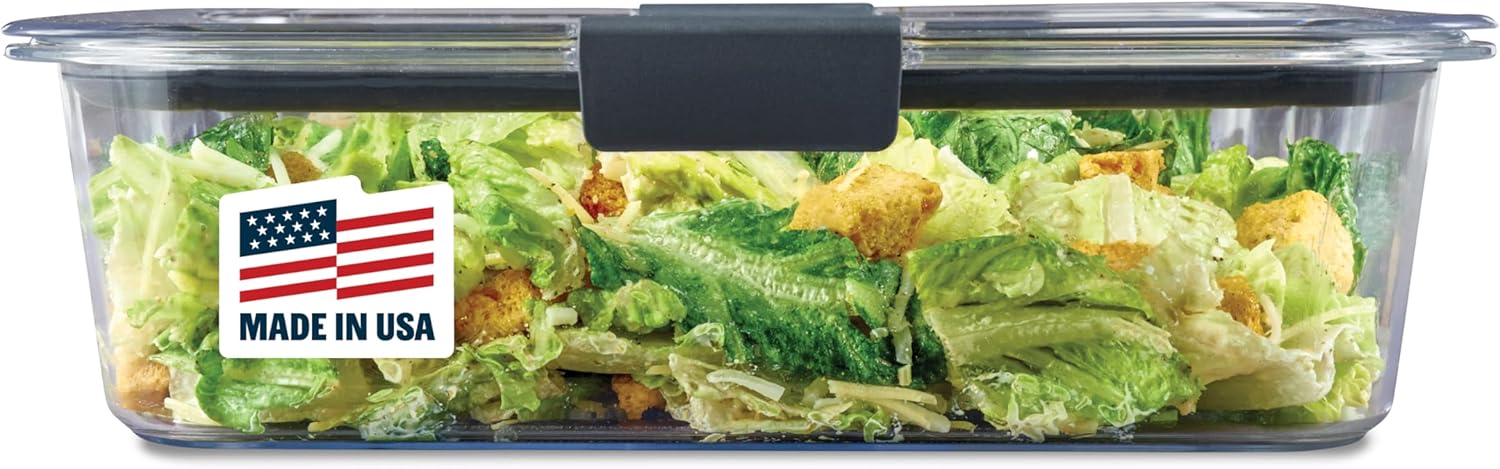
Constructed from rigid, BPA-free Tritan plastic, the Rubbermaid Brilliance 9.6-Cup container weighs 15.68 ounces and measures 11.05 inches long by 7.6 inches wide by 3.1 inches high. Unlike flexible polypropylene prep tubs, the clarity of the Tritan resin matches glass while offering superior shatter resistance against kitchen drops. The lid utilizes two side-mounted snap latches that compress a continuous synthetic gasket against the rim, creating a hermetic seal. Two integrated micro-vents beneath the latches allow pressure equalization when unlatched, though pizza makers will keep these sealed to retain moisture during cold retardation. The internal floor is flat, allowing level resting for expanding dough balls, while the low 3.1-inch vertical clearance prevents excessive vertical expansion, encouraging dough to relax laterally. The corners are rounded with sufficient radius to avoid flour buildup, and the perimeter lip allows stable stacking of multiple units within standard domestic refrigeration units without bowing the lower lid under load.
Real-world performance
In a pizza workflow, the container functions primarily as a staging box for the final proofing phase. The 11.05 by 7.6-inch footprint accommodates either two large 280-gram Neapolitan dough balls or three modest 220-gram balls spaced evenly. The airtight perimeter seal eliminates moisture loss, preventing the hard, leathery skin that ruins oven spring when baking at 850 degrees Fahrenheit or higher. During extended 48-to-72-hour cold fermentation in a home refrigerator, the seal keeps ambient odors from penetrating the dough matrix. At 3.1 inches of interior clearance, balls can rise adequately without sticking prematurely to the ceiling, provided surfaces are lightly oiled or floured. Extracting fermented dough requires a standard flexible dough scraper; the shallow walls permit clean access without deflating fragile gas pockets. While not wide enough for standard six-ball professional batches, the thermal transfer through the relatively thin Tritan plastic ensures dough drops quickly to refrigerator temperatures, slowing yeast activity reliably.
Value for money
Priced at $14.34, the Brilliance 9.6-Cup container occupies a practical middle tier between cheap disposable food containers and commercial fiberglass dough boxes. Dedicated catering proofing trays often cost over $25 each, require separate lids, and do not fit into domestic refrigerators without removing wire shelving. In contrast, this container delivers professional-grade air retention and structural rigidity in a compact footprint suitable for residential appliances. Backed by a 4.7 out of 5-star rating across nearly 60,000 recorded consumer reviews, the unit demonstrates exceptional longevity and resistance to gasket deformation. Dishwasher cleaning produces no warping or clouding, meaning the container maintains its utility across hundreds of proofing and baking cycles. For home bakers producing two to three pies per session, the initial investment yields a reliable, reusable dough management vessel that minimizes ruined dough batches due to dehydration or accidental exposure to refrigerator drafts.
Who should skip it
High-volume pizzaiolos and those producing large quantities of dough should avoid this container. Staging six to eight dough balls for a party requires three or four separate 9.6-cup units, which quickly becomes unwieldy and cost-inefficient compared to a single dedicated commercial proofing box like a Cambro or Vollrath tray. Bakers specializing in half-sheet Sicilian, Detroit-style, or Roman al taglio pan pizzas will also find the 11.05 by 7.6-inch dimensions too restrictive for par-baking or secondary in-pan proofing. Additionally, users who prefer proofing in individual round containers to retain strict spherical geometry will find rectangular boxes allow dough balls to relax and occasionally touch if fermentation extends past 72 hours. Finally, those who bake exclusively in outdoor high-heat ovens using standard commercial peels must recognize that this unit holds only the raw dough balls; it does not replace a prep station or large wooden dusting board.