Static vs Dynamic Climbing Rope: Beginners Guide to Safety
Understanding the vital differences between rope types is the most critical decision for any climber's personal safety and gear longevity.
By the Niche Picks editorsUpdated November 9, 20267 min readDrawn from our 30 research-based climbing gear reviews
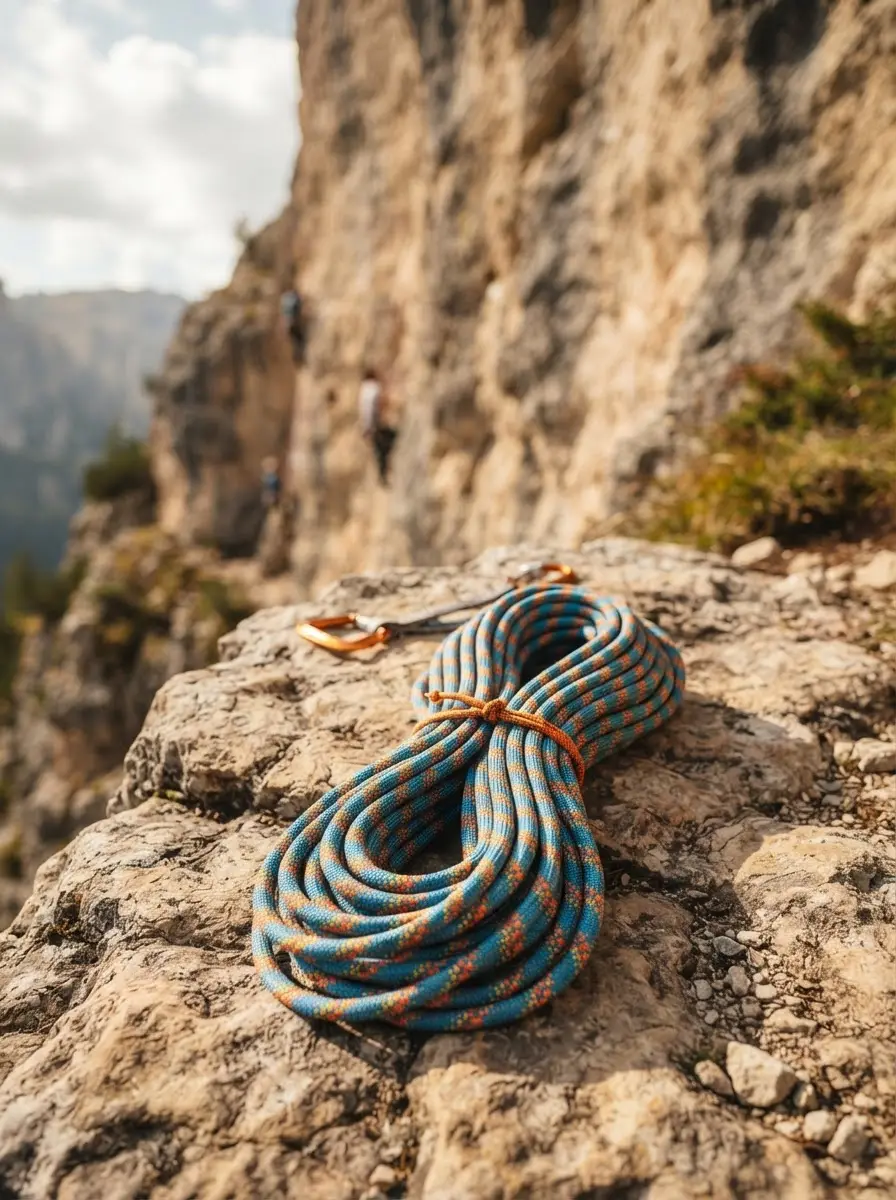
AI-generated editorial illustration; not a product or test photograph.
Short answer
Dynamic ropes are specifically designed to stretch, absorbing the force of a lead fall to protect the climber and the anchor system. Static ropes possess minimal stretch and are intended strictly for hauling gear, rappelling, or setting anchors. Beginners should only use dynamic ropes for any activity where a fall is possible.
4
Product listings discussed; not hands-on tests
4/4
Discussed listings with a recorded price
$16.14–$199.95
Recorded listing price range; not a complete setup cost
Key takeaways
Dynamic ropes stretch to safely absorb the energy generated during a lead climbing fall.
Static ropes are rigid and can cause catastrophic failure if used to catch a climbing fall.
Always verify that your rope is UIAA or CE certified before using it for life-safety.
Check that your rope diameter is compatible with your specific belay device ratings.
Static ropes are excellent tools for equipment hauling and fixed-line rigging, not climbing.
Products discussed in this article
Editorial scores and recorded prices are reference points, not measurements of suitability for every use. Read each review's specifications and limitations.
What is the physical difference between static and dynamic rope?
The core difference lies in their internal construction. A dynamic climbing rope is engineered with nylon fibers that allow for elongation, typically 30-40% when subjected to a heavy load. This controlled stretch is the mechanism that slows a falling climber down over a fraction of a second, significantly reducing the impact force transmitted to the climber, the harness, the rope, and the protective gear placed in the rock wall. If you were to take a hard lead fall on a static line, the lack of elasticity would result in a "hard catch," which risks serious injury to the climber and potential mechanical failure of the anchor points.
Conversely, a static rope is constructed to resist extension. Using materials like polyester, these lines prioritize minimal sheath slippage and high abrasion resistance for utility tasks. Because they do not absorb kinetic energy, they are strictly prohibited for lead climbing. If you are a beginner looking to understand your gear better, our climbing gear FAQ explains how these materials interact with hardware. Using an incorrect rope type is one of the most significant safety errors a novice can make. Always ensure you are using the right tool for the specific task at hand to maintain your safety margin.
Can I use a static rope for top-roping or rappelling?
Beginners often ask if static lines, which are cheaper and durable, can be used for top-roping or rappelling. The short answer is that while static ropes are used in professional rescue and some specific rappelling scenarios, they are dangerous for beginners in a climbing context. In top-roping, although the risk of a long lead fall is absent, the system still needs to handle sudden, albeit smaller, shock loads. A static rope does not offer the same safety buffer as a dedicated dynamic rope. Moreover, most standard belay devices are designed with the handling characteristics of dynamic nylon in mind.
Using a static cord, such as the NTR static rope, for rappelling requires advanced knowledge of friction management. Static lines can be very stiff and slick, which can lead to unpredictable speeds through tubular devices. If you are learning the sport, we recommend reviewing our climbing gear buyer's guide to understand why dynamic ropes remain the standard for all forms of recreational climbing. When you are on the rock, simplicity is your best friend. Relying on certified equipment and standard practices minimizes the chance of user error, which is the leading cause of accidents at the crag. Never substitute a general utility line for a purpose-built climbing rope.
Static ropes have zero energy-absorbing capability. A lead fall on a static line creates massive impact forces that can result in anchor failure, equipment breakage, or severe physical injury.
How do I check my rope's certification?
Safety in climbing is built upon the foundation of standardized testing. Any rope intended for life-support, such as a Black Diamond dynamic rope, must carry explicit documentation proving it has passed the relevant tests. Look for the CE marking and UIAA certification labels on the rope's packaging and the physical ends of the cord. The UIAA (International Climbing and Mountaineering Federation) standards are specifically tailored to the extreme demands of the sport, including fall frequency, impact force, and elongation limits.
Look for the UIAA circular seal on the product packaging or end tags.
Verify the CE number followed by the four-digit notified body identification.
Inspect the factory-cut ends for the manufacturer's batch ID and production date.
Ensure the rope is sold through an authorized, traceable retailer.
Reject any product that arrives without verifiable safety documentation.
Many inexpensive static ropes, such as those often found on generic marketplaces, lack these certifications because they are intended for non-life-support tasks like equipment hauling. Do not assume a product is safe just because it is labeled as a "climbing rope." Always consult our gear reviews to verify if the product is suitable for climbing or merely for utility. If you are working on your own budget planner for new gear, prioritize the safety of your rope over other accessories like chalk bags or apparel. Your rope is your lifeline.
The diameter of your rope must match the rated capacity of your belay device. A dynamic rope is typically between 8.5mm and 10.5mm. Using a rope that is too thin for your device can result in an inability to lock off properly during a fall, while a rope that is too thick may cause excessive friction, making it nearly impossible to feed slack to your climber. This is a common point of confusion for beginners who might purchase a rope based solely on price.
For example, if you are using an assisted-braking device, the manufacturer will specify a range (e.g., 8.5mm to 11mm). Using an 8mm static rope—even if it were safe in terms of impact—would be dangerous because it falls outside the mechanical tolerance of most devices, risking uncontrolled slippage. Always check the physical markings on your device against the rope diameter. Our climbing gear FAQ provides more insight on how to match hardware to your rope. When in doubt, stick to the manufacturer's guidelines; they are written to prevent the exact failure modes that occur when gear combinations are mismatched. Taking the time to understand your equipment's limits will pay dividends in your longevity and confidence as a climber.
Always check for UIAA or CE certification marks on the rope tags. If a rope listing does not explicitly mention these safety standards, do not use it for climbing.
Maintaining your rope for long-term performance
Proper care is essential to ensure your rope remains safe throughout its lifespan. Whether it is a dynamic rope or a static line for rigging, dirt and grit are the primary enemies of textile fibers. When dirt works its way into the sheath, it acts like sandpaper against the core, slowly weakening the structure from the inside. We have detailed protocols for cleaning and care, and the principles for ropes are similar: keep them in a clean rope bag, avoid stepping on them, and wash them only with water or mild, climbing-specific detergents.
Inspect your rope after every session. Run the rope through your hands and look for flat spots, "fuzzing" of the sheath, or internal core lumps. If the sheath is significantly abraded, or if you have taken a major fall, it is time to retire the rope. Remember that even if you don't climb often, the UV light and chemical exposure can degrade nylon over time. A rope that has sat in a trunk for three years is not as safe as one that has been properly stored. Keep track of your usage and stick to a strict retirement policy. Safety is not a one-time purchase but an ongoing commitment to inspecting and replacing your climbing gear when its performance is in question.
When you are ready to invest in your first personal rope, the number of options can be overwhelming. Avoid the temptation to buy generic, uncertified ropes simply because they are cheap. A dynamic climbing rope is a significant investment, but it is one that you should view as a multi-year safety component. Before purchasing, identify the types of climbing you expect to do most. If you are focusing on sport climbing in a gym, a 9.5mm to 9.9mm rope is often the "sweet spot" for durability and handling.
Use a budget planner to allocate your funds effectively. It is better to spend more on a certified rope and a reputable harness than to buy a complete set of budget gear that may not meet safety standards. Always look for brands that provide clear contact information and a history of safety documentation. If a listing provides zero information on materials, core count, or tensile strength, look elsewhere. Your goal is to build a kit that gives you peace of mind, not one that leaves you second-guessing your safety while on the wall. For those still refining their footwear, we offer guides on best shoes for beginners to help you get the right fit from the start.
1Identify the primary activity: sport, trad, or gym climbing requires dynamic rope.
2Verify the rope's diameter matches your existing belay device ratings.
3Check for the UIAA/CE label on the packaging before initial use.
4Perform a visual inspection for any sheath damage upon arrival.
5Register your rope's purchase date for future retirement planning.
6Properly coil and store the rope in a clean, dry location after each session.
Quick checklist
Confirm your intended use is for lead climbing (dynamic) or hauling (static).
Check that the rope carries UIAA or CE certification stamps.
Measure your belay device to ensure it is compatible with the rope diameter.
Inspect the product listing for specific tensile strength data.
Avoid buying generic ropes from marketplaces that do not provide safety documentation.
Ensure the rope length is sufficient for your local crag routes.
Consider the weight vs. durability trade-off for your specific climbing style.
Frequently asked questions
Why can't I use a static rope for lead climbing?
Static ropes do not stretch. In a lead fall, a static rope would stop the climber instantly, transferring the entire kinetic energy of the fall to the anchor, the protection, and the climber's body. This can easily lead to gear failure or internal injuries.
How long does a climbing rope last?
A rope's lifespan depends on frequency of use and care. With regular use, most ropes should be retired within 1-3 years. Even unused ropes degrade over time due to UV light and chemical exposure; manufacturers typically suggest a 10-year maximum shelf life if stored in perfect conditions.
Can I use a climbing rope for towing a car?
No. Climbing ropes are not designed for the high, sustained loads of towing. Using them for non-climbing tasks can introduce dirt and micro-tears that compromise their structural integrity, making them unsafe for subsequent climbing use.
What is the best rope diameter for a beginner?
A rope between 9.5mm and 10.2mm is ideal for beginners. This diameter range offers a good balance between durability, ease of handling, and compatibility with most standard belay devices, while being thin enough to feed smoothly.
How do I know if my rope is damaged?
Perform regular inspections by running the rope through your hands. Look for 'fuzzing' on the sheath, flat spots, or areas where the rope feels unusually soft or thin. If the inner core is visible through the sheath, retire the rope immediately.
Amazon links are affiliate links; we may earn a commission at no cost to you.
Shortlists in this category
Ranked lists from our climbing gear reviews, limited to listings whose titles confirm the product type, with budget cuts where enough recorded prices sit on both sides of the line.
This page summarizes our research reviews of Amazon listings, listed specifications and captured buyer ratings. It is not a hands-on test. Scores are editorial assessments, not measured performance; prices are recorded snapshots and may change. A category can include both main products and accessories, so its overall price range is not the cost of a complete setup.
Most recent product record update: October 5, 2026. Individual records may be older; this is not a verification date for every claim. Prices on this page were read from the listings Nov 8, 2026 – Nov 11, 2026.
Choose the product type first. These groups require a match in the listing title; an import search term alone is not enough. Scores rank our recorded research assessments within each group, not independently measured performance.
Values are shown as recorded, without unit conversions or inferred compatibility. Not recorded means unknown, not absent. Prices are snapshots, not current offers. Editorial scores are research judgments, not lab results. Amazon links are affiliate links.
Before treating a comparison as complete
Which details are still unknown?
A specification appearing in a listing is not independent verification. These counts show which shortlisted records contain the same field; a blank record does not mean the product lacks the feature.
For life-safety gear, verify the exact model's applicable standards, manufacturer instructions and traceable authorized supply; CE marking and UIAA certification are not interchangeable.
Rope diameter must match your belay device's rated range.
Downturn and stiffness should follow your climbing, not your ego.
If a specification, certification or compatibility detail is absent, mark it as unknown and ask the seller or manufacturer. Do not substitute a star rating, an editorial score or a different model's specification.