Manual vs Assisted Braking Belay Devices Explained
We break down how different belay devices manage rope tension to keep your climbing safe, efficient, and appropriate for your skill level.
By the Niche Picks editorsUpdated November 9, 202610 min readDrawn from our 30 research-based climbing gear reviews
AI-generated editorial illustration; not a product or test photograph.
Short answer
Manual belay devices like tubular plates require the belayer to maintain constant control of the brake strand to arrest falls. In contrast, assisted-braking devices use internal mechanical mechanisms, such as a cam, to help pinch the rope and capture a fall automatically, reducing the physical effort required during extended belaying sessions.
5
Product listings discussed; not hands-on tests
5/5
Discussed listings with a recorded price
$34.95–$102.30
Recorded listing price range; not a complete setup cost
Key takeaways
Manual tubular devices offer simplicity and versatility but demand absolute focus on the brake hand at all times.
Assisted-braking devices, such as the PETZL GRIGRI, provide an extra layer of security by helping to lock the rope when weighted.
Always check your device's manufacturer-rated rope diameter to ensure the friction is sufficient for safe operation.
Device choice should prioritize your specific climbing style—sport climbers often prefer assisted devices, while alpine climbers might prioritize the low weight of a manual device.
Regularly inspect your hardware for wear, as friction from ropes can eventually create sharp grooves in aluminum plates.
Products discussed in this article
Editorial scores and recorded prices are reference points, not measurements of suitability for every use. Read each review's specifications and limitations.
BLACK DIAMOND ATC Belay Rappel Device, Aluminum Rock$54.95
PETZL Verso Lightweight Belay/Rappel Device$34.95
PETZL Gray GRIGRI 3 Climbing Belay Device$101.00
Comparison of reviewed belay devices
Product
Type
Rope Compatibility (Single)
Best For
PETZL GRIGRI
Assisted-Braking
8.5 - 11 mm
Sport climbing
PETZL REVERSO
Manual (Tube)
8.5 - 10.5 mm
Multi-pitch / Rappelling
BLACK DIAMOND ATC
Manual (Tube)
Not specified
Basic belaying
PETZL Verso
Manual (Tube)
8.5 - 11 mm
Sport / Multi-pitch
PETZL GRIGRI 3
Assisted-Braking
8.5 - 11 mm
High-volume sport
How Manual Belay Devices Work
Manual belay devices, often called tubular or ATC-style devices, are the foundation of climbing safety. They operate on the principle of simple friction: the belayer passes the rope through the device and a locking carabiner, which creates the resistance necessary to stop a falling climber. The BLACK DIAMOND ATC is a classic example of this design, utilizing hot-forged aluminum to create a durable, lightweight plate that is remarkably easy to understand and maintain.
Because there are no internal moving parts like springs or cams, these devices are highly reliable and rarely suffer from mechanical failure. However, they place the full responsibility of fall arrest on the belayer's technique. Your brake hand must remain on the rope at all times; if you let go, the device will not stop the rope from sliding through. This requires consistent training and discipline, especially when catching heavier partners or working through long lead falls. For those interested in how these fit into a wider system, read more in our Climbing gear buyer's guide.
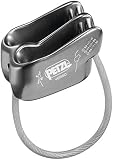
While they lack the 'auto-stop' feature of modern mechanical units, their simplicity is their greatest asset in emergency situations or alpine environments where weight and reliability are the primary concerns. Many climbers appreciate the PETZL Verso for its lightweight, straightforward geometry, which handles dual-rope setups common in multi-pitch settings. Because these devices are essentially passive, they require the user to be highly skilled in managing friction. Always inspect the device for sharp edges before use, as years of rope abrasion can create burrs that damage your gear, a point often covered in our climbing gear FAQ. The lack of mechanical parts means longevity is governed solely by the rate of aluminum wear from gritty rope passes.
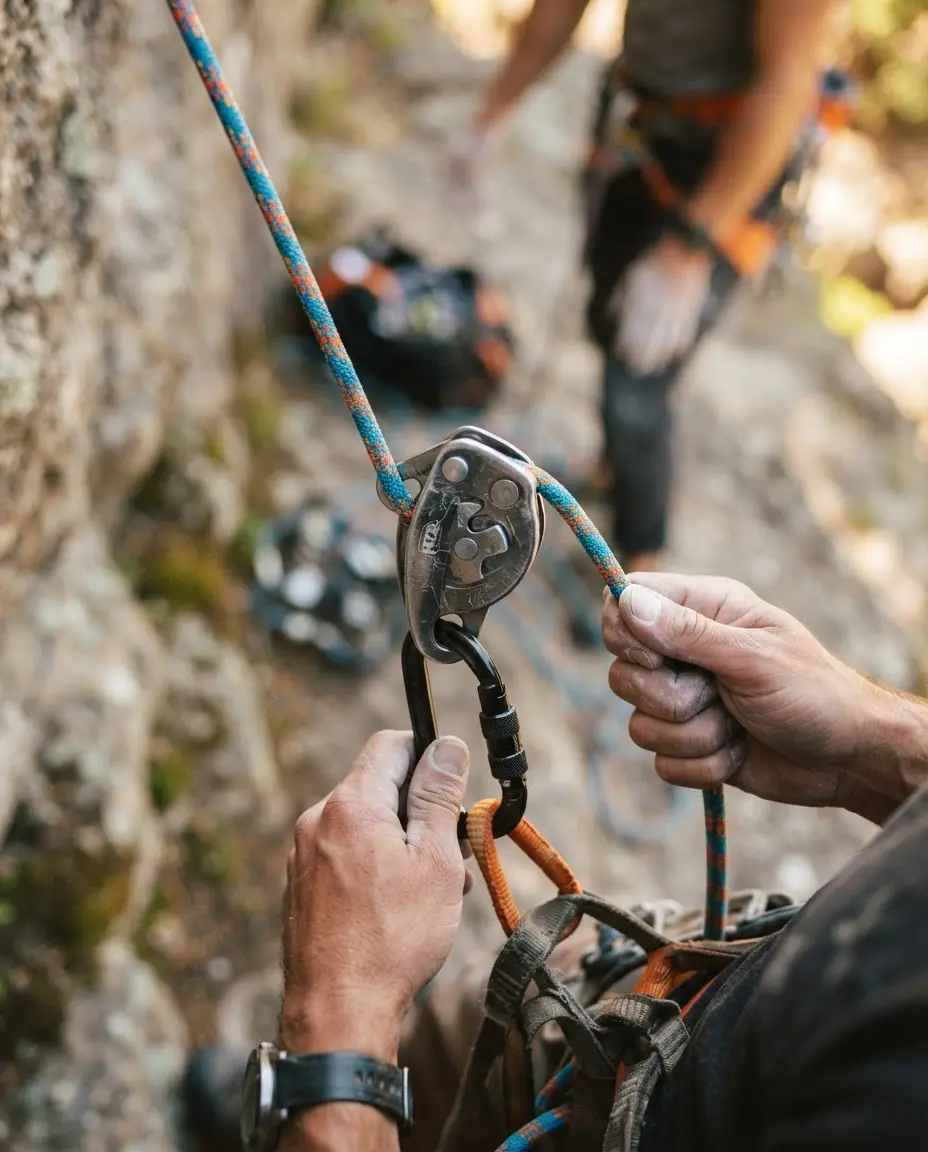
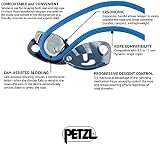
Assisted-braking devices take the manual concept and add a mechanical assist. When a climber falls, the internal mechanism—usually a pivoting cam—responds to the sudden tension by pinching the rope against a steel friction plate. The PETZL GRIGRI and the PETZL Gray GRIGRI 3 are the industry standards for this category, specifically designed for single-rope sport climbing. These devices are exceptionally effective at offloading physical tension from the belayer, making them a popular choice for gym climbing, projecting routes, and long days of hangdogging.
While they provide an 'assist,' it is vital to remember that these are not 'auto-belay' devices. You must still maintain a firm grip on the brake strand. The mechanical cam is meant to provide extra security, not to replace the fundamental safety rule of never letting go of the rope. Using an assisted device incorrectly can lead to a false sense of security, which is one of the common mistakes to avoid.
These devices are more complex than their tubular counterparts. They contain moving parts like springs, handles, and cams, which means they are heavier and more expensive. For instance, the PETZL GRIGRI is a more significant investment than a passive plate. They also have strict requirements regarding rope diameter; using a rope that is too thin might result in the cam not engaging effectively, while a rope that is too thick will cause excessive friction and make it difficult to pay out slack smoothly. Always consult the manufacturer's manual to ensure your rope is within the device's specified range before you start your climb. For a deeper look at gear compatibility, check out our blog on climbing gear.
Every belay device has a specific range of rope diameters it is designed to handle. Using a rope outside of these specs can result in either insufficient friction or a jammed device, creating a critical safety hazard.
Comparing Versatility and Use Cases
Choosing the right device involves balancing your climbing objectives against your technical experience. If you are regularly tackling multi-pitch routes that require rappelling on two ropes, a versatile manual device like the PETZL REVERSO is hard to beat. Its asymmetrical V-shaped friction grooves are designed to modulate the holding power, making it easier to control a descent on two thin half ropes or a single thick rope. It is this multi-mode capability—leader belaying, top-roping, and rappelling—that makes it a staple for climbers who move between different types of terrain.
In contrast, if your goal is predominantly high-volume sport climbing, the mechanical efficiency of an assisted-braking device often outweighs the versatility of a tube device. Catching dozens of falls in a day is significantly less fatiguing when the hardware absorbs the bulk of the force. However, sport climbers must be aware that some assisted-braking devices cannot handle two ropes, which limits their use in mountaineering or complex traditional climbing scenarios.
Before finalizing your purchase, ensure your choice aligns with the manufacturer's standards. Certification labels like CE or UIAA confirm that the device has been tested against industry benchmarks, but these standards vary. A device that is ideal for gym climbing may be completely unsuitable for a remote alpine wall. If you are unsure where to start, our climbing gear reviews provide a comprehensive look at the market. Regardless of your choice, the best device is one you are intimately familiar with, having practiced proper loading and operation repeatedly on the ground before ever heading up a route. You might also want to consult our budget planner to see how these devices fit into your total gear investment.
The relationship between rope diameter and your belay device is the most critical technical specification for safety. Every device has a rated range, typically documented in the manufacturer's user manual, which dictates the safe operation of the braking mechanism. For example, the PETZL GRIGRI is rated for single lines between 8.5 mm and 11 mm. If you attempt to use an 8.1 mm rope, the mechanical cam may not engage with enough force to hold the load, resulting in a dangerous slip. Conversely, using a 10.5 mm rope can make the rope feed feel sluggish, leading to frustration during lead belaying.
Manual devices such as the PETZL REVERSO are also sensitive to rope diameter. The V-shaped grooves are calibrated to provide specific friction based on the thickness of the cord. A thin 8.5 mm rope will glide through the grooves with much less resistance than a 10.5 mm gym rope. This means the belayer must exert more physical pressure with their brake hand on thinner ropes to compensate for the reduced surface area in contact with the device. Always confirm your rope's actual diameter with the manufacturer's tag, as many ropes are labeled slightly different from their measured dimension.
Properly managing this friction is a skill that evolves with experience. Beginners often prefer thicker ropes in the 9.8 mm to 10.2 mm range because they provide more 'bite' in the device, requiring less extreme effort from the brake hand to arrest a fall. As you become more proficient and start utilizing thinner performance ropes, you may need to adjust your braking technique to match the increased rope speed. For those concerned about gear lifespan, maintaining your ropes by avoiding contact with abrasive dirt and grit is as important as choosing the correct hardware. Remember to keep your hardware clean and free of grime, as debris can interfere with the camming action of assisted devices.
Regardless of whether you choose an assisted-braking or manual device, practice your technique on the ground until it is muscle memory. Never rely on the mechanical assist to replace a firm grip on the brake strand.
Maintenance and Retirement Guidelines
All climbing hardware has a limited lifespan, governed by exposure to wear, impact, and chemical contaminants. Manual devices are relatively simple to maintain—the most important step is regular visual inspection. Look for sharp burrs, cracks, or deep grooves in the rope-bearing channels. Since tubular devices like the PETZL Verso rely on the aluminum plate to slow the rope, these grooves will eventually form. While minor surface wear is normal, deep grooves can act as a knife edge, potentially cutting into the sheath of your rope during a high-impact fall. If you cannot smooth out a burr with a gentle file, it is time to retire the device.
Assisted-braking devices require more meticulous care because they contain complex internal linkages. The PETZL GRIGRI 3 features an internal cam that must be kept free of debris. Dirt, dust, and chalk can accumulate inside the housing, potentially slowing the movement of the cam or causing the handle to stick. Most manufacturers recommend periodic cleaning with warm, soapy water followed by thorough rinsing and air-drying in a cool, dark place. Never use aggressive solvents or lubricants, as these can damage the nylon or plastic components inside the device. Always follow the manufacturer's specific model-year instructions for cleaning.
Finally, always store your hardware away from moisture, heat, and direct UV radiation. Textile gear like climbing harnesses has a ten-year retirement age, but metal hardware is typically retired only upon evidence of structural degradation. However, if a device has been dropped from a significant height onto hard rock, it may have sustained micro-cracks that are invisible to the naked eye. In these cases, it is safer to retire the hardware than to risk failure. If you are unsure about the state of your gear, consult your manufacturer’s technical manual or contact their customer service department directly. Consistent, proactive maintenance is the hallmark of a responsible climber who keeps their life-safety gear in top condition.
When purchasing any belay device, ensuring it meets recognized international safety standards is your first line of defense. The UIAA (International Climbing and Mountaineering Federation) and the CE (Conformité Européenne) mark are the two most critical indicators that a product has been tested to withstand the forces encountered in climbing. These standards are not suggestions; they are the result of rigorous laboratory testing. When you look at the BLACK DIAMOND ATC or a Petzl device, you are paying for the quality assurance processes that go into each batch, ensuring the metal alloy is consistent and the design performs as intended under load.
Be wary of low-cost, unbranded hardware found on generic e-commerce platforms. These products often mimic the shape of reputable gear but lack the rigorous material testing and quality control required to earn UIAA or CE certification. Since life-safety gear is the only thing standing between a climber and a ground fall, the potential cost savings of 'cheap' gear is never worth the risk. Always buy from authorized, reputable retailers who can provide proof of supply chain traceability. This ensures that the item you receive is genuine and has been stored and transported according to the manufacturer's requirements.
Climbing hardware safety is also dependent on the entire system. A device is only as safe as the carabiner it is clipped into, the harness it is anchored to, and the rope moving through it. Always ensure your locking carabiner is a matching style—HMS or pear-shaped carabiners are often recommended for tubular devices because they allow the rope to feed smoothly and prevent the device from becoming jammed or twisted. If you are ever unsure about whether your current setup is compatible, consult the instruction manual provided with your belay device. The manufacturer's instructions are the final authority on how to load, use, and maintain their specific product. Taking the time to understand these technical documents is part of the sport's baseline responsibility, as it ensures you are maximizing the protective capacity of your equipment while minimizing the chance of human error during use.
1Identify your primary climbing style (e.g., sport, trad, or multi-pitch).
2Compare the friction requirements for your most common rope diameters.
3Confirm the weight and complexity you are willing to manage at the crag.
4Verify the device's compatibility with your current locking carabiner inventory.
5Read the manufacturer's manual thoroughly, specifically the section on rope loading.
6Practice loading the rope while on the ground until you can do it without looking.
7Conduct a controlled test catch at a low height to understand the device's engagement point.
Quick checklist
Check the device for the UIAA or CE certification marks on the housing.
Verify that your rope diameter falls exactly within the device's manufacturer-rated range.
Ensure your locking carabiner is compatible with the device's geometry.
Practice rope installation using the diagrams engraved on the device chassis.
Perform a partner check of your belay system before leaving the ground.
Inspect the device for sharp burrs or grooves caused by rope friction.
Follow the specific manufacturer maintenance procedures for your model.
Frequently asked questions
Are assisted-braking devices safer than manual ones?
Assisted-braking devices provide a mechanical advantage that can help catch a fall even if a belayer makes a momentary error. However, they are not foolproof. They do not replace the need for proper belay technique and a constant grip on the brake strand. Both types are safe when used according to the manufacturer's instructions, but they require different skill sets.
Can I use an assisted-braking device for rappelling?
Most single-rope assisted-braking devices, such as the GriGri, are not designed for rappelling in the same way as a tubular device. Attempting to rappel with some assisted-braking hardware can be complex and requires specialized training. If your climbing involves significant rappelling, a manual tubular device like the Reverso is usually the preferred, more intuitive choice.
How often should I replace my belay device?
There is no fixed expiration date for metal belay devices, but you must replace them if they show signs of significant wear. Specifically, check the rope-bearing channels for sharp edges or deep grooving caused by years of grit-laden rope passage. If the metal has worn down to a point where it could fray your rope, the device must be retired immediately.
Does my belay device need to be UIAA certified?
Yes, for life-safety gear like a belay device, you should always look for proof of certification. UIAA and CE markings indicate that the equipment has undergone standardized testing to ensure it meets rigorous safety requirements. Never purchase critical climbing hardware from unverified sources where these certifications cannot be traced back to the manufacturer.
Can I use any carabiner with my belay device?
No, you must use a locking carabiner, preferably one recommended by the device manufacturer. The shape of the carabiner (such as an HMS or pear shape) is critical because it dictates how the rope interacts with the belay device. An ill-fitting carabiner can rotate, jam, or prevent the device from locking correctly during a fall.
Amazon links are affiliate links; we may earn a commission at no cost to you.
Shortlists in this category
Ranked lists from our climbing gear reviews, limited to listings whose titles confirm the product type, with budget cuts where enough recorded prices sit on both sides of the line.
This page summarizes our research reviews of Amazon listings, listed specifications and captured buyer ratings. It is not a hands-on test. Scores are editorial assessments, not measured performance; prices are recorded snapshots and may change. A category can include both main products and accessories, so its overall price range is not the cost of a complete setup.
Most recent product record update: October 28, 2026. Individual records may be older; this is not a verification date for every claim. Prices on this page were read from the listings Nov 8, 2026 – Nov 11, 2026.
Choose the product type first. These groups require a match in the listing title; an import search term alone is not enough. Scores rank our recorded research assessments within each group, not independently measured performance.
Values are shown as recorded, without unit conversions or inferred compatibility. Not recorded means unknown, not absent. Prices are snapshots, not current offers. Editorial scores are research judgments, not lab results. Amazon links are affiliate links.
Before treating a comparison as complete
Which details are still unknown?
A specification appearing in a listing is not independent verification. These counts show which shortlisted records contain the same field; a blank record does not mean the product lacks the feature.
Included Components
Recorded for 2 of 2 shortlisted models
Present in every shortlisted record. Check units, exact variants and the current manufacturer documentation before relying on it.
Item Dimensions LxWxH
Recorded for 2 of 2 shortlisted models
Present in every shortlisted record. Check units, exact variants and the current manufacturer documentation before relying on it.
Item Package Dimensions L x W x H
Recorded for 2 of 2 shortlisted models
Present in every shortlisted record. Check units, exact variants and the current manufacturer documentation before relying on it.
Item Weight
Recorded for 2 of 2 shortlisted models
Present in every shortlisted record. Check units, exact variants and the current manufacturer documentation before relying on it.
Material
Recorded for 2 of 2 shortlisted models
Present in every shortlisted record. Check units, exact variants and the current manufacturer documentation before relying on it.
Package Weight
Recorded for 2 of 2 shortlisted models
Present in every shortlisted record. Check units, exact variants and the current manufacturer documentation before relying on it.
For life-safety gear, verify the exact model's applicable standards, manufacturer instructions and traceable authorized supply; CE marking and UIAA certification are not interchangeable.
Rope diameter must match your belay device's rated range.
Downturn and stiffness should follow your climbing, not your ego.
If a specification, certification or compatibility detail is absent, mark it as unknown and ask the seller or manufacturer. Do not substitute a star rating, an editorial score or a different model's specification.