How Much Is a Paddle Board? 2026 Price and Value Guide
Discover the true cost of paddle boarding and learn why the initial price tag is only the beginning of your water sports investment.
By the Niche Picks editorsUpdated November 9, 20268 min readDrawn from our 34 research-based paddle sports reviews
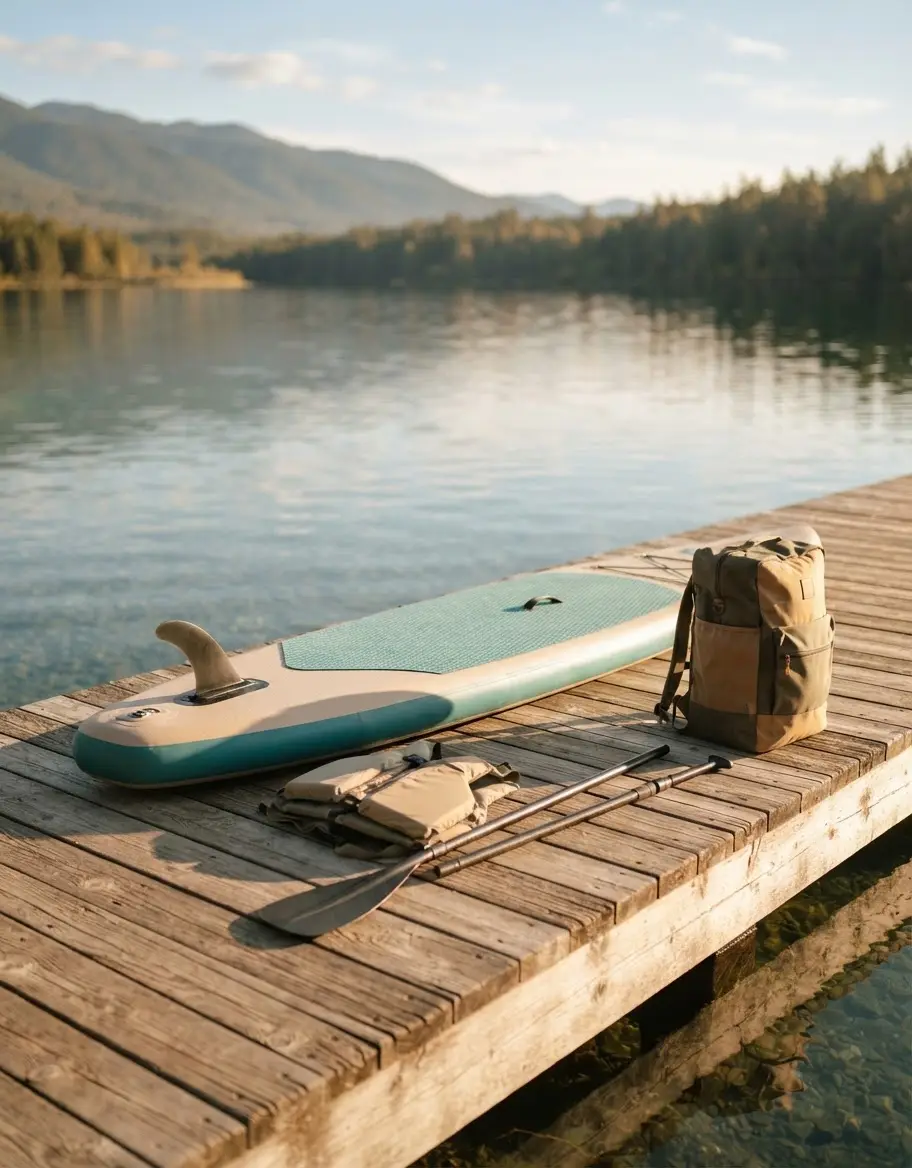
AI-generated editorial illustration; not a product or test photograph.
Short answer
Inflatable paddle boards typically range from $120 to $280 for entry-level recreational models. While you can find complete bundles at the lower end, you must budget an additional $40 to $90 for a reliable, Coast Guard-approved personal flotation device (PFD), as most starter kits do not include one.
6
Product listings discussed; not hands-on tests
6/6
Discussed listings with a recorded price
$149.99–$279.99
Recorded listing price range; not a complete setup cost
Key takeaways
Most entry-level inflatable paddle boards cost between $120 and $280.
Budget bundles include basic accessories like a pump and paddle but often skip essential safety gear.
Structural stiffness is determined by drop-stitch construction and the board's rated PSI.
Expect to invest an extra $40–$90 in a high-quality, Coast Guard-approved life vest.
Paddle weight is critical; heavy aluminum stock paddles can cause shoulder fatigue after 1,000 strokes.
Products discussed in this article
Editorial scores and recorded prices are reference points, not measurements of suitability for every use. Read each review's specifications and limitations.
SLOOSH Inflatable Stand Up Paddle Board for Adult$179.99
Comparison of Popular Budget-Friendly SUP Options
Product
Price
Length
Width
Max Capacity
Roc 10'6"
$219.99
10' 6"
33"
350 lbs
Skatinger 11'6"
$279.99
11' 6"
35"
450 lbs
SereneLife 10'6"
$159.90
10' 6"
32"
350 lbs
Niphean 10'6"
$169.97
10' 6"
33"
450 lbs
iTAOSTAR 12'
$149.99
12'
35"
410 lbs
SLOOSH 10'6"
$179.99
10' 6"
33"
300 lbs
Understanding the Market Price for Inflatable SUPs
When researching how much is a paddle board, you will find that the recreational market is heavily dominated by inflatable stand-up paddle boards (SUPs) priced between $120 and $280. These boards generally utilize polyvinyl chloride (PVC) shells with drop-stitch internal cores, which allow them to remain rigid when inflated to their recommended pressure. The price difference between an entry-tier board like the SLOOSH 10'6" Inflatable Paddle Board and a more robust, stable platform like the Skatinger 11'6" SUP usually reflects the quality of the included accessories, the density of the PVC materials, and the warranty support provided by the brand.
Low-end boards ($120–$160) are designed for casual, seasonal use and often include basic, heavier aluminum paddles.
Mid-tier packages ($170–$250) often offer better-refined accessories, such as dual-action pumps that make the setup process significantly less exhausting.
Premium recreational boards ($250+) tend to feature wider beams for stability, higher load capacities, and occasionally better-constructed fin systems like the universal US fin box found on the Skatinger 11'6".
While finding an inexpensive board is straightforward, buyers should remain cautious about the long-term durability of the seams and valves. It is often wise to read our Paddle sports buyer's guide to understand how these construction variables impact your actual time on the water. Remember that these boards represent the hull only; as noted in our Best Paddle Board: 6 Inflatable SUPs Worth Buying summary, the overall value is dependent on the total kit performance, including the pump's efficiency and the weight of the provided paddle.
One of the most common mistakes to avoid in this hobby is assuming that the bundled gear in a starter kit is all you need to be legal and safe. Almost every sub-$300 package—including the popular Roc 10'6" Inflatable SUP—omits a personal flotation device (PFD). Maritime authorities generally classify stand-up paddle boards as vessels, which means you are legally required to carry an approved buoyancy aid on navigable waterways.
Do not buy the cheapest vest; select a Coast Guard-approved PFD that fits your body type correctly.
High-back designs, similar to the Onyx Kayak Fishing Life Jacket, are excellent for SUP users because they prevent the vest from riding up against your back while paddling.
Proper fit is non-negotiable; test the straps on land to ensure the vest does not slide upward when you submerge or float in the water.
Allocating $50 to $90 for a comfortable, certified life jacket ensures you are compliant with local laws and provides a necessary safety net for unforeseen circumstances. If you are uncertain about how to choose the right gear, browsing our Paddle sports FAQ can clarify these legal requirements. Safety equipment is an investment in your well-being, and it should never be treated as an optional add-on to the board's purchase price. For a more comprehensive look at overall budget planning, visit our budget planner to calculate your complete out-of-pocket costs.
Federal and state laws often require you to carry a US Coast Guard-approved PFD while paddle boarding. Do not rely on cheap, uncertified flotation vests as they may not provide adequate safety in an emergency.
Does paddle weight impact my performance?
It is easy to ignore the paddle when you are focused on the cost of the board, but paddle weight is felt acutely after 1,000 strokes. Most boards under $250, such as the iTAOSTAR 12'x35" SUP or the Niphean 10'6" kit, include entry-level aluminum shaft paddles. While these are durable and corrosion-resistant, they carry a high swing weight that can lead to shoulder and wrist fatigue during sessions lasting longer than an hour.
Aluminum paddles are excellent backups but cause rapid muscle fatigue on long tours.
Fiberglass or carbon-composite paddles significantly reduce cumulative strain by lowering the weight moved with every stroke.
If you find yourself paddling several times a week, you will likely want to upgrade to a lighter paddle within your first season. This is a common realization among many enthusiasts who initially entered the sport with a standard budget bundle. We often discuss this in our buying tips section, where we emphasize that a lighter paddle is one of the most effective upgrades for increasing your endurance on the water. When shopping, keep in mind that the total cost of ownership includes this inevitable accessory upgrade as you progress from a beginner to a more frequent, casual paddler.
Structural rigidity is the defining factor of a quality ride, and it is governed by the combination of drop-stitch internal density and operating PSI. Most budget boards do not explicitly list their recommended PSI in the marketing copy, but you should always strive to reach the manufacturer’s specified target. For a board like the SereneLife 10'6" SUP, failing to reach the proper pressure can lead to mid-hull sagging, which significantly increases drag and reduces the board's stability.
Check the valve bezel or the provided manual upon arrival to find the exact recommended PSI, usually between 12 and 15 PSI.
Use a dual-action pump to reach the necessary pressure without excessive physical exertion.
Always rinse your board with fresh water and store it dry to protect the seam integrity and ensure the longevity of the PVC material.
As you look into Best Inflatable Paddle Board: 6 Top Picks, you will notice that the most consistent performers are those that hold their form under load. If your board feels soft underfoot while standing, it is likely under-inflated, which affects not only its glide speed but also your balance. Developing good habits—like checking pressure before every launch and properly cleaning the gear after use—will prevent many of the common mistakes to avoid and keep your initial investment in good condition for years to come. If you encounter issues, refer back to our Paddle sports FAQ for troubleshooting tips on inflation and maintenance.
Inflatable paddle board performance depends on reaching the recommended inflation pressure (typically 12–15 PSI). Use the gauge on your pump to ensure your board is rigid enough to perform well on the water.
What should I look for in a complete paddle board kit?
A successful paddle boarding experience relies on more than just the hull. When choosing between different packages, evaluate the utility of the included accessories. A kit like the Niphean 10'6" provides a full bundle, but you must assess whether the included backpack has durable zippers and if the pump features a clear gauge. Having a reliable pump is vital; without a dual-action pump, reaching the 12–15 PSI required to make the board perform correctly can be exhausting and discouraging for beginners.
Evaluate the fin system: removable fins are easier to pack and safer for shallow water launches.
Check for D-rings: these are essential for securing extra dry bags or attaching a kayak seat for tandem flexibility.
Assess the repair kit: ensure it includes at least a wrench for tightening valves, as vibrations can loosen them over several seasons.
Beyond the hardware, consider the warranty. As we highlight in our category of paddle sports reviews, a multi-year warranty is a rare but valuable find in the sub-$200 segment. Brands that offer three-year warranties demonstrate more confidence in their seam welding and construction quality. Use our budget planner to account for these subtle differences, as a slightly higher initial cost might save you from replacing subpar accessories or faulty valves within your first year of ownership. Investing in quality from the start often results in a more enjoyable and safer time on the water.
Paddle boarding is a sport with low entry costs but potential hidden maintenance requirements. Beyond the initial purchase of the board, leash, and paddle, you should plan for the eventual replacement of wearable parts. High-pressure pumps, leash Velcro, and even the PVC material itself can degrade over time due to UV exposure and friction. Our Paddle sports FAQ covers common maintenance queries, but the best protection is proactive care.
Never leave an inflated board in direct sunlight for long periods, as excessive heat can over-pressurize the chamber.
Keep your board away from sharp rocks and barnacles during shore landings.
Invest in a waterproof bag to protect your phone and keys, as standard dry bags provided in kits may not withstand total submersion.
If you find yourself moving to more challenging waters or longer touring distances, consider upgrading to a board with double-layer drop-stitch construction for increased durability. You might find useful comparisons in our guide Are inflatable kayaks any good? if you find that your paddling needs are shifting toward other types of watercraft. Always remember that the cost of your sport isn't just the sticker price on the board; it's the sum of your investment in safety gear, reliable propulsion, and regular maintenance. By building a set of equipment that you can trust, you will maximize your time on the water and avoid the frustration of having to repair or replace gear during the peak of the summer season.
Step by step
1Unpack your board and check for all components, specifically the pump, leash, and fin.
2Identify the recommended operating PSI, typically found near the valve or in the manual.
3Attach the pump hose firmly and inflate the board to the required pressure target.
4Secure the center tracking fin into its box to ensure straight-line stability.
5Put on your Coast Guard-approved PFD before stepping onto the water.
6Attach the ankle leash to your calf to keep the board tethered during falls.
Quick checklist
Verify the maximum PSI rating in your manual before inflating.
Budget for a US Coast Guard-approved PFD (Type III or higher).
Inspect the valve and fin box components upon delivery.
Consider the weight of the included paddle; aim for fiberglass if you plan on long tours.
Ensure you have a reliable dual-action pump to reach pressure efficiently.
Rinse the board with fresh water after every session to protect seams.
Frequently asked questions
Are cheaper paddle boards worth it?
Cheaper inflatable paddle boards are excellent for occasional recreational use on calm lakes. While they may lack the high-end material stiffness or lightweight accessories of premium models, they provide a very low barrier to entry for beginners. Always inspect the seams and valves regularly to ensure your budget-friendly investment remains safe.
What is the most important accessory to buy besides the board?
The most important accessory is a high-quality, Coast Guard-approved personal flotation device (PFD). Many starter kits do not include one, and it is a non-negotiable safety item required by law in most areas. A good PFD ensures buoyancy and safety in the event of a fall or equipment failure.
How often should I inflate and deflate my board?
You can inflate and deflate your board as often as needed for transport. Modern inflatable SUPs are designed to withstand hundreds of cycles. The most important thing is to rinse off sand or salt after each use and ensure the board is completely dry before rolling it up for long-term storage.
Why is my paddle board bending in the middle?
A bending board is typically caused by under-inflation. Even if the board feels firm to the touch, it likely requires higher PSI to achieve the structural rigidity necessary to prevent deflection under your body weight. Always check the manufacturer's maximum PSI and ensure you are pumping to that specific target.
How long should a beginner paddle board be?
Most beginner boards are between 10 feet and 11 feet in length. This size provides a good balance between primary stability, which makes standing up easier, and maneuverability. A width of at least 32 to 33 inches is also highly recommended for novices to ensure they have enough deck space.
Amazon links are affiliate links; we may earn a commission at no cost to you.
Shortlists in this category
Ranked lists from our paddle sports reviews, limited to listings whose titles confirm the product type, with budget cuts where enough recorded prices sit on both sides of the line.
This page summarizes our research reviews of Amazon listings, listed specifications and captured buyer ratings. It is not a hands-on test. Scores are editorial assessments, not measured performance; prices are recorded snapshots and may change. A category can include both main products and accessories, so its overall price range is not the cost of a complete setup.
Most recent product record update: October 3, 2026. Individual records may be older; this is not a verification date for every claim. Prices on this page were read from the listings Nov 8, 2026 – Nov 12, 2026.
Choose the product type first. These groups require a match in the listing title; an import search term alone is not enough. Scores rank our recorded research assessments within each group, not independently measured performance.
Values are shown as recorded, without unit conversions or inferred compatibility. Not recorded means unknown, not absent. Prices are snapshots, not current offers. Editorial scores are research judgments, not lab results. Amazon links are affiliate links.
Before treating a comparison as complete
Which details are still unknown?
A specification appearing in a listing is not independent verification. These counts show which shortlisted records contain the same field; a blank record does not mean the product lacks the feature.
Item Dimensions L x W
Recorded for 2 of 2 shortlisted models
Present in every shortlisted record. Check units, exact variants and the current manufacturer documentation before relying on it.
Material Type
Recorded for 2 of 2 shortlisted models
Present in every shortlisted record. Check units, exact variants and the current manufacturer documentation before relying on it.
Maximum Weight Recommendation
Recorded for 2 of 2 shortlisted models
Present in every shortlisted record. Check units, exact variants and the current manufacturer documentation before relying on it.
Drop-stitch construction and PSI rating decide board stiffness.
Paddle weight is felt 1,000 strokes later.
Buy the Coast Guard-approved PFD, not the cheapest vest.
If a specification, certification or compatibility detail is absent, mark it as unknown and ask the seller or manufacturer. Do not substitute a star rating, an editorial score or a different model's specification.