The best paddle board for most casual riders is a stiff, 10'6"-plus inflatable SUP with a stable deck, usable accessories, and room in the budget for a Coast Guard-approved PFD.
By the Niche Picks editorsUpdated October 7, 20269 min readDrawn from our 30 research-based paddle sports reviews
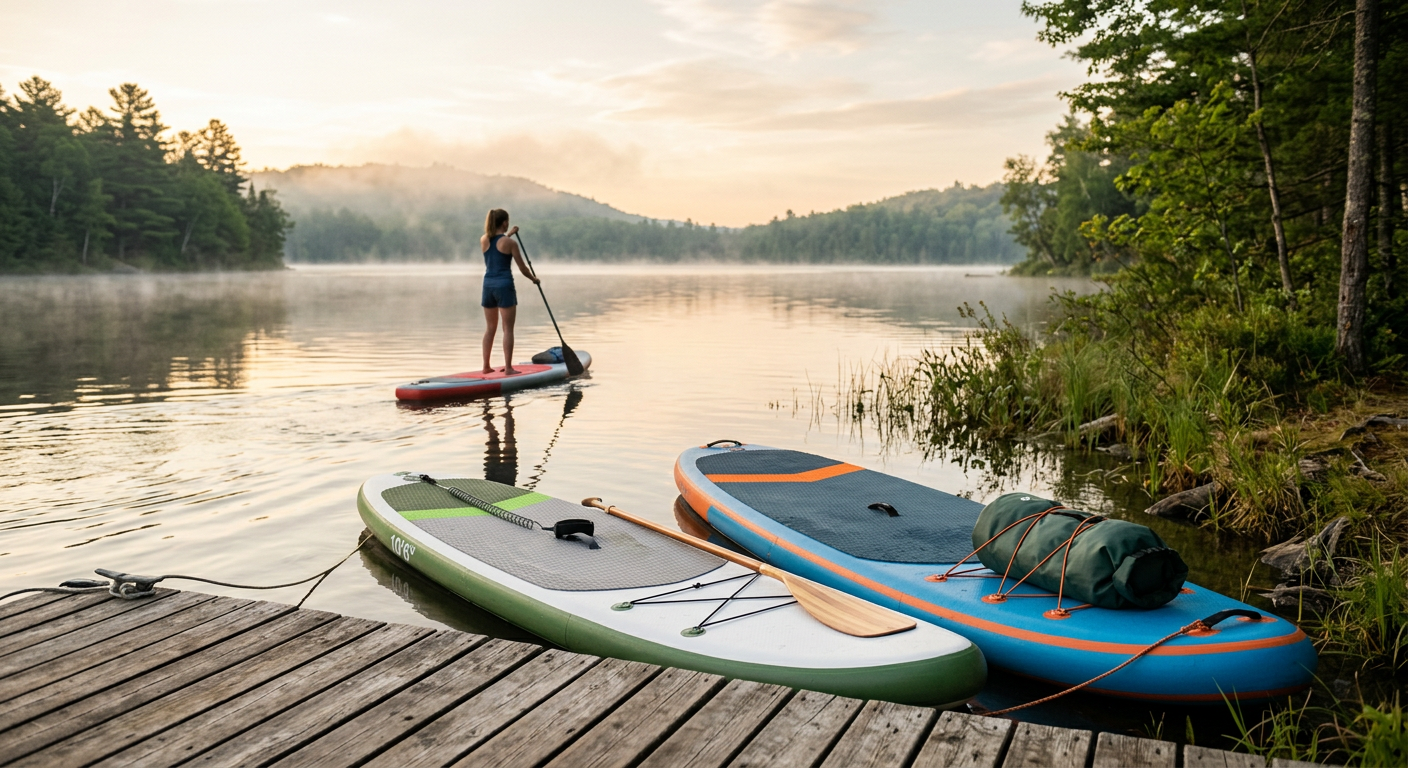
AI-generated editorial illustration; not a product or test photograph.
Short answer
The best paddle board in our reviews is the Skatinger 11'6×35" Super Wide Inflatable Paddle Board for riders who prioritize stiffness, stability, and carrying capacity: it is rated to 20 PSI and 450 pounds. For a more typical solo all-around board, the SLOOSH 10'6" offers a 33-inch-wide, drop-stitch platform with a stated 12–15 PSI working range at $142.49. Every pick below is an inflatable SUP for calm-water recreation, not a kayak or boat.
6
Product listings discussed; not hands-on tests
6/6
Discussed listings with a recorded price
$142.49–$259.99
Recorded listing price range; not a complete setup cost
Key takeaways
Skatinger is the strongest all-around structural pick because its 20 PSI ceiling is explicitly stated, unlike many budget SUP listings.
A 10'6" by 33" board is a practical recreational all-around size, balancing beginner stability with more glide than a 10-foot board.
A 35-inch-wide board is especially steady for larger riders, children, dogs, yoga, or fishing, but its extra drag makes it slower to paddle.
Drop-stitch construction matters, but PSI matters too: inflate only to the exact pressure specified in the board’s manual or valve markings.
The stock paddle is a common compromise in starter kits; its weight becomes noticeable over long outings, so frequent paddlers may eventually want a lighter paddle.
A leash, pump, and bag do not replace personal flotation: budget separately for a properly fitting Coast Guard-approved PFD.
Products discussed in this article
Editorial scores and recorded prices are reference points, not measurements of suitability for every use. Read each review's specifications and limitations.
Key specifications for the best inflatable paddle boards in our reviews
Product
Listed price
Dimensions
Stated capacity
PSI information
Skatinger 11'6×35"
$259.99
138" L × 35" W × 6"
450 lb
Up to 20 PSI
SLOOSH 10'6"
$142.49
126" L × 33" W × 6"
300 lb listed; documentation also claims 450 lb
12–15 PSI recommended; up to 20 PSI
FBSPORT 11'
$169.99
11' L × 33" W × 6"
160 kg
15 PSI maximum
SereneLife SLSUPB06
$169.99
10'6" L × 32" W × 6"
350 lb
Not stated
Roc 10'6"
$219.99
126" L × 33" W × 6"
350 lb
Not stated
Niphean Extra Large
$229.99
132" L × 33" W × 6"
Exceeds 500 lb
Not stated
What is the best paddle board overall?
The Skatinger 11'6×35" Super Wide Inflatable Paddle Board is our best overall pick for recreational buyers who put stability and structural confidence ahead of speed. Its 11-foot-6-inch length, 35-inch width, 6-inch thickness, and 450-pound stated maximum weight recommendation create a notably large platform for a solo rider with gear, a larger paddler, or family use. It is also one of the few reviewed boards with a stated inflation ceiling: up to 20 PSI.
That number matters. An inflatable SUP’s drop-stitch core holds its shape only when it is inflated to the manufacturer’s instructions. A higher stated pressure ceiling does not automatically prove that one board is better made than every alternative, but it gives this Skatinger a clearer stiffness specification than boards whose PSI information is absent. Its large 10-inch center fin uses a standard US fin box, a useful practical advantage for riders who may later want a lower-profile fin for shallow water.
The compromise is easy to predict from the dimensions: a 35-inch board creates a lot of drag. This is a platform for relaxed cruising, fishing, yoga, children, dogs, and balance-first outings—not fast, efficient touring. The listed $259.99 price includes a high-pressure pump, 10L dry bag, carry sling, and 1680D pack, but it does not include a PFD.
The SLOOSH Inflatable Stand Up Paddle Board is the best budget paddle board in this comparison because it pairs a low $142.49 listed price with unusually clear pressure information. It measures 10'6" by 33" by 6", the classic all-around recreational format: wide enough to make first standing attempts less intimidating, while long enough to be more practical for general flatwater use than a shorter 10-foot design.
Its FortaFusion construction is described as an internal drop-stitch core with double-layer mesh-reinforced sidewalls. More importantly, SLOOSH states a recommended working range of 12 to 15 PSI and a maximum of 20 PSI. That gives buyers a meaningful target during manual pumping and avoids the guesswork attached to many low-cost boards. Inflate only according to the exact-model instructions; never assume another board’s pressure rating applies here.
The starter kit includes a backpack, pump, paddle, leash, phone pouch, three fins, and repair kit. The paddle’s material and weight are not stated, so its long-distance ergonomics are unknown. That is worth taking seriously: paddle weight is felt after 1,000 strokes, and an accessory upgrade can make a larger difference than expected once outings become longer.
The listed 300-pound maximum weight recommendation conflicts with a 450-pound claim elsewhere in its documentation. Treat the formal listed maximum as the conservative reference until SLOOSH confirms the correct exact-model limit. See more buying tips and common paddle sports mistakes to avoid before launching.
Which board is best for yoga, fishing, and stability?
Choose a wider board if your priority is standing confidence rather than speed. The Skatinger’s 35-inch width is the strongest fit here, but the FBSPORT 11' Premium Stand Up Paddle Board is a lower-cost alternative for basic deck yoga and calm-water recreation. At $169.99, it is 11 feet long, 33 inches wide, and 6 inches thick, with brushed PVC drop-stitch construction and a stated maximum pressure of 15 PSI.
The 33-inch deck supplies a broad standing area, while the board’s square-ish, stability-led outline favors low-speed activities over efficient forward glide. FBSPORT lists a 160-kilogram payload capacity, roughly 353 pounds, and uses a 2+1 fin arrangement with a removable center fin. Those traits make it a reasonable fit for a single rider seeking a stable, stationary-friendly platform on protected water.
The limits matter just as much. Its blunt shape pushes water instead of slicing through it, so headwinds, chop, and longer routes will demand more effort. The included paddle has an aluminum shaft, and that added swing weight can contribute to shoulder fatigue on extended trips. This is therefore a value choice for occasional recreation, not the obvious choice for someone planning long touring sessions.
Regardless of board width, do not confuse initial stability with suitability for rough conditions. Start on sheltered water, learn local conditions, and carry essential gear securely. Our Paddle sports FAQ explains more beginner questions, while our budget planner can help account for the board, PFD, and any future paddle upgrade.
Is a 10'6" paddle board the best size for beginners?
For many adult beginners paddling calm lakes, gentle rivers, or protected bays, yes: a 10'6" by roughly 32- to 33-inch inflatable SUP is the most versatile starting size in this group. It provides a stable footprint without becoming as wide and drag-heavy as a 35-inch family platform. The SereneLife SLSUPB06 is a clear budget example, measuring 10'6" long, 32 inches wide, and 6 inches thick, with a stated 350-pound capacity and a listed price of $169.99.
Its drop-stitch internal structure and PVC skin are the right basic construction approach for an inflatable SUP. The 32-inch beam and rounded nose support primary stability, while the three-fin arrangement helps it hold direction. At 13.9 pounds, its listed item weight is also notably low for a full-size board, making carrying and packing less burdensome than with a larger platform.
There is one important unknown: SereneLife does not state the recommended operating PSI in the recorded specifications. Stiffness depends on both the drop-stitch core and correct inflation pressure, so buyers should check the manual and valve markings before use. Do not inflate based on a generic online recommendation. The included three-piece aluminum paddle is durable basic equipment, but it is not a lightweight touring solution.
At 10 feet, boards turn more easily but generally sacrifice some glide and straight-line tracking. At 11'6", they gain waterline length but are less nimble and often wider. Compare specifications side by side with our product comparison tool, and read the full SereneLife SLSUPB06 review for its package details.
What should you know about Roc and Niphean paddle boards?
The Roc Inflatable Stand Up Paddle Board and Niphean Extra Large Inflatable Paddle Board both appeal to shoppers who want an accessory-equipped recreational SUP, but each leaves a key stiffness detail unconfirmed. Roc is a 10'6" by 33" by 6" PVC board rated to 350 pounds and listed at $219.99. It has a three-year manufacturer warranty and a high 4.8 rating from more than 18,000 buyer reviews. For casual lake and calm-harbor paddling, its broad deck is a sensible shape.
However, Roc’s recorded specifications do not state its recommended or maximum PSI. Because pressure and internal drop-stitch construction govern resistance to center sag, verify the exact valve and manual specifications before deciding whether it meets your needs. The bundled paddle’s weight and shaft composition are also not published, so it should be considered basic kit gear rather than a known performance paddle.
Niphean’s $229.99 Extra Large board is for a different job: tandem or family recreation. It measures 11 feet by 33 inches by 6 inches, has a stated capacity exceeding 500 pounds, and includes three removable fins plus a central balanced fin. Its listed three-year guarantee is a meaningful value feature. Yet its working PSI and drop-stitch density are not stated, which is particularly relevant when multiple riders increase mid-board load.
Neither board should be selected on capacity alone. Use the conservative stated limit, distribute rider and gear weight sensibly, and confirm inflation guidance before every trip. Readers weighing these formats can start with our Roc SUP review and the broader Paddle sports buyer’s guide.
Start with the water and the rider, not the accessory count. These inflatable paddle boards are aimed at calm recreational water; wide all-around shapes are forgiving, but none of the reviewed listings establish them as rough-water or expedition boards. Choose a 10'6" by 32- to 33-inch shape for general solo use, or a 35-inch shape when a passenger, pet, fishing setup, or maximum stability is the primary goal.
Next, check construction evidence. Drop-stitch construction is the essential internal structure for an inflatable SUP, but it is only half the story. Confirm the model-specific working PSI in its manual or valve marking, use the supplied gauge where applicable, and never exceed the manufacturer’s limit. Among these picks, SLOOSH gives a 12–15 PSI operating range and up to 20 PSI maximum; FBSPORT lists 15 PSI maximum; Skatinger lists up to 20 PSI. Several otherwise appealing boards omit this information, making pre-purchase verification essential.
Finally, budget for items that matter after checkout. A leash can help keep a board nearby, but it is not a personal flotation device. Buy a Coast Guard-approved PFD rather than the cheapest vest, and select one that fits and permits a normal paddle stroke. Carry water and weather-appropriate clothing, secure loose equipment, and inspect the board, fin, leash, and valve before entering the water.
Choose a board width based on your priority: roughly 32–33 inches for general all-around use or 35 inches for maximum stability.
Confirm the exact-model recommended PSI and maximum PSI in the manual or on the valve before the first inflation.
Compare the stated rider-and-gear capacity with your real load, using the conservative figure when documentation conflicts.
Inspect the valve, seams, leash, fin hardware, and pump gauge before each launch.
Buy and wear or carry a properly fitting Coast Guard-approved PFD as required for your waterway and activity.
Secure water, phone, keys, and layers in appropriate deck storage or a dry bag.
Expect a basic included paddle to be the first component worth upgrading if you begin taking longer trips.
Frequently asked questions
What size paddle board is best for a beginner?
A 10'6" board around 32 to 33 inches wide is a practical beginner all-around format for calm water. It offers more standing stability than a narrow board while retaining better glide and maneuverability than many extra-wide family platforms. The SereneLife SLSUPB06, Roc, and SLOOSH are examples of this general size.
How much PSI should an inflatable paddle board have?
Use only the PSI specified for your exact board. In this comparison, SLOOSH lists 12–15 PSI as its recommended range, FBSPORT lists a 15 PSI maximum, and Skatinger lists up to 20 PSI. Several other boards do not publish PSI in the recorded specifications, so check their manual or valve marking rather than guessing.
Are 35-inch-wide paddle boards better?
They are better when primary stability and deck space matter most. The 35-inch Skatinger is suited to larger loads, yoga, fishing, children, or pets, but the broad shape creates more drag and requires more effort to maintain speed. A narrower 32- or 33-inch board is usually a more balanced choice for solo recreational cruising.
Is a 10-foot or 10'6" paddle board better?
A 10-foot SUP is generally easier to turn and may be easier to handle ashore, while a 10'6" board usually provides more glide and straighter tracking for general flatwater paddling. The best choice depends on rider size, intended distance, and whether agility or all-around cruising matters more.
Do I need to upgrade the paddle included with an inflatable SUP?
Not necessarily for short, occasional outings, but it is a sensible future upgrade for frequent or distance-focused paddlers. Several reviewed starter packages use aluminum paddles or do not publish paddle weight. Weight and swing weight become noticeable over repeated strokes, while a lighter paddle can reduce fatigue over longer sessions.
Do paddle board packages include a life jacket?
None of the selected SUP packages is listed with a personal flotation device. A pump, leash, bag, and repair kit are useful but do not replace flotation equipment. Add a properly fitting Coast Guard-approved PFD to your budget and follow the rules that apply on the water where you paddle.
Amazon links are affiliate links; we may earn a commission at no cost to you.
Sources and limits
This page summarizes our research reviews of Amazon listings, listed specifications and captured buyer ratings. It is not a hands-on test. Scores are editorial assessments, not measured performance; prices are recorded snapshots and may change. A category can include both main products and accessories, so its overall price range is not the cost of a complete setup.
Most recent product record update: October 3, 2026. Individual records may be older; this is not a verification date for every claim.
Choose the product type first. These groups require a match in the listing title; an import search term alone is not enough. Scores rank our recorded research assessments within each group, not independently measured performance.
Drop-stitch construction and PSI rating decide board stiffness.
Paddle weight is felt 1,000 strokes later.
Buy the Coast Guard-approved PFD, not the cheapest vest.
If a specification, certification or compatibility detail is absent, mark it as unknown and ask the seller or manufacturer. Do not substitute a star rating, an editorial score or a different model's specification.


 Skatinger 11'6×35" Super Wide Inflatable Paddle Board, Ultra Stable Stand Up Paddleboards