Our top 4K projector picks prioritize comparable brightness, room fit, black levels, and installation—not resolution marketing alone.
By the Niche Picks editorsUpdated October 7, 20268 min readDrawn from our 31 research-based projectors & home theater reviews
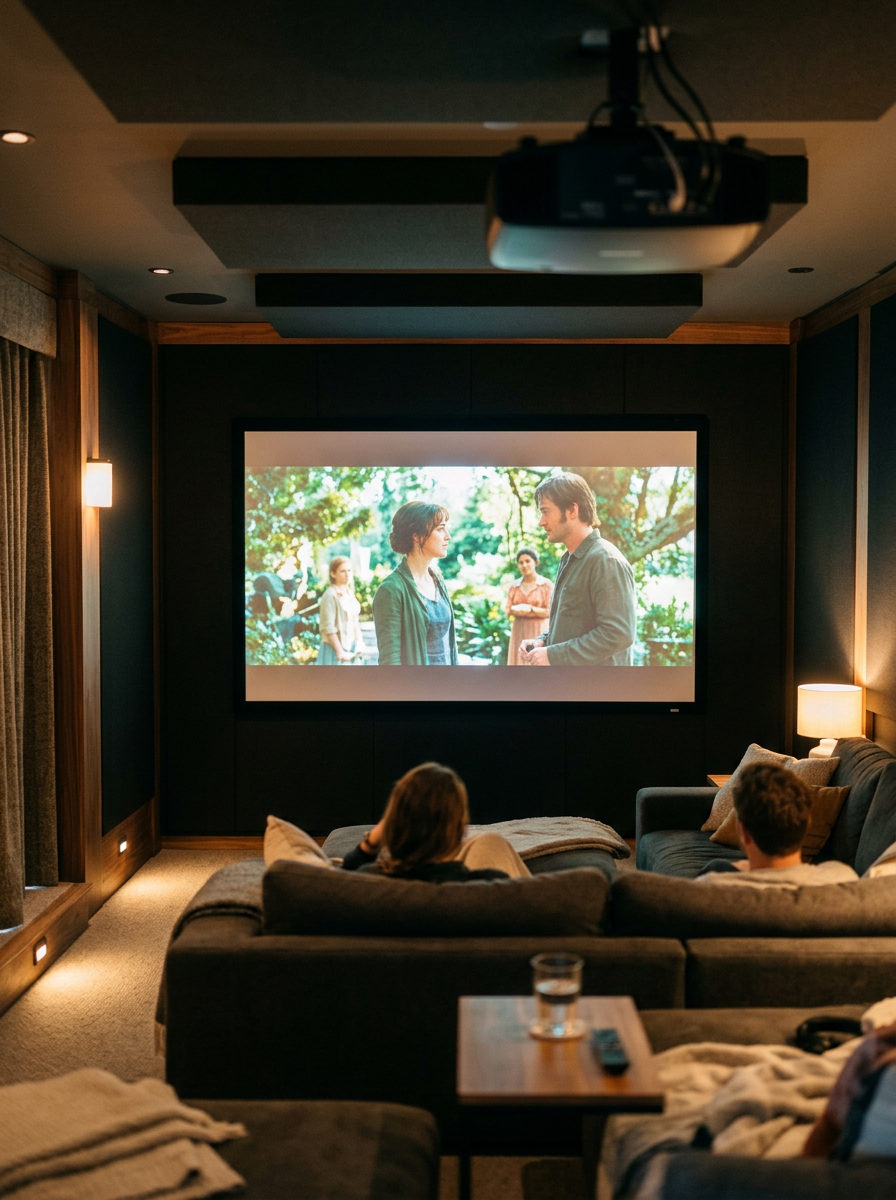
AI-generated editorial illustration; not a product or test photograph.
Short answer
The XGIMI HORIZON 20 is the best 4K projector in our reviews for most buyers because it combines 3,200 ISO lumens, RGB triple-laser illumination, mechanical lens shift, optical zoom, and 4K resolution for $1,399. The AWOL VISION LTV-3000 Pro is the better ultra-short-throw choice for a TV-replacement setup, while the ViewSonic PX701-4K is the value pick for bright-room gaming.
4
Product listings discussed; not hands-on tests
4/4
Discussed listings with a recorded price
$979.99–$1,899.00
Recorded listing price range; not a complete setup cost
Key takeaways
XGIMI HORIZON 20 is our best overall pick thanks to its 3,200 ISO-lumen RGB triple-laser engine and mechanical installation controls.
For a projector placed inches from the wall, AWOL VISION LTV-3000 Pro offers 4K ultra-short-throw projection, but it needs a dedicated UST ALR screen to show its best contrast.
ViewSonic PX701-4K supplies a comparable 3,200 ANSI lumens and 240Hz gaming capability for under $1,000, with lamp replacement as the main trade-off.
Optoma UHZ36 is a conventional 4K laser alternative for ceiling-mounted media rooms, though its review history is still limited to 27 ratings.
A high resolution does not guarantee a cinematic image: native contrast, room-light control, screen material, and correct throw distance determine perceived depth.
Products discussed in this article
Editorial scores and recorded prices are reference points, not measurements of suitability for every use. Read each review's specifications and limitations.
Optoma UHZ36 4K UHD Laser HDR Home Theater Projector1,199 USD
Best 4K projector picks compared
Product
Listed price
Resolution
Listed brightness
Best for
XGIMI HORIZON 20
$1,399.00
3840 x 2160
3,200 ISO lumens
Bright dedicated media rooms needing strong color
AWOL VISION LTV-3000 Pro
$1,899.00
3840 x 2160
2,000 lumens
Living room TV replacement with ALR screen
ViewSonic PX701-4K
$979.99
3840 x 2160
3,200 ANSI lumens
Mixed-light living room gaming and sports
Optoma UHZ36
$1,199.00
3840 x 2160
3,500 ISO lumens
Ceiling-mounted family media rooms
What is the best 4K projector overall?
The XGIMI HORIZON 20 is the best 4K projector in our reviews for buyers who want a bright, flexible home projector without moving to an ultra-short-throw system. At $1,399, it has a listed 3,200 ISO-lumen RGB triple-laser light source, 3840 x 2160 resolution, and a 300-inch maximum image size.
Its most useful differentiator is installation flexibility. Mechanical lens shift and optical zoom let you align the image without relying entirely on digital correction, while its integrated gimbal-style stand supports elevation adjustment. It also supports HDMI, USB, Wi-Fi, and Bluetooth; the review notes Google TV, 240Hz refresh capability, VRR, and ALLM.
The important caveat is black level. Its quoted 100,000:1 contrast figure is dynamic laser modulation, not a native intra-scene contrast measurement. Like other DLP designs, it can show elevated black floors in dark scenes. Dark walls, controlled lighting, and an appropriate screen matter more than chasing an even higher resolution number.
Read our full projector buyer's guide before choosing a screen size, and see more home projector recommendations if your priorities differ. For most mixed-use media rooms, the HORIZON 20 offers the strongest balance of brightness, 4K detail, laser longevity, and setup convenience in this group.
For a traditional projector in a living room with some ambient light, choose the ViewSonic PX701-4K. Its 3,200 ANSI-lumen rating is especially useful because ANSI lumens are a standardized, comparable brightness measure. At $979.99, it is the lowest-priced pick here with a clearly stated ANSI-lumen figure and a 3840 x 2160 listed resolution.
The PX701-4K is particularly sensible for sports and gaming. It supports up to 240Hz operation, has dual HDMI inputs, and is positioned for low-latency play. Its 1.1x manual zoom means placement needs advance planning: the review notes that a 100-inch image requires verifying the exact throw distance before installation. It is a stationary tabletop or ceiling-mount projector rather than a grab-and-go unit.
Brightness does not solve every image-quality problem. The PX701-4K's 12,000:1 figure is dynamic contrast, and its single-chip DLP design produces more elevated blacks than a dedicated dark-room cinema enthusiast may want. Its conventional lamp is rated for 6,000 hours, so eventual lamp replacement belongs in the ownership budget.
Is an ultra-short-throw 4K projector better than a TV?
An ultra-short-throw, or UST, projector can be a compelling TV replacement when you want a 100- to 150-inch image from a cabinet directly beneath the wall. The AWOL VISION LTV-3000 Pro is our top 4K UST pick: its 0.25:1 fixed throw ratio creates a 100-inch image from 8.54 inches away and reaches 150 inches from 12.84 inches. Its listed price is $1,899.
It uses a triple-laser optical engine with separate red, green, and blue lasers, rated for 25,000 operating hours. The review cites 107% BT.2020 and 147% DCI-P3 coverage, plus Dolby Vision, HDR10+, 3D support, and Dolby Atmos support. Those are meaningful features for color-rich streaming and disc content.
But UST projection is not plug-and-play on any wall. The listed 2,000-lumen output is not explicitly identified as ANSI standardized, and the stated 2,500:1 contrast ratio is moderate. A dedicated UST ambient-light-rejecting screen is the appropriate companion; a normal matte-white screen or painted wall can undermine contrast substantially. Screen gain and ALR behavior must match the projector's UST light path and your lighting, so there is no universal screen “improvement” multiplier.
The Optoma UHZ36 is a good fit for a buyer who wants a conventional 4K laser projector for a permanent desktop or ceiling-mounted family media room. It is listed at $1,199, with 3840 x 2160 resolution, a 3,500-ISO-lumen claim, HDR support, Filmmaker Mode, and a laser source rated for up to 30,000 hours.
Laser illumination is the main reason to consider it over the lamp-based ViewSonic PX701-4K. You avoid routine bulb replacements and get fast startup characteristics associated with solid-state projection. The projector accepts familiar 4K sources including 4K Blu-ray players, Apple TV 4K, PS5, Roku 4K, and Xbox Series X, and its maximum listed image size is 300 inches.
Still, treat the headline specifications carefully. Its 1,500,000:1 contrast claim relies on dynamic laser dimming rather than native DLP black-level performance. The review also advises that calibrated ANSI brightness will fall below a manufacturer ceiling rating. Its 4.3-star average is based on only 27 ratings, a much smaller feedback pool than the other picks.
This model makes the most sense when long laser life matters more than deep dark-room blacks. Browse all our Projectors & home theater reviews and review our buying tips before committing to a mounting position.
Why do contrast and black level matter more than 4K alone?
4K resolution describes how much fine detail a projector can address; it does not tell you how black a night sky looks, how much shadow detail remains in a dark scene, or whether a movie appears washed out in your room. Those outcomes depend heavily on native contrast, stray light, room reflections, and the screen.
Dynamic contrast numbers deserve special skepticism. They often describe how much a projector can dim or modulate its light source between very dark and very bright scenes. They do not necessarily describe the black floor within a single scene containing both highlights and shadows. The XGIMI, ViewSonic, AWOL, and Optoma picks all have caveats around DLP black-level limits or dynamic contrast specifications.
Brightness must be interpreted correctly too. ANSI lumens and ISO lumens are useful standardized measurements for comparisons; “light source lumens” are not directly interchangeable. The PX701-4K's 3,200 ANSI lumens and HORIZON 20's 3,200 ISO lumens provide stronger decision evidence than a large unqualified lumen claim.
For movie-first viewing, start by making the room darker rather than buying a brighter projector alone. Turn off direct overhead lighting, reduce reflective light-colored surfaces where practical, and select a screen suited to the projector type. A conventional ALR screen is not automatically suitable for a UST model, and positive gain can introduce trade-offs such as viewing-angle or uniformity changes.
How should you choose a 4K projector and screen together?
Choose the screen only after deciding on projector placement, desired image size, and room lighting. A screen is not a universal upgrade with a fixed brightness or contrast multiplier. Its gain, viewing cone, and ambient-light-rejection behavior interact with the projector's throw angle and the direction of room light.
For the standard-throw XGIMI, ViewSonic, or Optoma models, a matte-white screen in a dark room is the straightforward baseline. A 100-inch, 1.1-gain manual pull-down option such as the Elite Screens Manual B can be a practical budget surface, but it does not reject ambient light and its non-tensioned design may develop edge curl over time.
For the AWOL's ultra-short-throw layout, use a screen made specifically for UST projection if ambient light and contrast are priorities. Its optical layers are designed around the steep upward light path from a cabinet-mounted projector. Do not assume a generic ALR label means compatibility.
Before ordering, map the image at your planned seating distance and check the projector's throw specifications and mount requirements. Digital keystone correction can make setup easier, but physical alignment and optical adjustment are preferable when available because they preserve the projected pixel structure. If a 100-inch image feels right for your room, confirm both the width of the screen and the furniture clearance beneath it.
Measure the wall or screen location and confirm the projector's throw distance before purchasing.
Choose the target diagonal first, then calculate seating, furniture, and mount clearance around it.
Match the projector to room light using ANSI or ISO lumen figures rather than unqualified brightness claims.
Prioritize light control and native black-level performance if movies and dark scenes are your main use.
Use a UST-specific ALR screen for an ultra-short-throw setup when room-light performance matters.
Budget for the full system: screen, mount or furniture, cables, streaming source, and audio.
For lamp projectors, account for eventual replacement lamps; for laser units, verify the exact-model manufacturer instructions for installation and care.
Frequently asked questions
Is 4K worth it on a projector?
4K can be worthwhile for fine detail, large images, gaming, and high-quality 4K sources, especially at common 100-inch-and-larger screen sizes. It is not the only priority, however. A 4K projector with weak blacks, poor light control, or incorrect placement can look less cinematic than a lower-resolution model in a well-managed room.
How many lumens do I need for a 4K projector?
The answer depends on image size, screen gain, and ambient light. For comparable specifications, the 3,200 ANSI-lumen ViewSonic PX701-4K and 3,200 ISO-lumen XGIMI HORIZON 20 are the stronger options here for mixed-light use. A dark dedicated room needs less light than a daylit living room, where contrast remains difficult regardless of brightness.
Are ISO lumens the same as ANSI lumens?
They are not identical labels, but both refer to standardized brightness measurement approaches and are far more useful for comparison than unqualified light-source lumen claims. The HORIZON 20 is rated at 3,200 ISO lumens, while the PX701-4K is rated at 3,200 ANSI lumens. Always consider screen size and room light alongside the number.
Do I need an ALR screen for a 4K projector?
Not always. In a genuinely dark, light-controlled room, a matte-white screen can be appropriate. An ALR screen can help in rooms with ambient light, but its effectiveness depends on projector placement and the direction of light. UST projectors such as the AWOL LTV-3000 Pro require a UST-specific ALR design rather than a generic ALR screen.
Which is better for gaming: XGIMI HORIZON 20 or ViewSonic PX701-4K?
The ViewSonic PX701-4K is the more value-focused gaming recommendation because it pairs 3,200 ANSI lumens with 240Hz capability at $979.99. The XGIMI HORIZON 20 also lists 240Hz, VRR, and ALLM, while adding RGB triple-laser illumination, mechanical lens shift, and optical zoom for $1,399. Choose based on installation flexibility and budget.
Can the AWOL LTV-3000 Pro project onto a wall?
It can physically project onto a wall, but that is not the best route to its intended performance. Its 0.25:1 UST lens and moderate 2,500:1 listed contrast make a dedicated UST ALR screen particularly important for preserving perceived image punch and contrast. A flat, smooth wall is still preferable to a textured surface if a screen is not possible.
Amazon links are affiliate links; we may earn a commission at no cost to you.
Sources and limits
This page summarizes our research reviews of Amazon listings, listed specifications and captured buyer ratings. It is not a hands-on test. Scores are editorial assessments, not measured performance; prices are recorded snapshots and may change. A category can include both main products and accessories, so its overall price range is not the cost of a complete setup.
Most recent product record update: September 15, 2026. Individual records may be older; this is not a verification date for every claim.
Compare the same kind of projectors & home theater
Choose the product type first. These groups require a match in the listing title; an import search term alone is not enough. Scores rank our recorded research assessments within each group, not independently measured performance.
Recorded price: $1,899.00 · Editorial score: 7.9/10
Connectivity Technology
HDMI
Native Resolution
3840 x 2160
Reason to pause
High initial financial outlay
What to verify before choosing
ANSI lumens are comparable; 'light source lumens' are not.
Contrast and black level matter far more than resolution claims.
Match screen gain and ambient-light rejection to projector throw and room lighting; there is no universal improvement multiplier.
If a specification, certification or compatibility detail is absent, mark it as unknown and ask the seller or manufacturer. Do not substitute a star rating, an editorial score or a different model's specification.


 XGIMI HORIZON 20 4K RGB Triple Laser Home Projector, 3200 ISO Lumens