Design and build
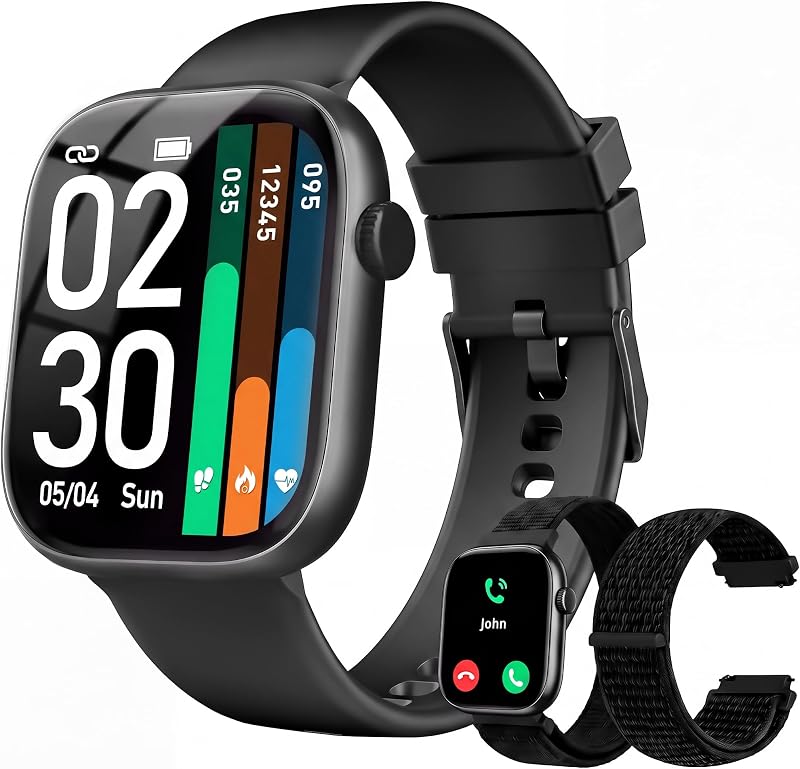
The watch utilizes a lightweight rectangular plastic chassis paired with a 1.83-inch touchscreen and dual interchangeable bands secured by a tang buckle. Navigation relies on a hybrid interface of physical buttons and touch inputs, providing adequate control during basic interactions. Durability is constrained by its material choices and an ingress protection rating of IP67, rated for immersion up to 1 meter. This specification protects against perspiration, light rain, and accidental splashes during handwashing, but the manufacturer explicitly advises against using the device in hot showers or while swimming. The fit is functional for day-to-day office and casual use, though the plastic construction will not withstand rough outdoor impacts like metal or reinforced composite alternatives. Buyers seeking a rugged enclosure or high-pressure water seals will find the physical packaging strictly aligned with entry-level standards. Overall, the hardware reflects pragmatic cost management rather than structural resilience.
Real-world performance
Fitness monitoring encompasses step counting, estimated distance, caloric expenditure, breath rate, sleep duration, stress, and menstrual tracking. Like most wrist-based optical sensors, the heart rate monitor is adequate for steady-state activity but exhibits latency during rapid interval changes, requiring an external chest strap for serious conditioning. The device lacks onboard GPS, relying instead on connected phone tracking or internal step estimations to calculate outdoor distance, which inherently reduces route precision. Bluetooth connectivity facilitates on-wrist voice calls and basic assistant commands through an integrated microphone and speaker. While notification delivery functions reliably across common messaging platforms, active sensor polling and frequent call handling will accelerate battery depletion. Prospective buyers should note that the technical specifications do not detail exact milliamp-hour capacity or dedicated sport-mode endurance figures. Buyers should verify runtime longevity when running multi-sport tracking routines alongside continuous Bluetooth pairing.
Value for money
Priced at $35.99, this smartwatch targets consumers seeking digital wrist communication and general wellness metrics without high financial commitment. The inclusion of two bands, Bluetooth telephony, and wide-ranging non-diagnostic wellness tracking represents substantial surface value compared to mainstream fitness platforms costing ten times as much. However, cost compromises are evident in the reliance on tethered mobile GPS and modest IP67 environmental sealing. Buyers should verify whether companion mobile applications require paid subscriptions to unlock advanced wellness history or trends, as ongoing service fees can quickly offset initial hardware savings. For budget-conscious users prioritizing call handling, notification mirroring, and rudimentary daily step tracking, the platform delivers reasonable return on capital. Those requiring certified data accuracy, third-party athletic sensor pairing, or multi-day sport tracking with high operational durability will need to scale their budget accordingly.
Who should skip it
Serious endurance athletes, competitive runners, and interval trainers should look elsewhere. The lack of onboard GPS restricts independent route tracking, and the optical sensor cannot match the immediate responsiveness required for high-intensity training. Swimmers, triathletes, and water sports enthusiasts must also bypass this device due to its IP67 ingress limitation, which prevents submerged aquatic use. Furthermore, outdoor adventurers operating in abrasive environments will likely wear down the unreinforced plastic casing and basic screen assembly prematurely. Individuals who require deep integration with specialized athletic analysis ecosystems, such as exportable GPX files or ANT+ chest strap synchronization, will find the custom Android OS architecture excessively restrictive. For these user groups, investing in a dedicated sports watch with standalone satellite positioning, 50-meter water resistance, and verifiable sensor ecosystem compatibility represents a far more functional and durable choice.