Design and Build
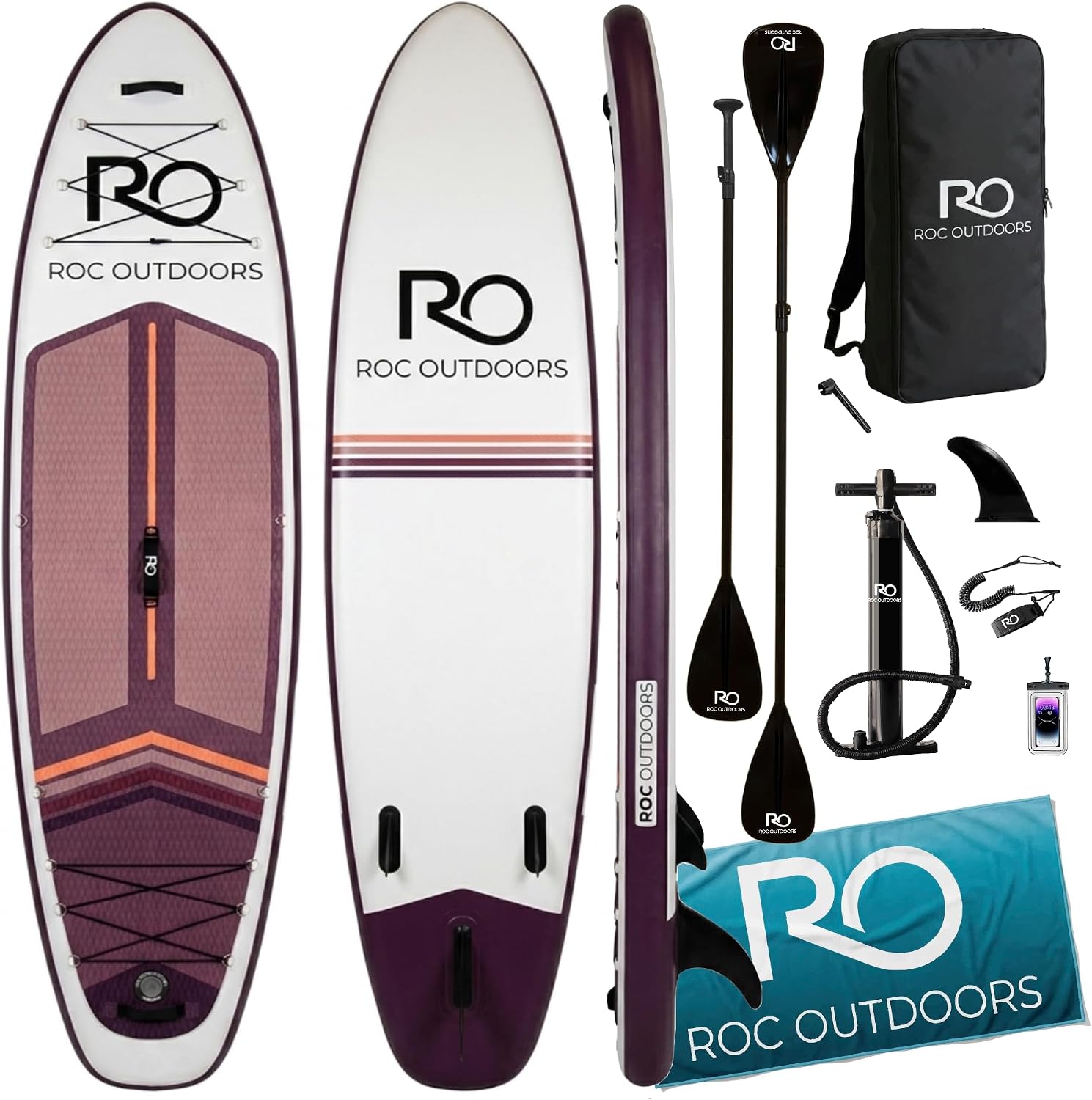
The Roc inflatable stand-up paddle board relies on a standard single-chamber polyvinyl chloride construction measuring 126 inches in length, 33 inches in width, and 6 inches in thickness. These dimensions provide a broad footprint favored for general stability rather than speed. While the manufacturer claims high-grade material durability, practical board stiffness in paddle sports depends directly on internal drop-stitch density and operating inflation pressure. The provided technical specifications do not cite a maximum or recommended PSI threshold, meaning purchasers must inspect the valve surround and manual to verify the target pressure before hitting the water. A 6-inch profile generally prevents swampiness when properly pressurized, but without a verified high-pressure rating of 15 PSI or above, some hull deflection may occur under heavier loads. The deck features an integrated non-slip traction pad to facilitate secure footing, while the overall assembly targets all skill levels seeking basic recreational resilience.
Real-World Performance
On calm water, the 33-inch beam delivers substantial primary stability, allowing novice paddlers to find balance quickly without excessive roll. The 350-pound rated weight capacity accommodates heavier individuals or a paddler carrying dry bags. However, hull geometry always dictates paddling dynamics: a wide, blunt profile pushes more water, limiting forward glide and tracking efficiency over distance. Paddlers must also assess the packaged propulsion hardware. The bundled accessory pack does not publish the precise gram weight or material breakdown of the included paddle. In stand-up paddling, paddle weight is felt acutely after one thousand strokes; heavy aluminum shafts introduce shoulder strain and sap paddling cadence during extended sessions. For short-distance leisure on protected lakes and sluggish rivers, the platform performs acceptably, but performance touring requires realistic expectations regarding glide ratio, stroke resistance, and tracking stability in moving currents.
Value for Money
Priced at $179.99, the Roc package is positioned at the entry level of the inflatable paddle board market. The inclusion of a 3-year manufacturer warranty is notable in this price tier, where one-year coverage is customary. Supported by an average 4.8 rating across more than 18,000 recorded reviews, the board presents a verifiable record of recreational consumer satisfaction. Nevertheless, calculating true value requires examining required supplemental gear. The package contains basic board accessories, but it does not supply a personal flotation device. Legal compliance and fundamental safety standards demand a Coast Guard-approved life jacket on open water, meaning buyers must factor the price of a dedicated Type III or inflatable PFD into their overall budget. For budget-conscious recreationists who paddle occasionally on sheltered waterways, the initial acquisition cost remains objectively low relative to the board volume and warranty offered.
Who Should Skip It
Touring paddlers, competitive racers, and open-ocean downwind specialists should bypass this board entirely. The broad 33-inch width and blunt nose outline create continuous hydrodynamic drag that inhibits distance efficiency and straight-line tracking. Paddlers planning expeditions over several miles will quickly exhaust themselves pushing this volume through wind and chop. Furthermore, riders who demand complete structural rigidity should look toward touring boards with documented 18 to 20 PSI ratings or integrated carbon stringers to eliminate flex. Technical paddlers will also find the unspecified bundle paddle insufficient for high-cadence stroke work, requiring an immediate aftermarket paddle upgrade. Finally, anyone venturing into offshore conditions must remember that recreational inflatable packages lack the dual-chamber redundancy or sea-keeping capabilities necessary for harsh maritime environments. Those seeking fitness, touring speed, or rough-water performance will be better served by a narrower, specialized platform.