Design and Build
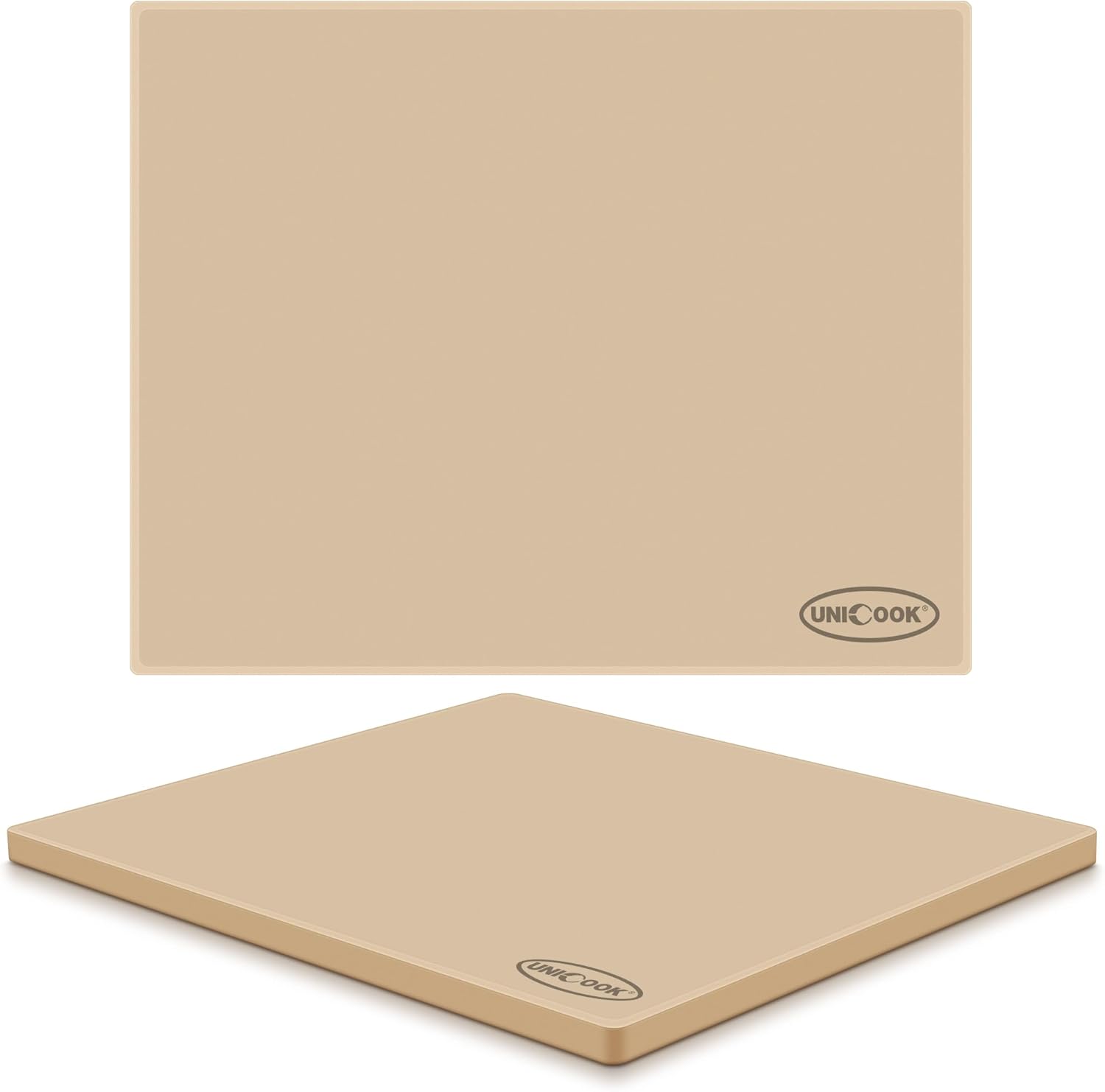
The Unicook BP20016 utilizes cordierite ceramic, an engineered material selected for thermal shock resistance and a maximum operating threshold of 1450°F. Measuring 20 inches in length, 16 inches in width, and 0.6 inches in thickness, the slab weighs approximately 15.8 pounds. This rectangular geometry maximizes the floor plan of standard domestic oven racks and larger outdoor grills. The material is inherently porous, allowing it to wick steam away from bottom crusts during the initial stages of baking. The stone is fully reversible, permitting wear to be distributed across both faces over extended ownership. Included with the slab is a basic plastic scraper designed for dough management and dried residue removal once the surface cools. The dimensions necessitate at least a 22 by 18-inch internal oven chamber to preserve the required one-inch peripheral gap for convective airflow.
Real-World Performance
Baking performance on cordierite is governed by thermal conductivity and heat capacity. With a 0.6-inch profile, the Unicook stone stores adequate energy to set a crisp base for conventional pan pizzas, New York styles, and hearth breads. However, stone thickness controls thermal recovery between pies. In high-output sessions, pulling heat into cold dough drops the surface temperature, meaning operators must allow the stone to recover heat between launches to prevent pale crusts. For Neapolitan pizza, the stone can structurally endure the required 850°F-plus environment inside specialized outdoor grills, but home ovens will fall short of these ambient parameters. The stone delivers uniform heat distribution, minimizing hot spots across its 320 square inches of surface. Users launching high-hydration doughs should note that using a perforated peel remains critical to minimize burnt raw flour buildup on the porous face.
Value for Money
Listed at $59.99, the Unicook BP20016 represents a pragmatic thermal upgrade on a dollar-per-pound basis. Compared to smaller 14-inch round cordierite plates often priced near thirty to forty dollars, this model provides nearly double the usable surface area and significant mass for a modest price increase. Supported by a 4.5 out of 5 rating across 13,414 reviews, its field reliability is well documented. The stone matches the heat thresholds of premium ceramics without the cost penalty of heavy steel plates, which can cost twice as much and stress domestic oven racks. The included plastic scraper is an inexpensive accessory, but the primary value resides entirely in the slab's dimensions and cordierite composition. Provided internal oven clearances are verified prior to purchase, the investment provides durable, utilitarian service.
Who Should Skip It
Prospective buyers must measure their cooking chambers before ordering. Compact European ranges, standard 24-inch residential ovens, and smaller kettle grills cannot accommodate the 20-inch width while maintaining the essential one-inch perimeter gap for proper airflow. Home cooks focused exclusively on Neapolitan pizza in conventional 500°F home ovens will not achieve target bake times with cordierite alone; this style requires specialized high-heat units capable of 850°F or more. Furthermore, those seeking rapid sequential baking in high-volume settings should consider thicker stones or baking steel, which offer faster conductive recovery. Finally, cooks looking for lightweight, dishwasher-safe cookware should avoid this 15.8-pound stone, as cordierite requires gentle physical handling and must never come into contact with dish soaps or heavy moisture saturations.