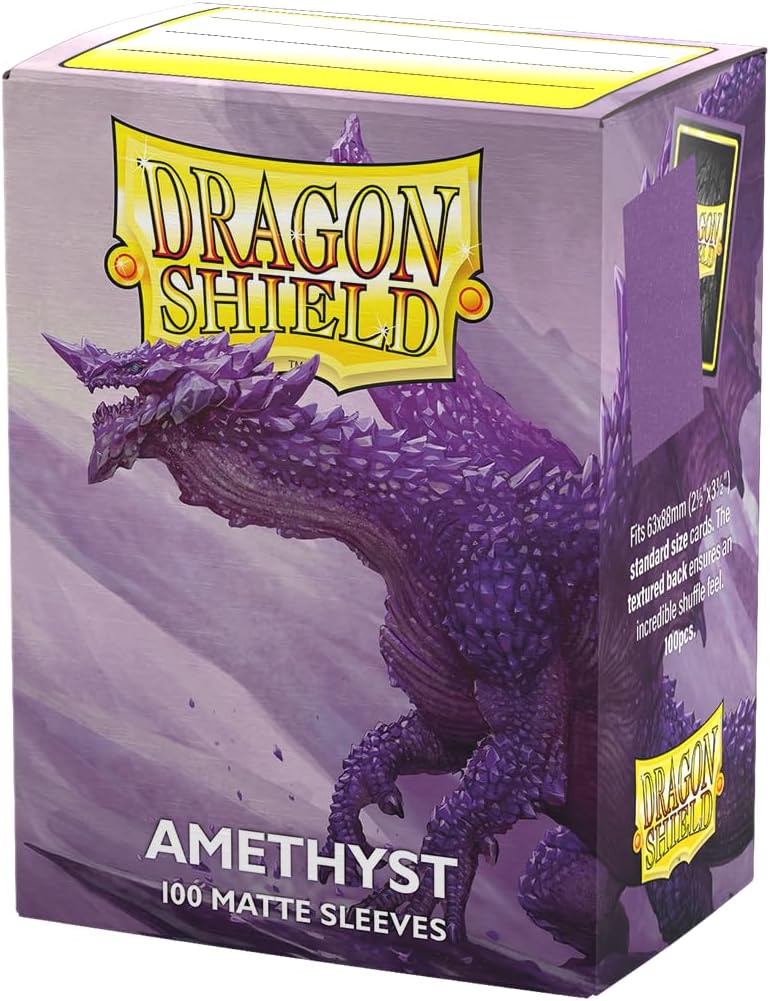
Design and Material Build
Dragon Shield standard matte sleeves are manufactured by Arcane Tinmen using acid-free polypropylene. The Amethyst variant features an opaque, finely textured rear surface paired with a clear, non-glare front face. Designed for cards measuring 63 by 88 millimeters, these sleeves match the requirements of games such as Magic: The Gathering, Pokémon, Flesh and Blood, and One Piece. The top-loading cut leaves sufficient lip above the card edge to prevent exposure without introducing excess border slack. Seam weld strength is a primary engineering focus; the side joins resist splitting under repeated lateral stress. Because the material gauge is thicker than entry-level penny sleeves, each sleeve introduces measurable bulk. The manufacturing process maintains tight tolerances on dimensions, ensuring that cards cut to factory standard seat uniformly to an identical depth across the entire 100-count pack.
Real-World Performance and Handling
In tabletop use, the matte texture alters card handling by minimizing surface contact between facing cards. This granular backing prevents the vacuum adhesion common with smooth sleeves, facilitating clean corner-to-corner mash shuffles straight from the box. The clear front maintains card legibility and art fidelity without muting foiling. However, the thickness of the material significantly increases total deck volume. A standard 60-card constructed deck or 100-card Commander deck expands substantially, which impacts storage planning. Tabletop board gamers integrating these sleeves into boxed games should note that vacuum-formed plastic inserts rarely accommodate this extra stack height. Unless a title provides adjustable partitions or modular card wells, the increased deck thickness will require aftermarket storage solutions or the removal of stock inserts to allow the game box to close flush.
Value Analysis
At $11.90 for a 100-count pack, the unit cost sits at approximately twelve cents per sleeve. This places Dragon Shield above bulk utility sleeves but within standard retail parameters for archival-grade gaming protection. The product's aggregate rating of 4.8 out of 5 across more than 40,000 recorded purchases reflects consistent manufacturing reliability over long production runs. For competitive trading card players who routinely subject a single deck to hundreds of shuffles per tournament, the durability of the seams prevents the mid-match blowouts that require mid-event re-sleeving. For board games requiring continuous card recycling, such as deck-building titles, the longevity offsets the higher initial purchase price. Buying single 100-count boxes for titles that feature hundreds of components can become cost-prohibitive, so buyers should calculate exact component counts before committing.
Who Should Skip This Product
Players seeking protection for Japanese-size games, such as Yu-Gi-Oh or Cardfight Vanguard, must bypass this product; standard 63x88 mm sleeves are excessively wide for mini-format cards and will permit lateral slipping. Similarly, hobbyists managing massive board games with hundreds of cards—such as large campaign dungeon crawlers—may find both the financial cost and physical volume impractical. Because insert quality decides whether a heavy game stays on the table without cumbersome setup friction, outfitting a 500-card board game with heavy-gauge Dragon Shields will render almost any factory insert unusable. Collectors who prioritize low-profile storage in standard pocket binders or tightly fitted deck boxes may prefer thinner alternatives that avoid stretching binder pockets or overflowing standard single-compartment plastic containers.