Design and build
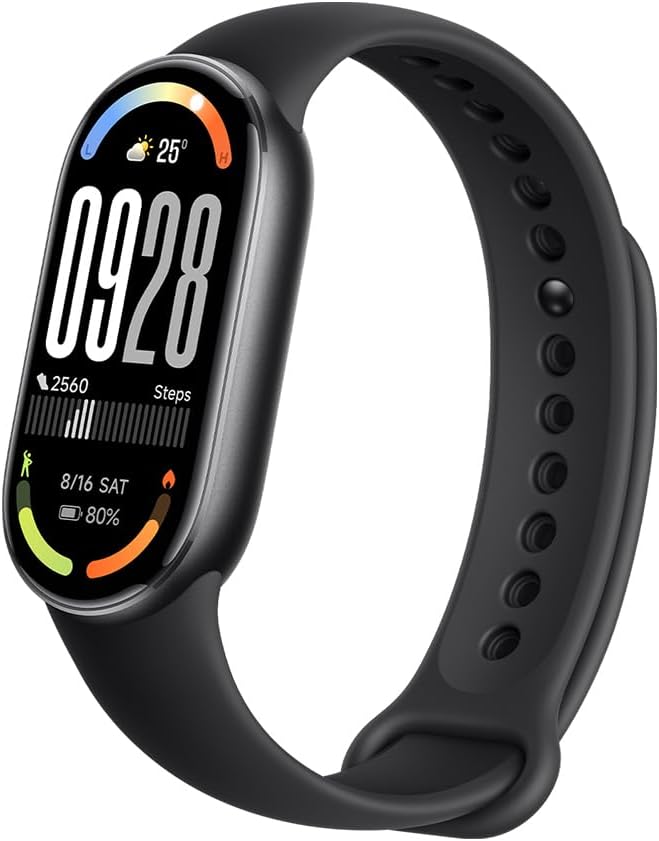
The Mi Smart Band 10 focuses on hardware refinement, housing a 1.72-inch AMOLED touchscreen within an oval chassis. Xiaomi has reduced the symmetrical borders to 2.0 millimeters, which expands the screen-to-body ratio to 73 percent. With peak high-brightness mode reaching 1,500 nits, the panel remains legible under harsh midday sun, eliminating the washed-out appearance common to budget fitness wearables. The casing uses a fluoroelastomer band secured by a traditional tang buckle, ensuring a stable fit on the wrist. Water resistance is rated to 50 meters, making the device suitable for surface swimming and showering, though it remains ill-suited for deep diving despite speculative label inclusions. The chassis runs Xiaomi HyperOS 2, delivering responsive navigation across daily widgets and menus. Build tolerances are solid for the category, and the lightweight footprint prevents wrist fatigue during continuous wear. Buyers must accept that materials lean utilitarian, prioritizing cost control over premium metal finishes.
Real-world performance
Tracking capabilities cover standard health metrics, including optical heart rate monitoring, blood oxygen saturation, and multi-stage sleep analysis. However, real-world athletic monitoring requires realistic expectations. In line with optical sensor mechanics, the wrist-based heart rate module exhibits latency during rapid interval changes; athletes targeting specific heart rate zones should note the band does not support native chest strap pairing. Satellite positioning is also constrained: the hardware lacks independent onboard GPS, relying instead on tethered smartphone data for geotagging routes. Battery longevity is marketed at 21 days from a one-hour charge, but this figure assumes passive pedometer tracking and general standby with continuous sensors dialed down. Engaging continuous biometric logging and frequent exercise tracking will significantly degrade that endurance, requiring users to verify their specific sport-mode drain in practice. Swimmers benefit from the integrated electronic compass, which assists directional recognition during pool workouts, though overall data remains fundamentally entry-level.
Value for money
Priced at $54.99, the Mi Smart Band 10 maintains a high market position, evidenced by a 4.3 out of 5-star rating across 8,692 user reviews. A primary advantage over competitors like Fitbit is the financial accessibility of its companion software: core metrics including sleep stages, heart rate trends, and blood oxygen readings sit outside paywalled subscriptions. You access your data via the Mi Fitness application without an ongoing monthly charge. However, cost concessions emerge within software localization. The Mi Fitness client natively restricts measurement displays to the metric system. Displaying imperial units such as pounds, ounces, and feet requires configuring a secondary data bridge to Google Fit, an awkward workaround for North American users. Despite this software friction, the combination of a 1,500-nit AMOLED display, robust water resistance, and zero mandatory subscriptions ensures strong hardware-to-dollar value in the budget tracking tier.
Who should skip it
Priced at an accessible tier, this tracker still presents clear dealbreakers for certain athletes. Distance runners and outdoor cyclists who prefer training without a smartphone should look elsewhere, as the absence of onboard autonomous GPS prevents standalone route and pace recording. Interval trainers and cross-training athletes must also avoid relying on this band for precision cardiac data; optical wrist sensors lag behind rapid spikes in exertion, and the tracker cannot interface directly with external chest straps. Furthermore, individuals residing in regions accustomed strictly to imperial units may find the software requirements frustrating, given that native imperial visualization demands syncing data through Google Fit rather than functioning out of the box in Mi Fitness. Finally, those who require full smartwatch functionality, such as cellular communication, third-party application stores, and advanced productivity tools, will quickly outgrow the lightweight constraints of HyperOS 2.