Design and Build
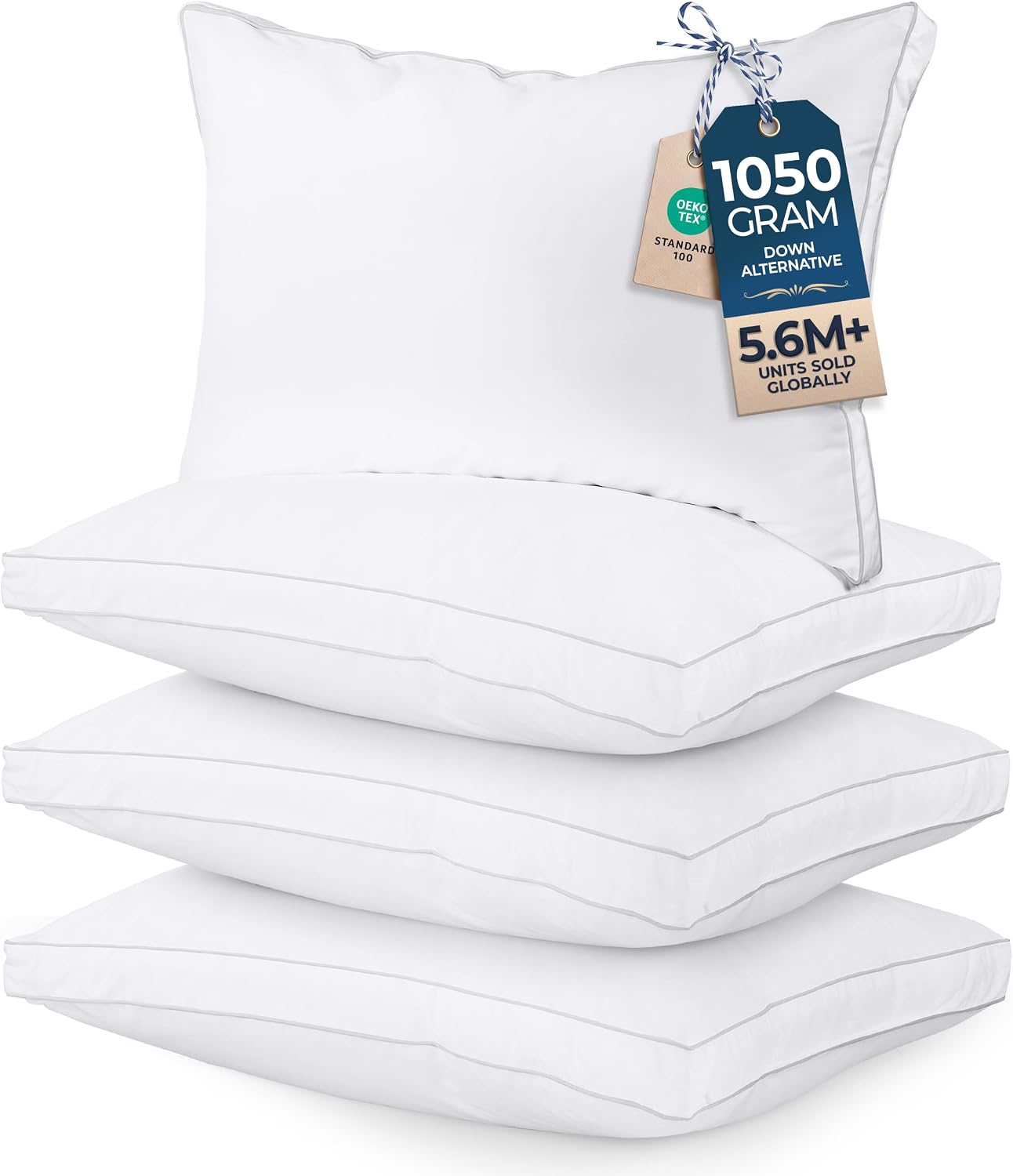
The Utopia Bedding Gusset Bed Pillow relies on a standard dual-band construction measuring 18 by 26 inches with a nominal five-inch side profile. Its perimeter is reinforced with corded piping, an architectural feature intended to expand the interior chamber and allow the loose polyester fiber to distribute evenly toward the edges rather than tapering off into a knife-edge seam. The exterior shell utilizes a polycotton weave, combining synthetic polyester durability with cotton fibers to limit production costs while maintaining a smooth hand feel. Inside, the fill consists entirely of conjugated polyester fiberfill, designed to emulate the soft give of down without animal derived inputs. At an indicated package weight of 10.4 ounces, the density of the fiber fill remains relatively low across the four included units. Overall build quality reflects economical assembly practices, with functional perimeter stitching suited for casual residential duty rather than institutional laundering demands.
Real-World Performance
In sleep testing, polyester alternative fills typically deliver immediate softness upon head placement followed by progressive compression throughout the night. The advertised five-inch profile yields significantly under direct head weight, meaning that back and stomach sleepers may find adequate spinal neutrality, while strict side sleepers will likely experience insufficient neck support as the fiber compresses. Regarding thermal behavior, the polycotton outer casing provides acceptable passive airflow, but synthetic polyester fiber remains prone to trapping core ambient heat compared to open-cell foams or down clusters. Buyers should note that marketing labels regarding universal firmness mean very little in practice; how the material resists downward pressure is what governs alignment. Furthermore, because loose polyfill lacks internal baffles, repeated shifting during sleep can cause localized fiber clumping, requiring daily manual redistribution to maintain an even sleeping plane.
Value for Money
At a retail price of $33.89 for four pillows, the unit cost sits at approximately $8.47 per cushion, placing this set squarely within the budget tier. With over 79,000 aggregate ratings averaging 4.5 stars, the market validation reflects customer satisfaction centered on volume and affordability rather than high-end material resilience. This set functions exceptionally well for outfitting secondary guest bedrooms, seasonal rental properties, or student dormitories where initial out-of-pocket expense takes precedence over multi-year structural lifespan. However, shoppers must weigh this low entry price against return logistics. Unlike premium bedding brands that offer dedicated 100-night sleep trials, budget third-party retail purchases require reliance on standard marketplace return windows. Returning bulky, decompressed pillows through mail carriers often proves inconvenient, making it sensible to view this purchase as a low-risk, disposable investment rather than a warranted, long-term sleep foundation.
Who Should Skip It
Shoppers suffering from chronic cervical spine discomfort or tension headaches should bypass this set entirely. The lack of a high-density foam core or targeted contouring means the pillow cannot sustain lateral neck support for dedicated side sleepers across an eight-hour window. Allergy sufferers and those demanding rigorous hygiene protocols should also steer clear: the manufacturer explicitly specifies spot-clean maintenance only, precluding high-temperature machine washing to eliminate dust mites. Additionally, chronic hot sleepers who require cool-to-the-touch performance will find the polyester fill and polycotton shell inferior to crisp, open-weave cotton percale. If your sleep quality relies on predictable, unyielding firmness or if you want verified sleep trials with hassle-free doorstep returns, spending more on a modular memory foam or zoned latex unit remains the recommended medical and practical course.