Design and build
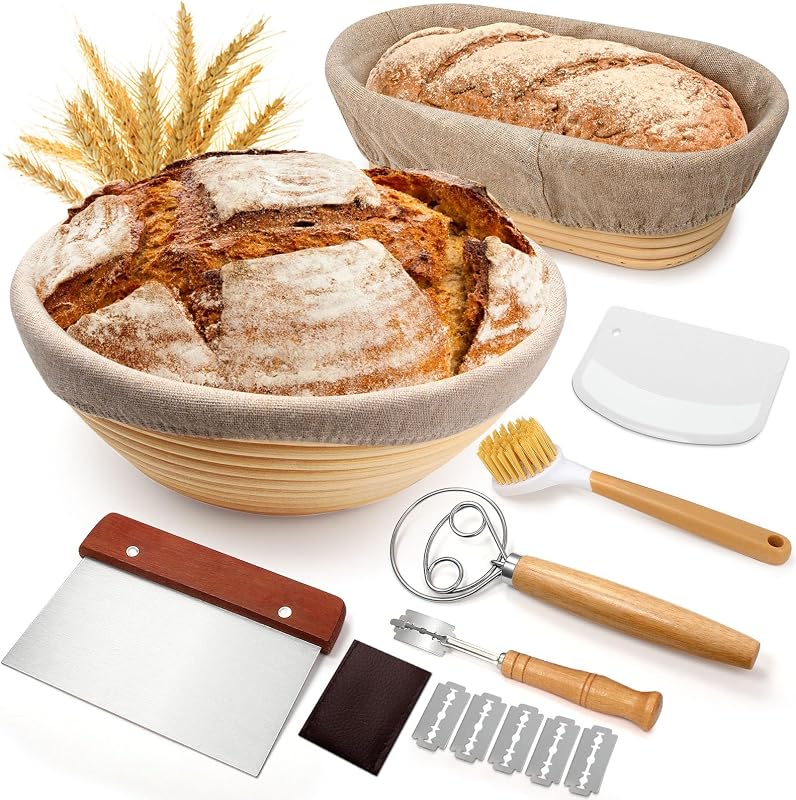
The EWFEN BPB-001 kit centers on two unsealed Indonesian rattan cane vessels: a 9-inch round banneton measuring 9 by 9 by 3 inches and a 10-inch oval banneton measuring 10 by 5.7 by 3.5 inches. Both forms utilize coiled natural cane joined with staples, an industry standard method for structural rigidity. The unfinished rattan allows moisture transpiration from the dough exterior, aiding skin formation prior to baking. Accompanying the baskets are two tailored linen liners, a wire Danish dough whisk, a rigid dough scraper, a flexible bowl scraper, a dedicated stiff bristle cleaning brush, and a bread lame supplied with five replacement razor blades. The construction relies on traditional hand-weaving without synthetic sealants or chemical coatings. Buyers should inspect the perimeter staples and cane terminals upon delivery to ensure no sharp splinters or loose edges protrude into the proofing cavity. Overall assembly reflects standard utility-grade rattan production suitable for routine domestic fermentation cycles.
Real-world performance
During the final proofing phase, each vessel is rated to support dough charges weighing up to two pounds. When dusted directly with rice flour, the ribbed cane geometry imparts traditional spiral flour rings while wicking surface humidity to facilitate cleaner scoring. Bakers working with high-hydration doughs exceeding 75 percent hydration can fit the washable linen liners to prevent wet dough from bonding to the crevices. The included curved bread lame, loaded with one of the five provided blades, allows controlled scoring, though users must exercise caution when securing the blade manually. Mixing duties benefit from the Danish whisk, which cuts through shaggy starter doughs without clogging like a conventional balloon whisk. Post-bake basket maintenance requires allowing residual flour and dough fragments to dry completely before dislodging them with the included stiff brush; moisture must not remain trapped in the weave to prevent fungal growth during storage.
Value for money
At $23.99, the package establishes a distinctly economical cost per component across its nine included items. Sourcing individual pieces independently—specifically an oval banneton, a round banneton, replacement liners, a Danish whisk, separate bench and bowl scrapers, and a guarded lame with extra blades—typically commands a higher cumulative outlay. With a customer rating of 4.6 out of 5 stars derived from over 1,800 reviews, the assembly displays dependable market acceptance within consumer baking settings. While premium standalone bannetons made from compressed wood pulp offer higher thermal mass and dishwasher compatibility, they cost significantly more per basket alone. While the equipment will not compensate for improper fermentation metrics or lacking oven thermal mass, this set lowers the financial barrier for home bakers outfitting their staging station with dedicated tools for both boules and batards simultaneously.
Who should skip it
Commercial bakeries or high-output home micro-bakers operating multiple daily bake cycles should consider commercial-grade wood pulp forms or perforated composite proofing baskets instead. Natural rattan requires air drying and deliberate manual brushing, making it less suited for continuous wet-production runs where rapid machine sanitization is standard operating procedure. Bakers who already possess established shaping gear, scrapers, and an ergonomic lame will also find little incentive in purchasing a redundant multi-piece kit rather than singular, specialized baskets sized to bespoke Dutch oven dimensions. Furthermore, those seeking specific artisan sizes—such as long eight-inch narrow batards or smaller 500-gram round boules—will find the two-pound target capacities of these vessels slightly oversized, potentially allowing smaller dough masses to spread laterally rather than retaining vertical tension during final proofing.