Design and build
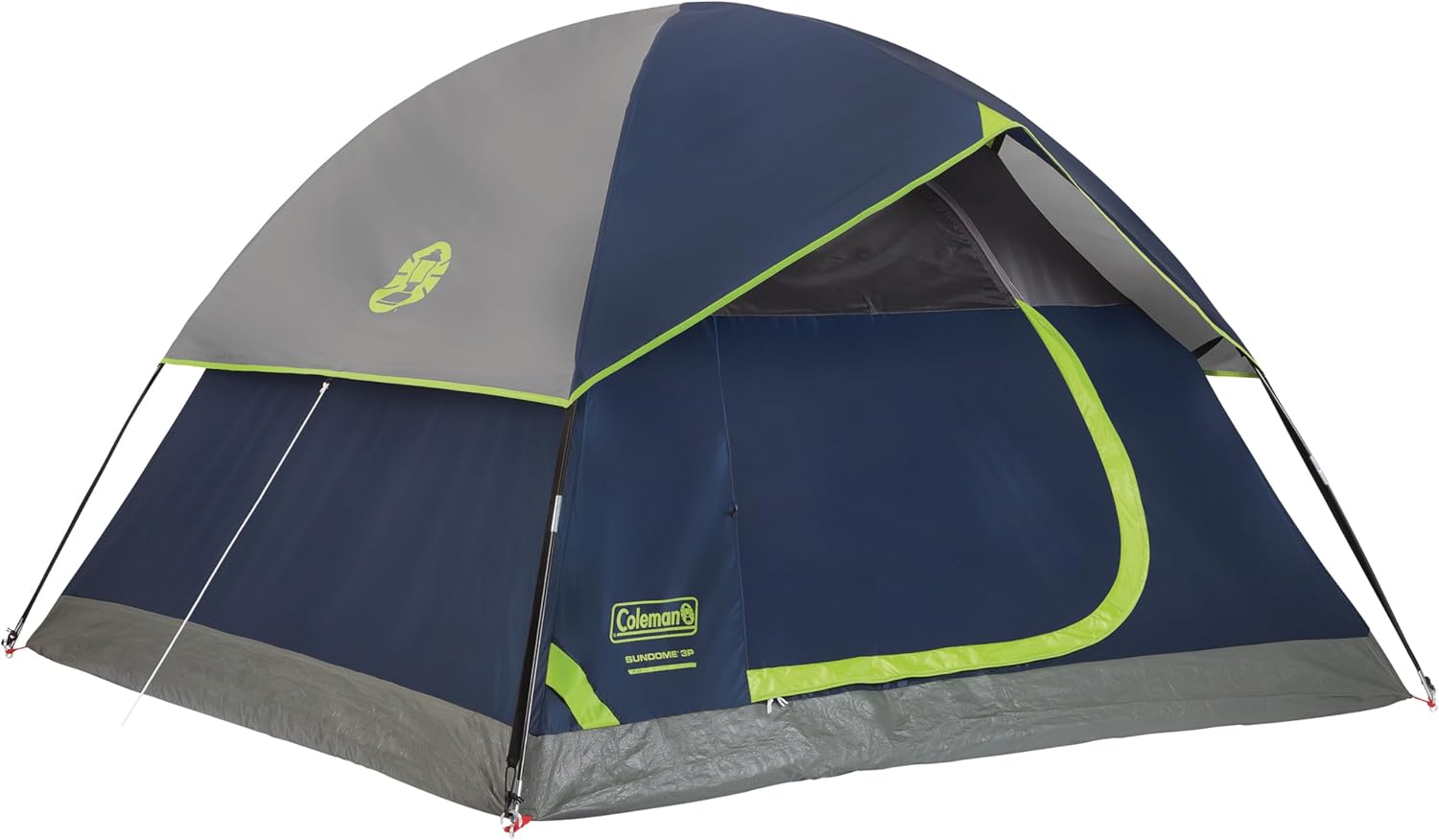
The Sundome 4-Person tent adopts an established two-pole cross-dome architecture augmented by brow poles for window awnings. The floor measures 9 by 7 feet, yielding 63 square feet of internal footprint beneath a 4-foot 11-inch center height. Fabric attachment relies on standard pole clips paired with partial sleeves, which balance assembly speed against even load distribution across the frame. Entry is restricted to a single zippered door, backed by two interior storage pockets and an integrated E-Port flap for electrical pass-through. Although the specification sheet confirms UV protection and lists the shelter as water resistant, Coleman does not publish the precise hydrostatic head rating of the rainfly or the floor material. Buyers should note that six included stakes provide only the minimum anchor points for the four corners and primary guyouts, meaning additional ground hardware will be necessary for secure pitching in soft terrain.
Real-world performance
Field utility is defined strictly by environmental limits. The structural profile is rated by the manufacturer to withstand wind speeds exceeding 35 mph, a claim supported by the low center of gravity and aerodynamic dome slope. However, the rainfly is a partial-coverage design rather than a full vestibule wrap, leaving substantial expanses of the lower wall fabric exposed to driven rain. In general shelter assessment, hydrostatic head ratings dictate whether a fabric resists seam weeping under torrential downpours; absent that metric, this model remains suited primarily to moderate, intermittent rainfall rather than prolonged storms. Condensation management is superior to many entry-level designs due to the dedicated floor-level ground vent, which generates a thermal chimney effect in conjunction with the mesh ceiling panels. Thermal retention depends heavily on proper ground insulation, reinforcing the standard rule that sleeping pad R-value dictates actual sleeper warmth far more than enclosure fabric.
Value for money
Priced at $113.83, the Sundome occupies the lower baseline of three-season car camping shelters. A cumulative rating of 4.6 out of 5 across 23,189 entries reflects consistent execution of basic expectations among casual users, weekend festival attendees, and frontcountry family campers. At this pricing tier, trade-offs are evident in the use of entry-grade frame poles, a partial rainfly, and stamped wire stakes rather than forged or extruded aluminum pegs. You receive a functional, freestanding shelter capable of housing a queen air mattress with room left over for duffels, backed by a standard one-year warranty. The value proposition holds up well against competing entry-level dome tents, provided the user recognizes the absence of technical mountaineering treatments, silicone coatings, or advanced pole geometries. It performs to the dollar amount requested, but it does not substitute for a fully storm-rated backcountry tent.
Who should skip it
Backcountry backpackers should bypass the Sundome entirely. Although total packed weight is omitted from the official specifications, multi-pole steel or fiberglass dome structures of this dimension inevitably exceed reasonable trail limits, and what you actually carry into the field determines physical strain. Extended-trip wilderness campers who face unforecasted deluges should also look elsewhere; without confirmed hydrostatic head metrics, relying on this shelter during multi-day alpine or late-autumn squalls introduces structural water risk. Groups genuinely intending to house four adult occupants will find the 63-square-foot floor plan excessively constrained, as accommodating four sleeping systems eliminates all floor space for dry bags and forces occupants against potentially damp single-layer perimeter walls. Finally, anyone over five feet tall who requires stand-up changing clearance will find the sub-five-foot center height ergonomically frustrating over extended stays, pointing instead toward cabin-style family enclosures.