Design and build
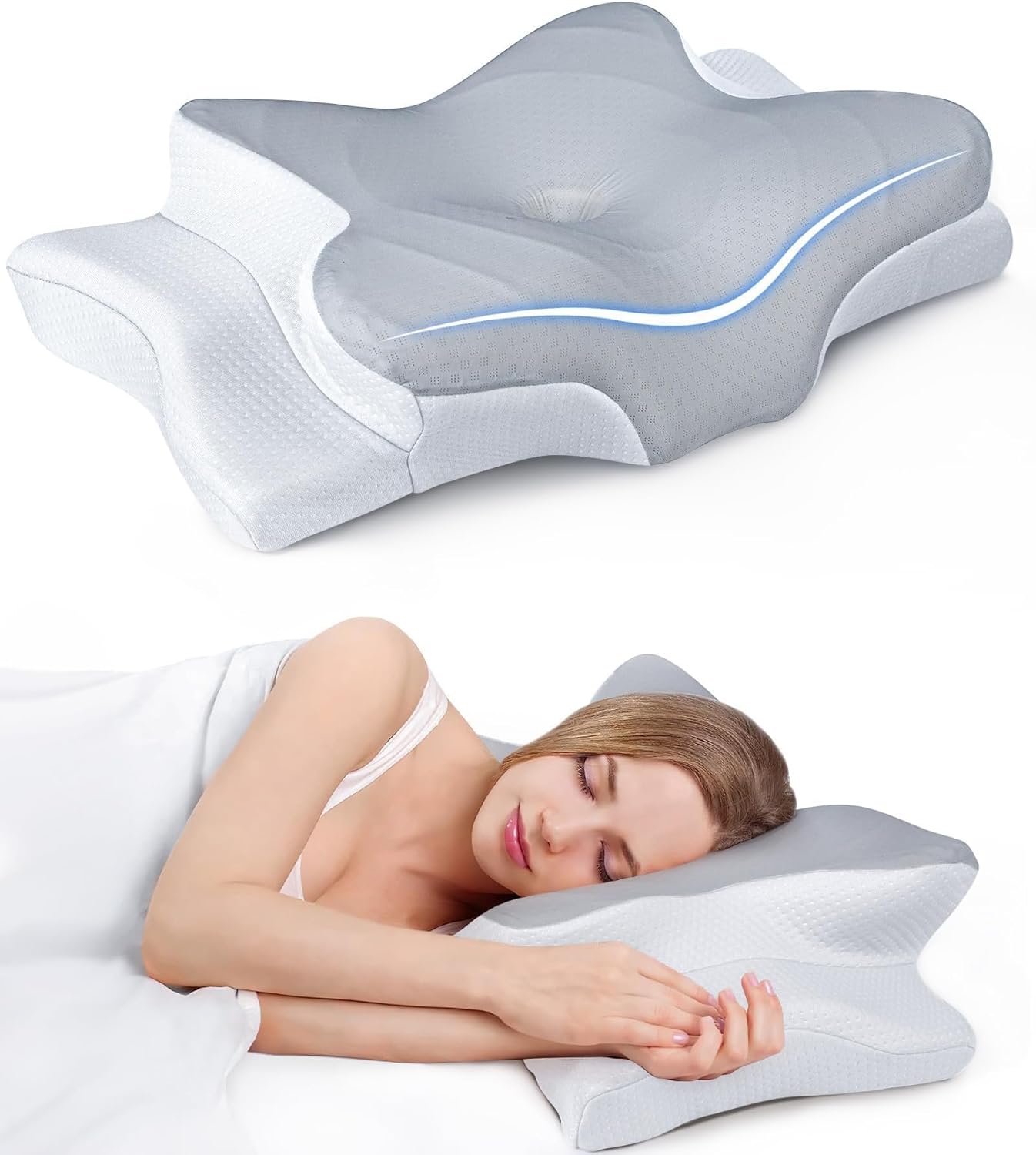
The Cozyplayer cervical pillow measures 23.2 by 13.4 by 5.1 inches, establishing a compact footprint tailored specifically to orthopedic alignment rather than conventional bedding aesthetics. Its foundation is a molded memory foam core featuring a hollow central cavity tilted at a 15-degree angle. This structural depression is engineered to cradle the cranium while the elevated cervical ridges support the lordotic curve of the neck. The pillow incorporates six designated contour zones intended to accommodate the neck, shoulders, and lateral arm placement. Loft adjustment is achieved via a removable bottom foam insert or by rotating the unit 180 degrees to switch between resting heights. Surrounding the core is a removable, machine-washable textile cover constructed from 62 percent polyester, 30 percent nylon, and 8 percent spandex, integrated with a high-density 3D mesh border. While the synthetic core is non-toxic, the manufacturer specifies an initial 48-hour ventilation requirement to dissipate standard foam manufacturing odors.
Real-world performance
Performance hinges largely on individual sleeping posture and structural adjustment. For back sleepers, the central concavity maintains steady cranial positioning, preventing forward neck flexion and reducing strain along the upper trapezius. Side sleepers benefit from the elevated lateral wings, which help bridge the gap between the acromion process and the cervical spine. However, stomach sleepers will likely find the 5.1-inch profile excessively elevated, even with the base insert removed. In terms of thermal management, the Arc-Chill pillowcase demonstrates a Q-Max rating of 0.4, delivering an immediate cool-to-the-touch sensation upon initial contact. Nevertheless, dense memory foam cores inherently restrict deep airflow, meaning thermal absorption will stabilize to ambient body temperature over extended hours. Furthermore, adaptation requires patience; the manufacturer and customer aggregate data confirm that shifting to a sculpted contour profile demands several nights of physiological acclimation before persistent muscular tension diminishes.
Value for money
Retailing at $35.98, the Cozyplayer pillow operates in an accessible price tier relative to branded orthopedic cervical pillows that frequently exceed double this cost. A critical metric in bedding evaluation is the policy framework surrounding sleep trials, which supersedes arbitrary firmness ratings. In this regard, the stated 100-night trial period offers essential consumer protection, allowing adequate time to test anatomical compatibility against the fixed contour architecture. With a 4.2-star average across more than 23,000 recorded ratings, market reception suggests solid baseline satisfaction. Potential buyers should, however, verify the specific return logistics before purchasing, confirming whether reverse shipping is subsidized or handled via direct drop-off. If the return mechanism is fully supported without hidden fees, the low acquisition cost balances out the inherent risk of purchasing molded foam ergonomics online without preliminary physical assessment.
Who should skip it
Strict stomach sleepers should bypass this product entirely. Despite claims accommodating all sleeping positions, the foundational 5.1-inch profile and molded contouring will force the cervical spine into hyperextension when lying prone, aggravating neck strain rather than resolving it. Individuals who dislike rigid sleep orientations will also find the sculpted channels restrictive, as shifting position freely across the surface is impeded by the perimeter ridges. Buyers seeking standard bedding integration should note that the sculpted dimensions will not properly fill standard pillowcases, necessitating reliance on the proprietary cover. Finally, individuals with acute chemical sensitivities should exercise caution; the required 48-hour off-gassing window is mandatory to clear residual odors inherent to molded polyurethane. Those unwilling to wait out the ventilation process or adapt to fixed contours should explore traditional low-loft down-alternative or shredded latex alternatives.