Design and Build
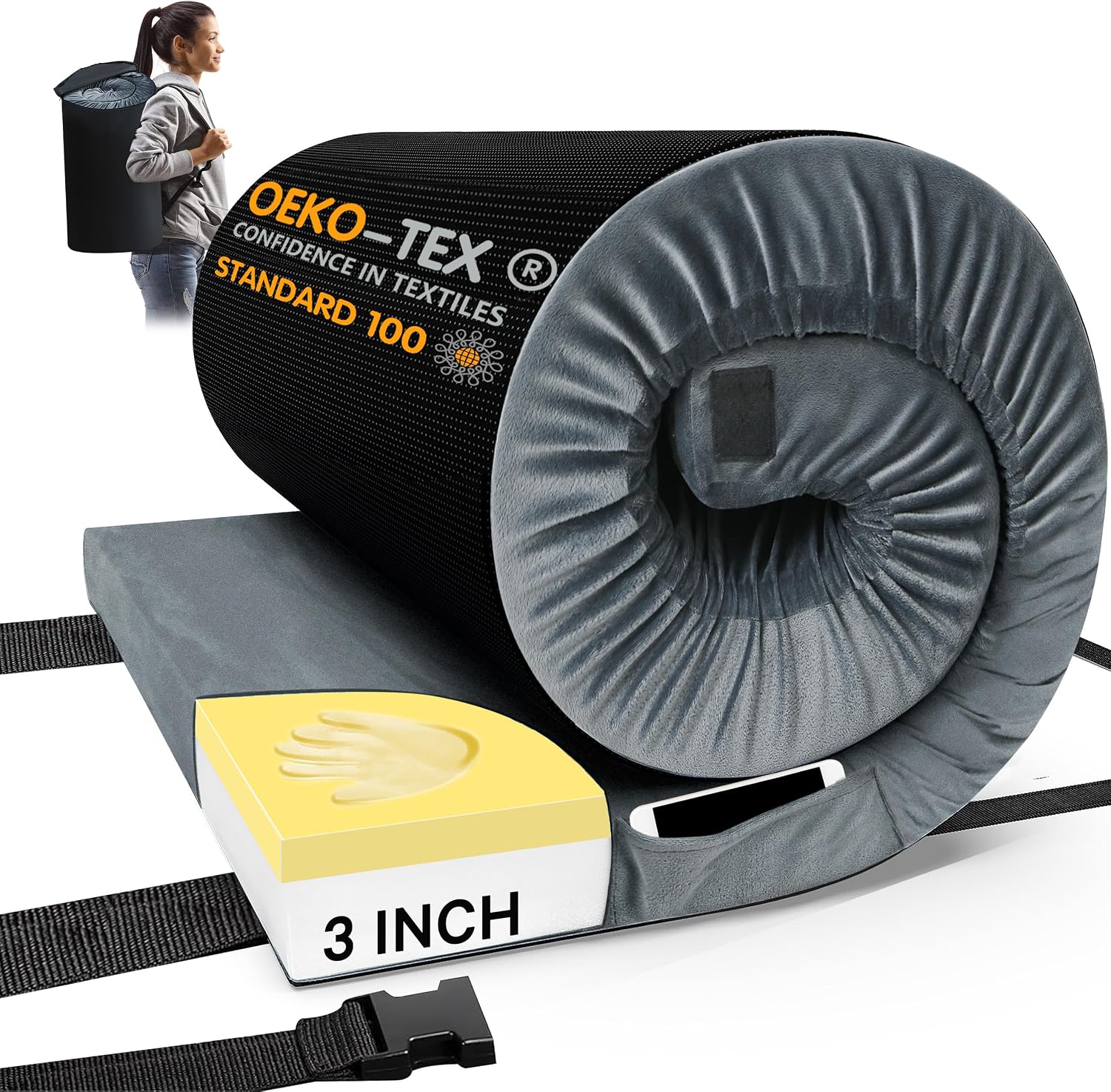
The CYMULA LBL-063 measures 72 inches long, 24 inches wide, and 3 inches thick, utilizing a single continuous slab of high-density memory foam. The chassis is enveloped in a multi-surface textile system: the top contact layer consists of a soft synthetic fleece, while the bottom is built with a black, non-slip waterproof fabric engineered to resist abrasive surfaces such as tent floors, rocks, and dirt. Roll-up security is handled via integrated compression straps with plastic side-release buckles built into the perimeter seams, complemented by a secondary cylindrical travel duffle. Weighing 7.5 pounds, the pad relies on sheer physical volume rather than inflatable chambers for support. Because Hangzhou Yijia Textiles ships the unit under vacuum compression, the manufacturer notes that structural expansion requires between 24 and 72 hours to achieve its full 3-inch profile. The build exhibits functional utility for casual settings, though the exterior seams are standard production grade rather than heavy-duty outdoor welded construction.
Real-World Performance
For vehicular resting and cabin use, three inches of high-density foam effectively mitigates pressure points across the hips and shoulders, eliminating the bottoming-out sensation common to under-inflated air mattresses. On dirt or frozen ground, however, its technical performance becomes ambiguous. Camping gear rules dictate that sleeping pad R-value decides warmth more than a sleeping bag rating does, yet CYMULA publishes no ASTM F3340-18 thermal resistance rating. While open-cell memory foam contains trapped air that offers baseline resistance, buyers cannot reliably calculate their sleeping system's lower temperature threshold for late-autumn or winter camps. In damp conditions, the bottom waterproof textile prevents direct liquid transfer from damp tent floors into the interior foam sponge, although the lack of a measured hydrostatic head metric means it should not sit in pooled water. Packing the pad down requires deliberate physical compression, as rolling a dense 7.5-pound foam slab into its storage sack demands significant knee pressure.
Value for Money
Priced at $57.99, the CYMULA pad sits well below traditional self-inflating basecamp mats manufactured by dedicated outdoor brands, which frequently exceed $120. With over 2,300 recorded consumer ratings averaging 4.4 stars, it captures strong volume in the recreational car camper and guest-bed market. The inclusion of rolling buckles and a dedicated carry sack adds convenience out of the box, sparing the user from buying accessory compression straps. The trade-off for this accessible pricing rests entirely on the lack of standardized technical documentation. You do not receive an verified hydrostatic head rating for the base fabric, nor do you receive laboratory R-value testing to confirm safety during freezing nights. If the planned application involves trunk sleeping, van platforms, dry cot camping, or living room floors, the $57.99 investment represents high physical comfort per dollar, provided the user respects its clear thermal and dimensional limits.
Who Should Skip It
Backpackers, bikepackers, and canoe trekkers must completely avoid this product. Our foundational gear rules emphasize that packed weight, not trail weight, is what you carry; at 7.5 pounds and occupying substantial cylindrical bulk when rolled, this pad cannot fit into standard trekking packs or long-distance loadouts. Mountaineers and cold-weather wilderness campers should also bypass the CYMULA pad because sleeping pad R-value decides warmth more than bag rating does. Venturing into sub-freezing weather with an uncertified foam core risks severe conductive heat loss into the earth, rendering expensive cold-weather sleeping bags ineffective. Furthermore, those needing an immediate bed straight out of the delivery box should plan ahead, as the foam requires up to 72 hours to decompress from transit packing. Hikers requiring lightweight, tested thermal performance should instead invest in a verified ASTM-rated insulated inflatable pad, reserving this model exclusively for trunk beds, guest sleepovers, and dry roadside campsites.