Design and build
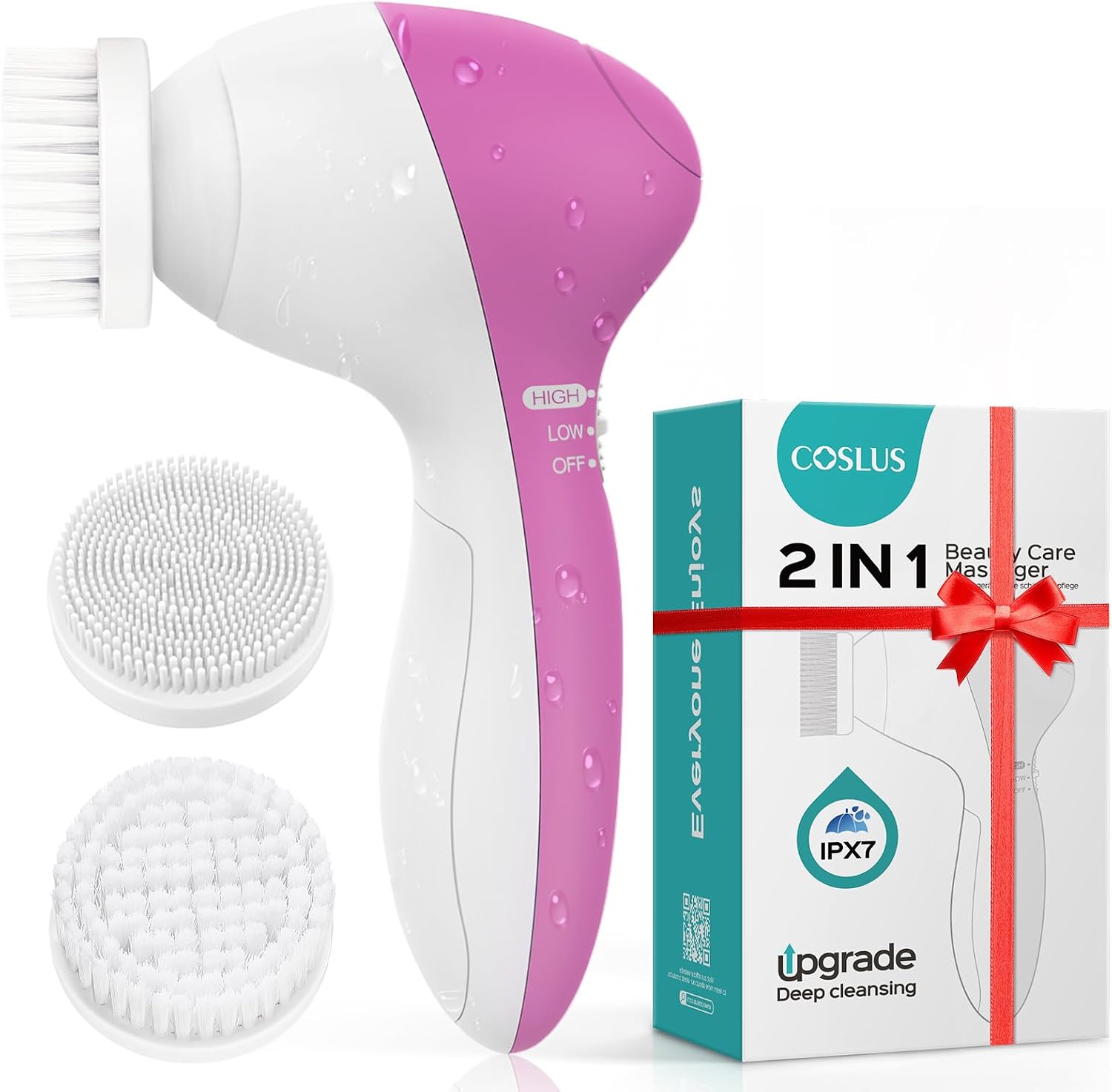
The COSLUS P2017 facial brush features a lightweight plastic chassis weighing 3.84 ounces, designed for basic handheld operation. It ships with two interchangeable attachments: a soft silicone head targeted at sensitive skin and a traditional nylon bristle head for coarse exfoliation. Power delivery relies entirely on two standard AA batteries, which are not supplied in the packaging. While the manufacturer promotes a waterproof design suited for sinkside or brief shower splashing, the manual explicitly warns against submerging the handle under water. The device lacks an official IPX waterproof certification, making thorough sealing around the battery compartment a primary concern over repeated wet use. Mechanically, the unit uses a basic rotary drive system rather than sonic oscillation, with a single physical toggle to switch between two rotation speeds. Materials feel consistent with its low cost tier, prioritizing functional simplicity over premium tactile density or long-term component durability.
Real-world performance
In practical operation, the P2017 functions strictly as a mechanical surface exfoliator. The two-speed motor provides moderate rotational torque, adequate for removing surface residue, dead skin cells, and stubborn makeup. The silicone attachment offers lower friction, while the bristled head delivers aggressive physical abrasion that requires a light touch to prevent micro-tears. However, prospective buyers should disregard marketing assertions regarding pore shrinking and collagen stimulation. Mechanical rotation does not modify pore diameter, nor does it replace verified energy-based modalities such as FDA-cleared red light therapy or microcurrent. Without published clinical data, wavelength specifications, or medical clearances, its therapeutic utility ends at physical stratum corneum cleansing. For basic facial hygiene, the dual heads clear debris effectively, but users with active acne or compromised skin barriers risk irritation if using the coarse brush head at high speed.
Value for money
At an entry price of $15.99, the initial hardware investment is negligible, supported by an aggregate 4.3 out of 5 rating across more than 14,000 consumer reviews. Nevertheless, true cost of ownership extends beyond the base price. Because the unit is powered by two disposable AA batteries rather than an internal lithium-ion cell, recurring battery replacements will steadily inflate operational costs over months of daily use. Furthermore, maintaining hygienic performance requires recurring purchases of the specific FBS-D 4-piece replacement brush heads, as bristles degrade and harbor bacterial accumulation over time. When factored over a multi-year horizon, these ongoing consumable expenses often equal or exceed the upfront cost of an entry-level rechargeable sonic cleanser with standardized or permanent silicone contact surfaces. Buyers seeking immediate, short-term utility will find the pricing fair, provided ongoing consumable expenditures are acknowledged upfront.
Who should skip it
Shoppers managing inflammatory dermatological conditions, including rosacea, eczema, or active cystic acne, should skip the COSLUS P2017. Mechanical rotary scrubbing frequently exacerbates vascular redness and compromises the delicate lipid barrier, even when utilizing the silicone attachment. Individuals seeking clinical anti-aging interventions should also bypass this device; it contains zero LED diodes, lacks published optical wavelengths, and offers no bio-stimulatory clearance to substantiate claims of skin elasticity improvement. Furthermore, consumers who routinely cleanse directly under a streaming shower head should look elsewhere, as the unit lacks a verified IPX immersion rating and is prone to water ingress if accidentally dropped into standing water. Finally, environmentally conscious users or those unwilling to manage frequent AA battery sourcing should select a fully sealed, USB-rechargeable alternative that eliminates ongoing battery disposal.