Design and build
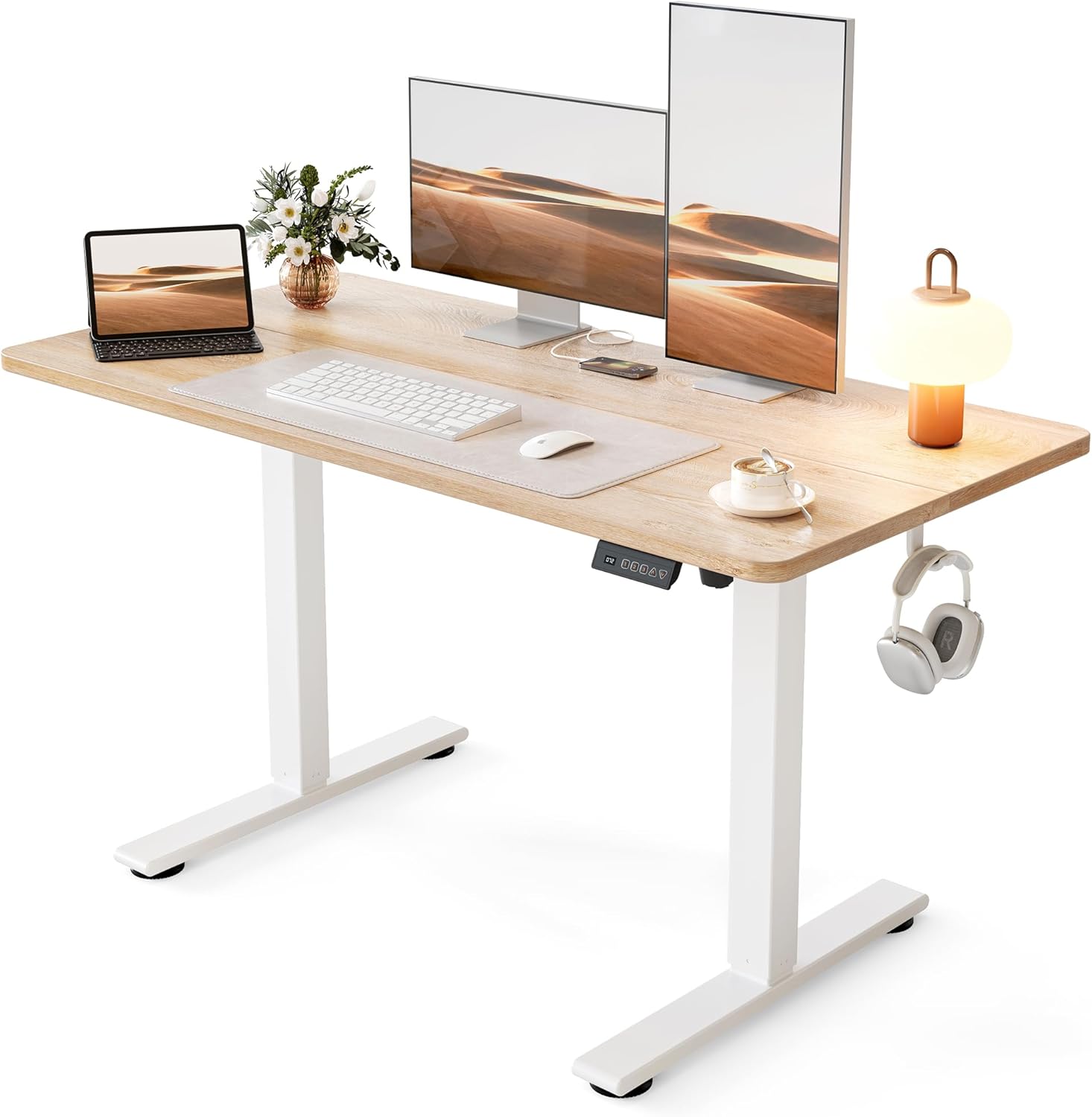
The Cubiker sit-stand desk is built around an entry-grade steel frame and a two-piece spliced laminated maple desktop measuring 48 by 24 inches. At a total product weight of only 38 pounds, the entire unit is noticeably light for an electric standing desk, which facilitates easy assembly but inherently limits overall structural mass. The split-top design requires joining two desktop segments during assembly, introducing a center seam that detracts from the seamless feel of continuous laminate or solid wood tops. Straight legs support the assembly without crossbeam stabilization, relying strictly on the motor housing and upper frame bracket to maintain squareness. Potential buyers should note contradictory spec sheet figures, such as depth listed alternatively as 20 and 24 inches, and verify actual clearance dimensions before purchase. The finish employs low-VOC materials and smooth rounded edges, presenting a clean modern aesthetic, yet the thin core and multi-piece build prioritize flat-pack shipping efficiency over industrial-grade rigidity.
Real-world performance
Assessing stability at maximum elevation reveals the limits of this minimalist straight-leg frame. While the motorized adjustment smoothly covers the stated range of 28.3 inches to 46.5 inches at noise levels below 45 decibels, frame flex becomes noticeable as the desk extends past 40 inches. Under our category evaluation rules, wobble at full extension remains the primary indicator of chassis quality; the lack of lower bracing combined with the 38-pound frame weight yields perceptible monitor oscillation during aggressive typing. The single-motor system provides three programmable presets and advertises a 176-pound lifting capacity. Users mounting dual displays on mechanical arms, heavy desktop towers, and audio hardware must calculate their exact equipment payload, as operating close to the motor's ceiling accelerates mechanical wear. The rated 100,000 cycle lifespan suggests consistent light-duty reliability, but the absence of published motor warranty terms leaves its true mechanical endurance unconfirmed for demanding workloads.
Value for money
Priced at $79.99, this desk represents the bottom edge of the electric standing desk pricing spectrum. Securing motorized elevation, quiet operation, and digital presets below eighty dollars provides undeniable budget appeal, especially compared to manual crank alternatives or basic fixed-height workstations. The consumer rating of 4.6 across thousands of reviews indicates broad satisfaction for standard residential telework. Nevertheless, that price floor reflects specific engineering compromises: a split-panel work surface, modest 176-pound lift threshold, and lighter gauge steel components. Competing commercial desks frequently cost triple this figure to deliver thicker single-slab surfaces, dual motors, and extended five-to-ten-year warranties. For a student, light laptop worker, or budget-conscious remote employee requiring basic sit-stand mobility without heavy peripheral loads, the financial proposition is solid. Value seekers simply need to accept that the low barrier to entry trades heavy-duty frame dampening and premium materials for sheer affordability.
Who should skip it
Prospective buyers with multi-monitor arrays, heavy clamp-on monitor arms, or sensitive audio equipment should look elsewhere. The 176-pound payload is sufficient for basic computing, but clamp mounts exert concentrated torque on the split laminate desktop, risking surface deformation. Furthermore, users taller than six feet one inch may find the 46.5-inch maximum height marginal, and any operation near that top limit exhibits the sway typical of unbraced, lightweight frames. Professional creators requiring zero screen movement while standing and typing will likely find the wobble frustrating. Individuals who prioritize long-term equipment protection should also hesitate, as the manufacturer supplies no clear warranty duration for the electric motor or controller. In an equipment class where warranty length directly reflects manufacturer confidence in motor longevity, the absence of documented warranty coverage advises high-demand users to invest in heavier, single-piece commercial alternatives backed by multi-year guarantees.