Design and build
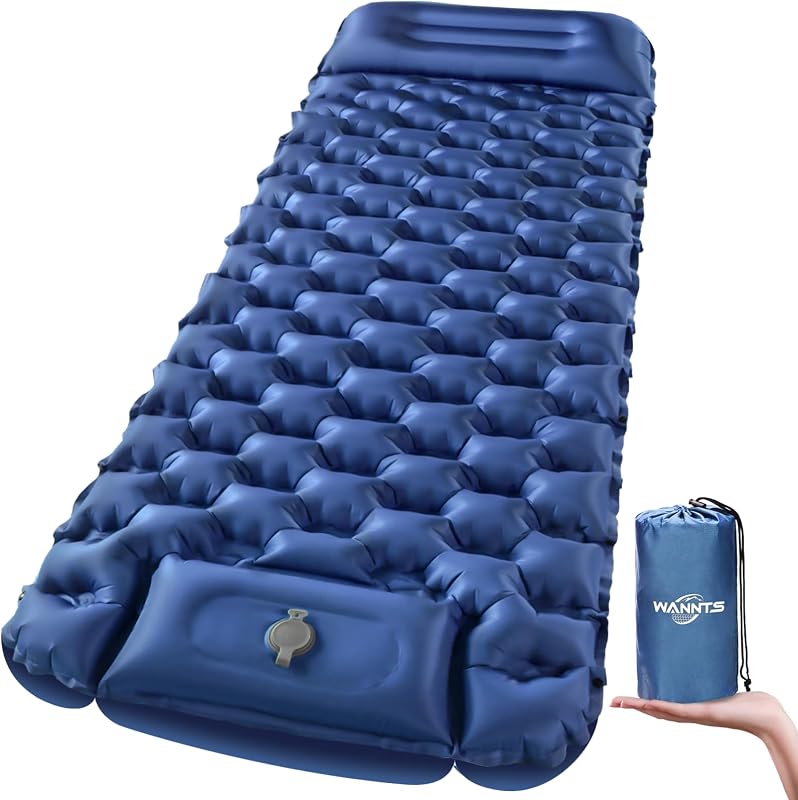
The WANNTS Model WA-02 measures 75 by 25 inches when fully inflated, presenting a standard rectangular footprint suitable for solo sleeping. Its core layout utilizes an array of interconnected hexagonal air cells intended to distribute body weight, terminating in a raised, non-removable pillow chamber. Inflation relies on a built-in foot-operated sponge pump situated at the bottom, which eliminates the introduction of breath moisture into the interior chamber, paired with dual-layer deflation valves. Along the lateral edges, plastic snap buttons allow tandem pairing with a second pad. The manufacturer lists the construction vaguely as outdoor-grade waterproof material without specifying the denier count, base polymer, or hydrostatic head rating. At an official weight of 30 ounces, the unit carries noticeable heft relative to traditional ultralight sleeping mats, and buyers must note that packed weight with the storage bag and repair kit will slightly exceed this base metric.
Real-world performance
In field use, the integrated foot pump operates as intended, filling the pad via downward foot pressure in approximately one to two minutes, though the marketing claim of twenty seconds remains optimistic under deliberate cadence. The hexagonal baffles stabilize torso movement better than smooth tubular chambers, but the modest loft yields minimal margin against bottoming out for dedicated side sleepers. Furthermore, while the manufacturer markets the pad for any weather conditions, thermal insulation is unverified. There is no listed ASTM F3340 R-value, meaning the pad relies purely on dead air with no internal reflective films or fibrous batting. Because standardized sleeping-pad R-values cannot be substituted by sleeping-bag ratings, using this unrated pad over cold ground risks rapid conductive heat loss regardless of how warm the overhead quilt is. The pad functions adequately on summer loam, but ground temperatures below fifty degrees Fahrenheit require an auxiliary closed-cell foam underlayment.
Value for money
Priced at $19.98, the WANNTS sleeping pad sits firmly at the low end of the outdoor sleep system spectrum. With a 4.2 out of 5 consumer rating across more than 4,600 reviews, it provides accessible utility for entry-level car campers, festival attendees, and occasional backyard use. The inclusion of six adhesive repair patches and a fitted stuff sack adds practical value to an inexpensive kit. However, prospective buyers should not confuse low acquisition cost with technical capability. Premium sleeping pads justify higher retail prices through laboratory-verified thermal resistance, field-proven puncture resistance, and precise weight-to-volume efficiency. For someone seeking an inexpensive, self-contained air mattress for indoor sleepovers or benign warm-weather park overnights, the price-to-utility balance is defensible, provided the user enters ownership with realistic expectations regarding fabric resilience and long-term air retention over repeated cycles.
Who should skip it
Three-season and shoulder-season backpackers should avoid this pad entirely. The lack of an independently tested R-value makes thermal performance unpredictable, and venturing into freezing or near-freezing environments without verified ground insulation directly compromises field safety. Additionally, gram-conscious hikers will find the 30-ounce packed weight difficult to justify when compared against standardized ultralight sleeping pads that provide certified insulation at half the mass. Backcountry travelers undertaking extended wilderness routes should also consider the reliability risks associated with unrated budget laminates, where a field puncture can negate the integrated pillow and torso support simultaneously. Finally, users seeking modular sleep systems may find the non-removable, integrated pillow awkward if they already carry an ergonomic standalone camping pillow, as the fixed height cannot be adjusted independently of the main mattress chamber without compromising overall inflation firmness.