Design and Build Quality
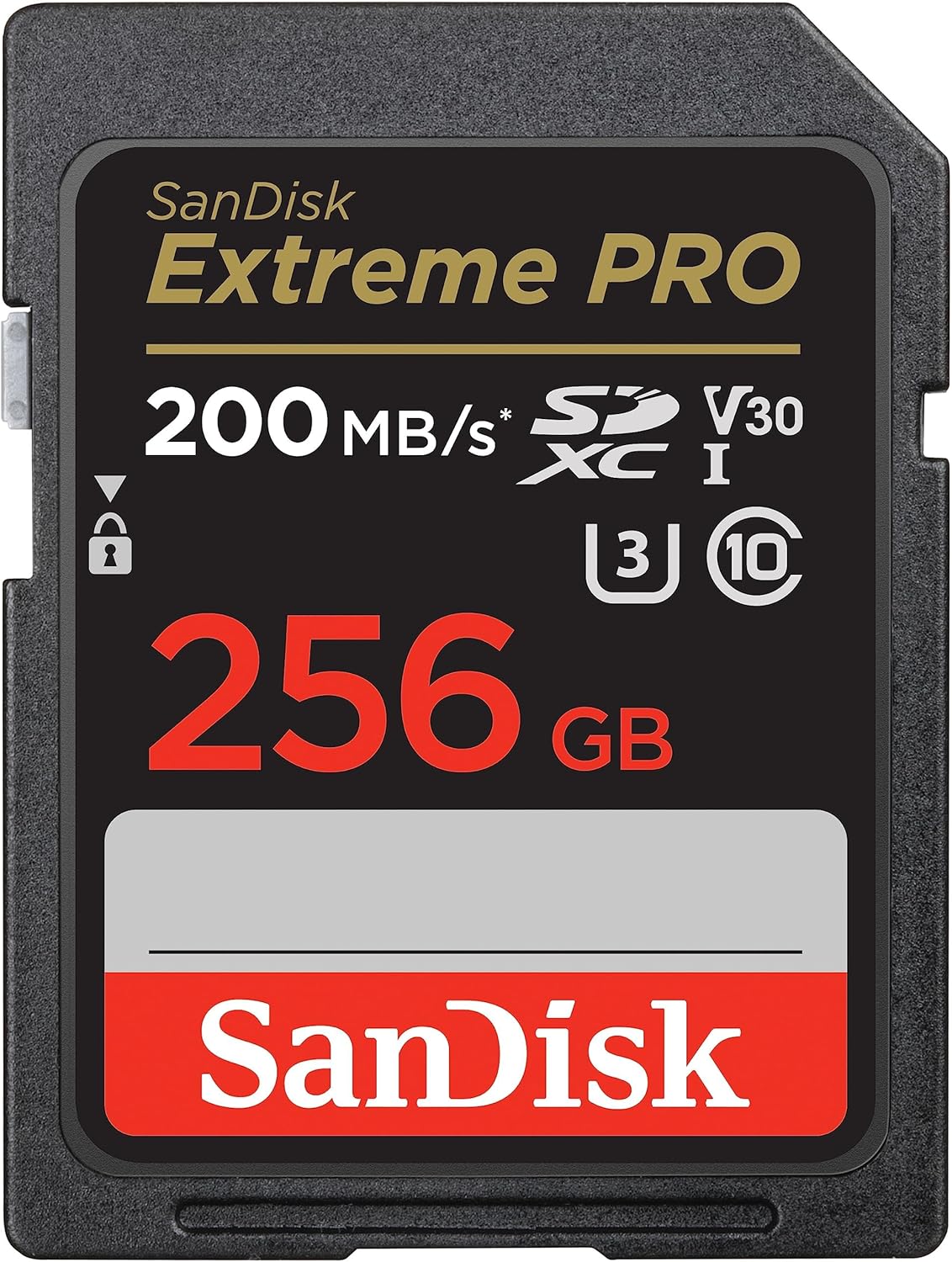
Weighing two grams and measuring standard SD dimensions, the SanDisk Extreme PRO features a familiar dark gray and black plastic shell. SanDisk rates the card as temperature proof, water proof, and X-ray proof, offering standard resistance against baseline field hazards during transit and shooting. The card retains the standard physical write-protect slide switch on the side edge, which prevents accidental overwrites or file deletion when engaged. Unlike heavier, ribbed monolithic card designs, this housing uses a conventional multi-piece plastic casing with standard connector contact pins. While adequate for regular insertion cycles in cameras and laptops, the plastic ribs between the electrical contacts require normal care to prevent structural cracking over years of heavy use. Buyers working in marine, desert, or extreme sub-zero settings should confirm the exact operating temperature range on the manufacturer datasheet, as thermal stress in camera slots can exacerbate write degradation over time.
Real-World Performance
The headline read speed of 200MB/s and write speed of 140MB/s rely on SanDisk QuickFlow technology. Because standard UHS-I interfaces cap at 104MB/s under SDR104 specifications, reaching the full 200MB/s offload speed requires a compatible reader, such as the SanDisk Professional PRO-READER SD. In standard camera slots, write performance tops out below that proprietary envelope. For video shooters, headline write bursts are largely irrelevant; the defining metric is the Video Speed Class 30 rating. A V30 certification guarantees a sustained continuous write rate of 30MB/s, which equates to 240 megabits per second. Camera operators attempting to record 4K video using high-bitrate codecs—such as 400Mbps All-Intra profiles—will experience buffer overruns and aborted recordings. Users must verify their camera codec data rates before relying on this card for mission-critical video, as uncompressed or intra-frame modes exceed the 30MB/s safety floor.
Value for Money
At $89.16 for a 256GB capacity, this unit commands a notable price premium over entry-level V30 media. In photographic budgeting, lenses consistently outlive camera bodies and storage media; capital is usually best deployed toward optics rather than overpriced consumable storage. While 70,383 user ratings with a 4.8 aggregate score confirm wide market dependability, the cost per gigabyte reflects brand positioning and proprietary QuickFlow speeds rather than a higher performance tier like UHS-II. Buyers seeking faster buffer clearing or higher-bitrate video assurance can often find UHS-II V60 cards within a close price bracket. If workflow speeds on standard readers do not routinely utilize the QuickFlow protocol, this card behaves identically to conventional UHS-I U3 cards that cost significantly less. Buyers should weigh whether fractional offload time savings justify the near ninety-dollar outlay on an aging UHS-I bus.
Who Should Skip It
Videographers shooting cinematic codecs, high frame rate slow motion, or uncompressed RAW video should bypass this media entirely. Because the card is limited to a V30 minimum sustained write floor, recording video formats that require 60MB/s or 90MB/s continuous data streams will result in dropped frames or interrupted takes. High-speed continuous burst photographers capturing dense RAW sequences on high-resolution cameras will also find the buffer clearing times limiting, as the card cannot match UHS-II bus throughput in-camera. Furthermore, users who lack a proprietary QuickFlow card reader and rely on integrated laptop SD slots will never see the 200MB/s read transfer rates, as standard host controllers will throttle transfers to sub-104MB/s speeds. In those operating scenarios, purchasing this specific model yields no measurable performance advantage over less expensive, standard-specification UHS-I media.