Design and build quality
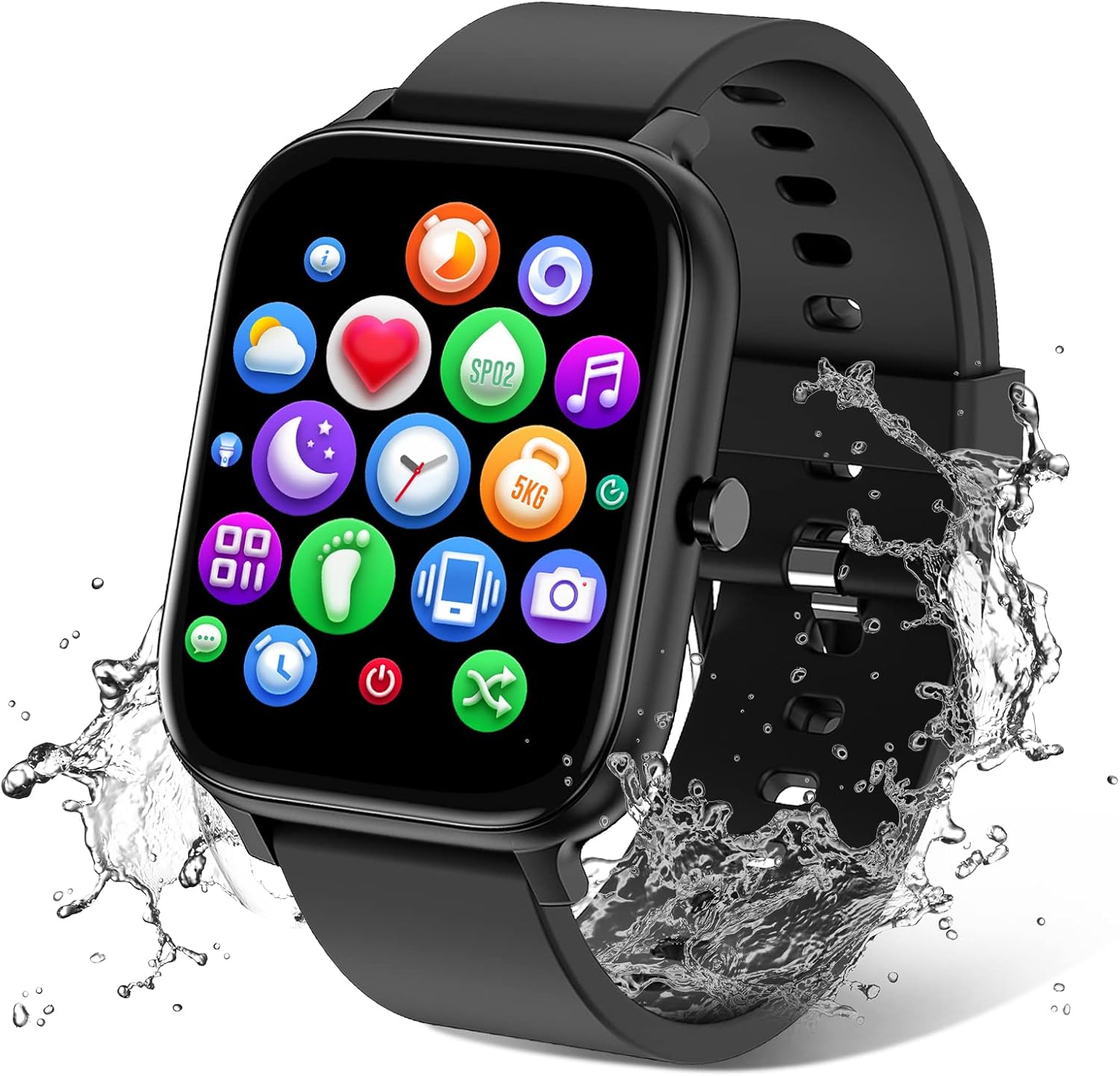
The hardware presentation of this budget smartwatch reveals inconsistencies within its technical documentation that buyers should note prior to purchase. While the listing title and technical summary advertise a 1.69-inch rectangular touchscreen, the manufacturer bullet points state a 1.83-inch panel with a resolution of 240 by 284 pixels. Regardless of the precise panel diagonal, the display resolution is modest, providing acceptable legibility for digitized step counts and basic notification mirrors rather than crisp graphical rendering. The housing features a lightweight chassis coupled with a breathable black silicone strap secured by a magnetic mechanism. The device carries an IP68 ingress protection rating, certified to withstand water submersion up to a depth of 1.5 meters. This allows safe usage during rain, surface swimming, and handwashing, though buyers should avoid hot water exposure and high-pressure water sports. Overall, the physical construction aligns directly with standard sub-twenty-dollar wearable electronics, offering basic splash protection and utilitarian materials without structural refinement.
Real-world tracking and connectivity
Activity monitoring is driven by rudimentary optical sensors tracking steps, sleep intervals, and heart rate, with manufacturer claims extending to blood pressure and blood oxygen estimation. Users must treat optical blood pressure and SpO2 metrics on sub-twenty-dollar hardware with extreme skepticism, as they lack clinical clearance and rigorous algorithmic backing. In real-world fitness scenarios, wrist-based optical heart rate sensors systematically lag during rapid interval training; because this watch cannot bridge to an external Bluetooth or ANT+ chest strap, high-cadence training metrics remain unreliable. Navigation functionality is designated as GPS via smartphone. The absence of an onboard satellite receiver means the watch acts merely as a display terminal for phone-derived route mapping. The Da Fit application facilitates connectivity on Android 5.0 and iOS 9.0 or higher. For notification management, the interface mirrors incoming text, messaging app alerts, and incoming caller data, offering the capacity to reject incoming calls directly from the wrist without supporting duplex voice communication.
Value proposition and software ecosystem
Retailing at $19.99 with an aggregated consumer rating of 4.2 out of 5 from over 4,800 entries, this wearable targets consumers seeking entry-level baseline tracking without financial commitment. A distinct advantage over premium platforms is the absence of a subscription paywall within the Da Fit companion ecosystem; basic health trends, sleep staging, and movement tallies do not demand recurring monthly expenditures. Power is sustained by a 230 mAh battery, with claimed endurance spanning five to seven days following a three-hour magnetic recharge. Buyers must note that manufacturer battery claims reflect passive tracking with the display set to intermittent activation. Because the watch lacks an integrated GPS receiver, activating outdoor sport modes does not incur the aggressive battery drain typical of standalone multisport watches. Instead, the operational penalty is shifted entirely to the connected smartphone's battery. At this price point, the cost-to-utility ratio is reasonable for casual step logging and notification triage.
Who should look elsewhere
Endurance athletes, competitive runners, and serious gym-goers should bypass this unit entirely. The inability to pair an external heart rate chest strap renders the device ill-suited for interval workouts, threshold runs, or functional fitness where wrist sensors lag and misread peak exertion. Furthermore, outdoor athletes who prioritize training without carrying a smartphone will find the connected-GPS dependency restrictive, as the watch cannot calculate standalone course geometry or independent split paces. Consumers requiring dependable medical monitoring must also avoid relying on its unvalidated blood pressure and blood oxygen algorithms. Discrepancies between the 1.69-inch and 1.83-inch panel dimensions in official materials suggest minimal quality control in product documentation, which frequently correlates with inconsistent firmware stability over time. Anyone seeking robust third-party app integration, dedicated onboard satellite tracking, or verified biometric accuracy should invest in proven sports platforms from specialized manufacturers rather than entry-tier generic white-label devices.