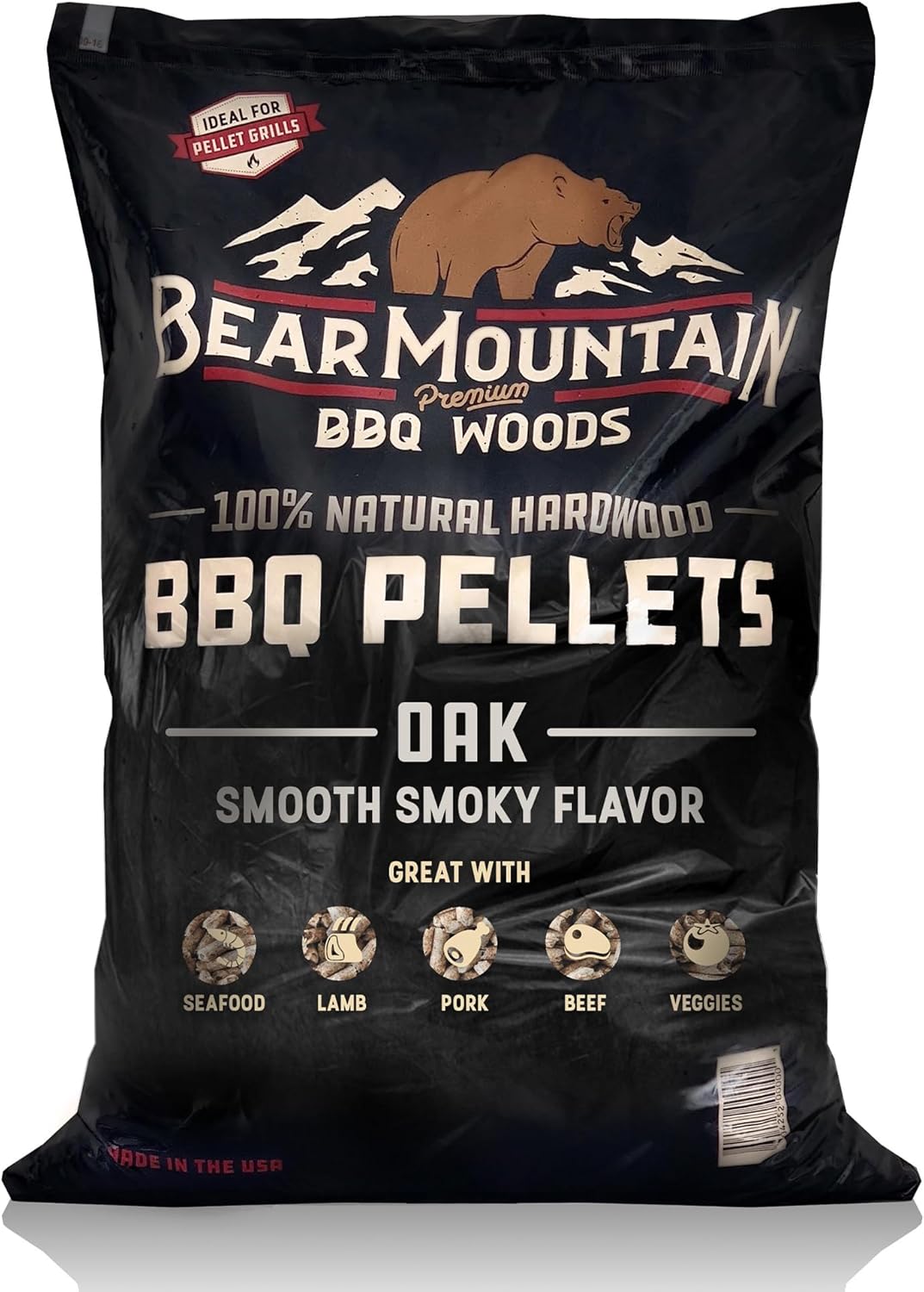
Design and material composition
Bear Mountain specifies that its Oak pellets derive entirely from all-natural hardwood sawdust, completely omitting artificial binders, lubricating oils, and secondary filler woods such as alder or softwoods. The production process compresses the fibers under high mechanical pressure, relying on natural lignins to bind the cylinder structure. Controlling moisture content is critical in pellet manufacturing, as excess internal water leads to erratic burn temperatures and auger clogs, while overly dry wood combusts too rapidly. The density of these pellets is uniform throughout the 40-pound bag, resulting in minimal fines and sawdust at the bottom of the packaging. Packaging durability is adequate for warehouse handling, though the plastic membrane requires shelter from ambient moisture once unsealed. For cooks running pellet grills equipped with sensitive optical or mechanical hopper sensors, the standard pellet diameter feeds reliably without causing mechanical resistance or premature auger motor strain.
Real-world combustion and maintenance
Operational consistency hinges heavily on how fuel interacts with a grill's airflow and cleanout systems. In a well-insulated chamber with thick steel walls, these oak pellets generate a predictable thermal output that tracks internal controller setpoints accurately. The cleanout design of your specific grill determines how often you interact with the firepot, and these pellets mitigate that burden by leaving a relatively fine, light-gray ash residue rather than dense clinkers. Clinker accumulation can disrupt igniter rods and stall subsequent starts, making low-residue fuel a necessity for unattended low-and-slow cooks. While wood smoke quality remains subtler than split-log stick burners, the oak profile delivers a neutral, medium smoke that colors bark cleanly without imparting acrid creosote notes. Cooks targeting exact internal meat doneness must still rely on independent dual-probe thermometers, but this fuel provides the baseline thermal stability required to let digital monitoring work properly.
Value and market positioning
Priced at $31.34 for a single 40-pound bag, these pellets position themselves directly in the competitive mid-tier of outdoor cooking fuels, breaking down to approximately seventy-eight cents per pound. This compares favorably against proprietary branded pellets from large grill manufacturers, which often retail in 20-pound increments at a higher per-pound rate while blending non-disclosed base woods into the mix. Given that a standard overnight brisket or pork butt cook can consume fifteen to twenty pounds of fuel depending on ambient winds and chamber metal thickness, the 40-pound bulk bag substantially lowers running costs over an active barbecue season. Bear Mountain holds a strong aggregate score of 4.6 out of 5 across more than 14,000 recorded consumer ratings, confirming that batch-to-batch quality control and burn characteristics remain reliably standardized at an accessible, sustainable price point.
Who should skip it
Pitmasters seeking the heavy, pungent profile characteristic of pure hickory or southern mesquite may find the baseline oak profile too mild, particularly for thick cuts of beef like brisket flats and chuck roasts. Additionally, users who cook irregularly or operate small portable grills with four-pound hoppers might struggle to store a 40-pound bag safely, as any exposure to garage humidity or rain causes compressed pellets to disintegrate into useless sawdust. Those who rely on charcoal-flavored pellet blends to mimic live-coal searing will also find pure oak lacking that specific mineral char note. Finally, if you run a gravity-fed charcoal chute or rely entirely on split logs for an offset smoker, pelletized fuel offers no operational utility outside of secondary accessory smoke tubes used during cold smoking applications.