Design and build
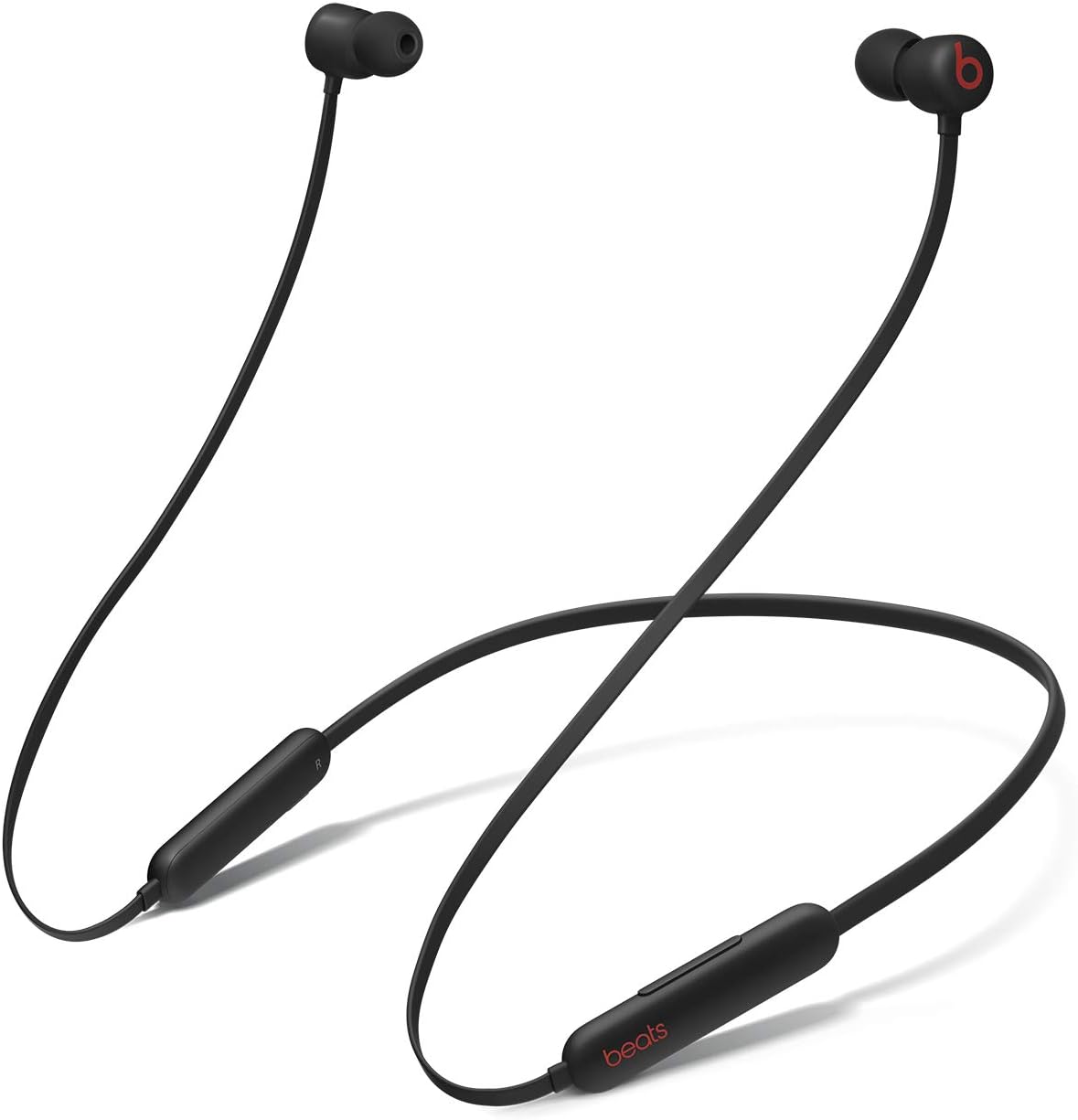
The Beats Flex relies on a tethered neckband design utilizing a Flex-Form cable and weighs 0.6 ounces. The package includes four interchangeable silicone eartip sizes, ranging from extra-small to large, allowing users to establish an acoustic seal mechanically. Unlike true wireless designs that rest inside an autonomous charging case, the Flex stays draped around the neck when idle, secured by magnetized earbud housings that automatically pause playback when joined together. The physical controls are integrated directly onto the neckband modules, housing buttons for volume, track navigation, calls, and voice assistant access. Charging occurs via a built-in USB-C port rather than Apple's proprietary Lightning connector. However, Apple and Beats provide no formal Ingress Protection (IP) rating for water or sweat ingress in the published specifications. The structural finish is utilitarian plastic, built to withstand daily commuting duties rather than extreme weather or rigorous environmental exposure.
Real-world performance
Wireless operation is driven by Apple's W1 headphone chip alongside Class 1 Bluetooth, delivering low latency and rapid pairing across iCloud-linked hardware. Android users retain standard Bluetooth functionality through on-device controls and mobile compatibility. The manufacturer rates continuous battery longevity at up to 12 hours on a single charge, which avoids the mid-day battery depletion common in small standalone true wireless stems. Physical connectivity remains stable over distance, minimizing audio dropouts during transit or gym sessions. For communication, the built-in microphone incorporates wind reduction processing to retain speech intelligibility in outdoor environments. Audio Sharing permits simultaneous listening with another pair of Beats headphones or Apple AirPods from a single source device. What remains absent is any dynamic head tracking or Active Noise Cancelling circuitry; isolation relies entirely on the passive seal provided by the silicone tips.
Value for money
Retailing at $49.00, the Beats Flex occupies an entry-level tier within Apple's broader audio portfolio. A cumulative rating of 4.2 out of 5 stars across more than 60,000 consumer reviews indicates stable long-term user satisfaction relative to price. The inclusion of Class 1 Bluetooth, USB-C re-energizing, magnetic play-pause sensors, and 12-hour endurance provides solid utility without inflating costs. By omitting active noise cancellation, ambient transparency modes, and an external charging case, Beats keeps the cost well below the company's premium Powerbeats or Studio lines. For runners and commuters prioritizing basic audio continuity and low replacement cost over boutique audiophile drivers, the price-to-feature ratio remains strictly practical. The necessity of providing one's own USB-C wall adapter slightly tempers the out-of-box convenience, but overall economic value remains sound.
Who should skip it
Dedicated outdoor runners operating in heavy precipitation or athletes who sweat profusely should approach the Beats Flex cautiously. With no verified IPX moisture rating listed on the technical specification sheet, long-term exposure to salt and rain presents a tangible risk to the internal electronics. Athletes should verify whether an unrated device meets their durability standards before training in wet climates. Additionally, runners sensitive to equipment bounce may find the loose tether cable annoying against the collarbone during high-cadence strides. Commuters requiring active noise suppression in train tunnels or air travel should also pass, as the passive ear tips cannot eliminate low-frequency acoustic rumble. Finally, users seeking true wireless independence without any cords resting across their neck will be better served by fully independent wireless models with dedicated charging cases.