Design and build
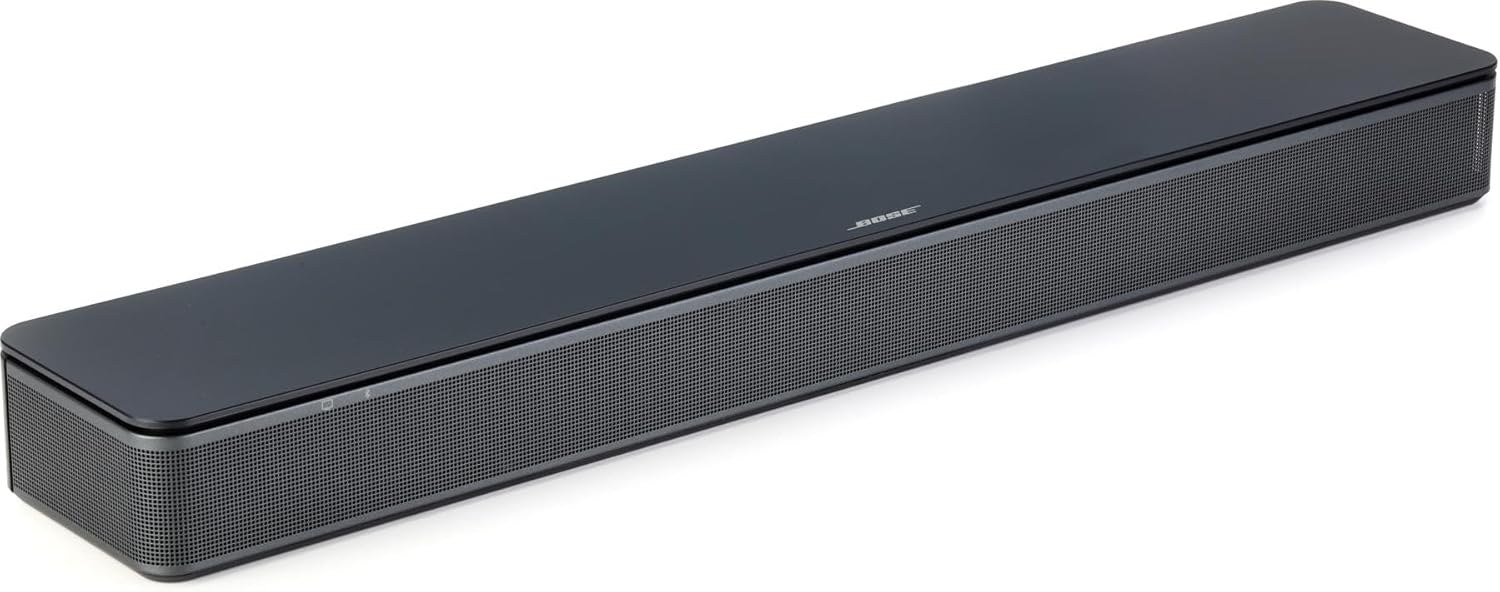
Measuring 2.21 inches tall, 23.38 inches wide, and 4.02 inches deep, the Bose TV Speaker carries an unobtrusive footprint suited for displays where vertical clearance is limited. The matte black plastic enclosure blends into media consoles without calling attention to itself, and keyhole mounting slots accommodate wall installations, though brackets are sold separately. The front grille conceals two angled full-range drivers alongside a centrally positioned one-inch tweeter, accompanied by subtle LED indicators that register volume adjustments and audio mode toggles. Rear connectivity includes an HDMI-ARC port with CEC compliance, an optical digital audio input, a 3.5mm auxiliary input, and a dedicated bass module output. The physical build is compact and tightly fitted, showing solid tolerances throughout, though the reliance on plastic outer casing reflects an entry-tier enclosure strategy. The package includes a five-foot power cord, a basic optical cable, and a compact infrared remote control.
Real-world performance
Acoustic reproduction from the Bose TV Speaker is clearly tailored for vocal clarity rather than home theater dynamics. The combination of two angled drivers and a dedicated center tweeter creates an intelligible center image, ensuring spoken dialogue remains clear over background scoring or ambient effects. Engaging the remote-controlled dialogue enhancement mode further emphasizes midrange frequencies, aiding viewers who struggle with recessed speech in television broadcasts. However, high-octane film sequences expose the inherent boundaries of its stereo configuration. The compact cabinet lacks internal volume to deliver impactful low-end presence, meaning sub-bass rumbles in action tracks are largely missing. Engaging the onboard bass boost mode provides moderate warmth in the mid-bass territory but does not replace a genuine low-frequency transducer. Spatial imaging is wider than standard integrated television speakers, yet the system does not produce true three-dimensional surround panning or object-based placement.
Value for money
Retailing at $279.00 with an aggregate customer rating of 4.3 out of 5 stars across more than 14,000 reviews, this unit occupies an unusual pricing bracket. Consumers are largely paying for brand cachet, refined midrange tuning, and compact dimensions. In this price neighborhood, competing manufacturers frequently provide 2.1 or 3.1 configurations complete with wireless subwoofers and bundled HDMI cabling. Because Bose does not include an HDMI-ARC cable or mounting brackets in the packaging, owners seeking CEC integration or wall-hung installations will face immediate supplementary costs. Adding the compatible Bose Bass Module 500 or 700 also requires purchasing a proprietary or 3.5mm cable, which pushes the total investment into the territory of high-end dedicated soundbars. For those strictly looking to resolve thin television sound without complex cabling, the investment may be justified, but objective sonic capability per dollar remains modest.
Who should skip it
Buyers seeking an immersive, cinematic home theater setup should bypass this model entirely. Because the unit is limited to stereo output and basic Dolby decoding, it cannot decode advanced audio formats such as Dolby Atmos or DTS:X, nor can it create genuine vertical or rear surround channels. Dedicated projector installations or expansive living rooms will quickly overpower the compact drivers, leaving the soundstage feeling constricted. Users who consume action films, orchestral scores, or modern gaming soundtracks that rely on deep low-frequency effects should look elsewhere, unless they are prepared to purchase a separate external subwoofer. Furthermore, households requiring Wi-Fi streaming, AirPlay 2, multi-room platform support, or smart assistant voice controls must pass on this unit, as wireless capabilities are strictly limited to basic Bluetooth. Anyone expecting an all-inclusive package with HDMI accessories should consider alternatives.