Design and build
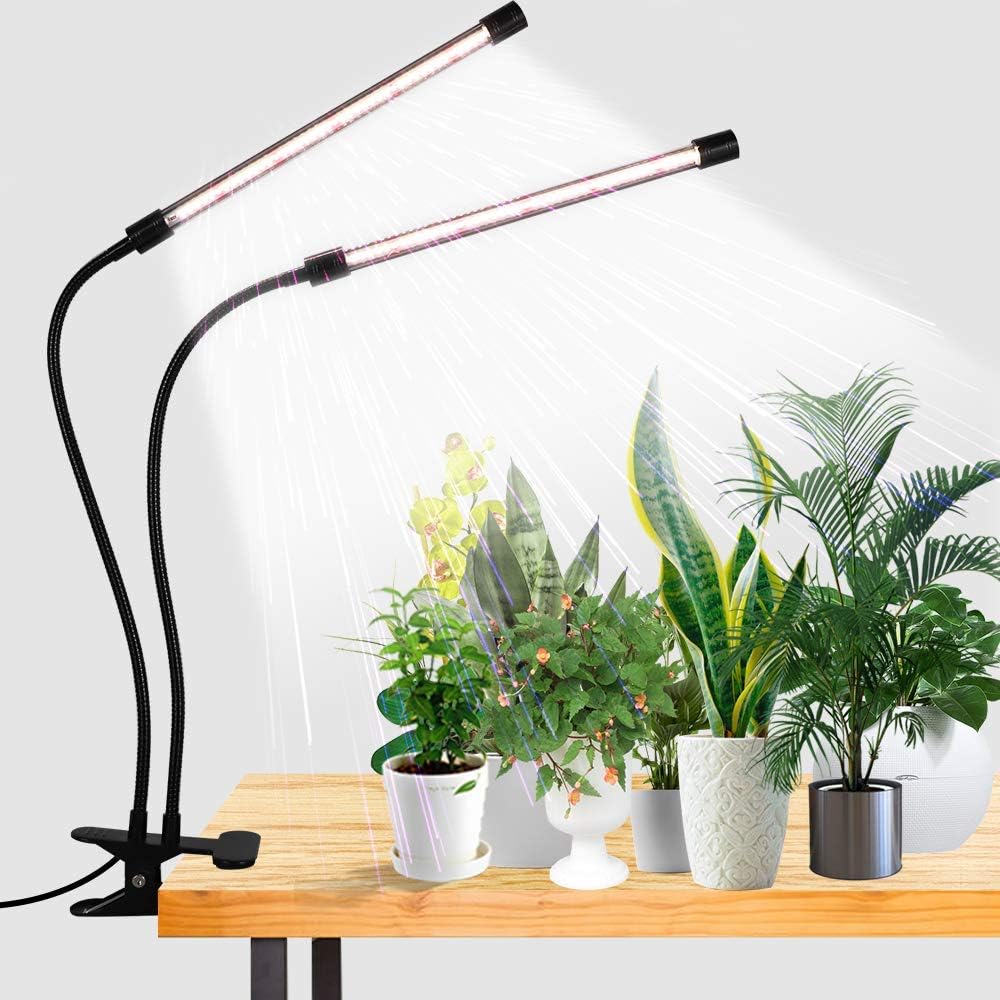
The GooingTop grow light is built around a utilitarian clamp-and-gooseneck configuration measuring 22 inches long by 14 inches wide. Fabricated from a combination of iron, plastic, and metal shading, the assembly is designed to clip directly onto desks, shelves, or the edges of plant stands. Dual flexible necks provide 360-degree articulation, letting growers angle the light heads over tabletop containers. Power delivery is flexible, accommodating either standard 110-volt AC wall outlets or direct USB connections via the provided adapter. The integrated inline controller manages basic functions, including 4-hour, 8-hour, and 12-hour automated cycle settings, alongside dimming controls. While the mechanical clamp is firm enough for stationary household furniture, the plastic housing around the switchgear feels strictly budget-oriented. At this price point, mechanical simplicity takes priority over industrial-grade durability, but the overall structural balance is adequate for anchoring small potted arrangements without tipping over under normal household conditions.
Real-world performance
In indoor cultivation, photosynthetic photon flux density (PPFD) measured at canopy distance is the single metric that matters for evaluating biological utility. The manufacturer specifies a maximum output of 2500 lumens and a 10-watt operating draw across 84 individual diodes—74 white and 10 red—producing a 6000-Kelvin daylight profile. However, raw lumens measure human ocular sensitivity rather than photosynthetically active radiation. Without published PPFD data across specific distances, buyers cannot verify precise millimole delivery for light-hungry plants. That said, the 6000K spectrum with a high color rendering index (stated between 90 and 95) provides a stark operational advantage over pink or violet blurple fixtures for shared living areas. The output renders foliage in natural color while avoiding the ocular fatigue associated with narrow-band spectrums. Given the modest 10-watt power draw, this unit functions primarily as supplemental daylight for low-to-moderate light houseplants rather than a primary driver for rapid vegetative growth.
Value for money
Retailing at $18.38, the GooingTop sits near the entry baseline for consumer clip lights. A rating average of 4.5 across more than 22,000 user logs indicates dependable execution of basic mechanical and electrical tasks. Electrical efficiency is high relative to its output profile; drawing approximately 10 watts under normal operation keeps calculated monthly utility expenses around two dollars when run on a daily twelve-hour cycle. The inclusion of a 365-day replacement warranty adds a degree of purchase protection rarely seen on sub-twenty-dollar hardware. For small decorative ferns, pothos, or winter windowsill supplementation, the unit provides clean aesthetic lighting without the capital commitment required for commercial horticultural bars. The bundled hardware eliminates the need for separate digital timers or bespoke suspension rigs, consolidating mounting, power conversion, and cycle scheduling into an inexpensive, out-of-the-box package.
Who should skip it
Growers managing demanding botanical setups should look elsewhere. The 10-watt power draw and unverified canopy PPFD output make this lamp inadequate for fruiting crops, flowering specimens, dense canopies, or large-scale vegetable propagation that mandate high photon densities. Additionally, because the fixture relies entirely on a physical clamp and flexible gooseneck mounts, it cannot cleanly integrate into standard modular grow tents, commercial wire shelving, or hydro rack systems. Cultivators who need precision environmental control will find the fixed 4, 8, and 12-hour timer presets too restrictive compared to smart plugs or external digital controllers. Anyone seeking measurable, uniform PAR coverage mapped across an entire plant footprint should bypass this unit in favor of dedicated board-style horticultural luminaires with certified laboratory PPFD test charts.