Design and build
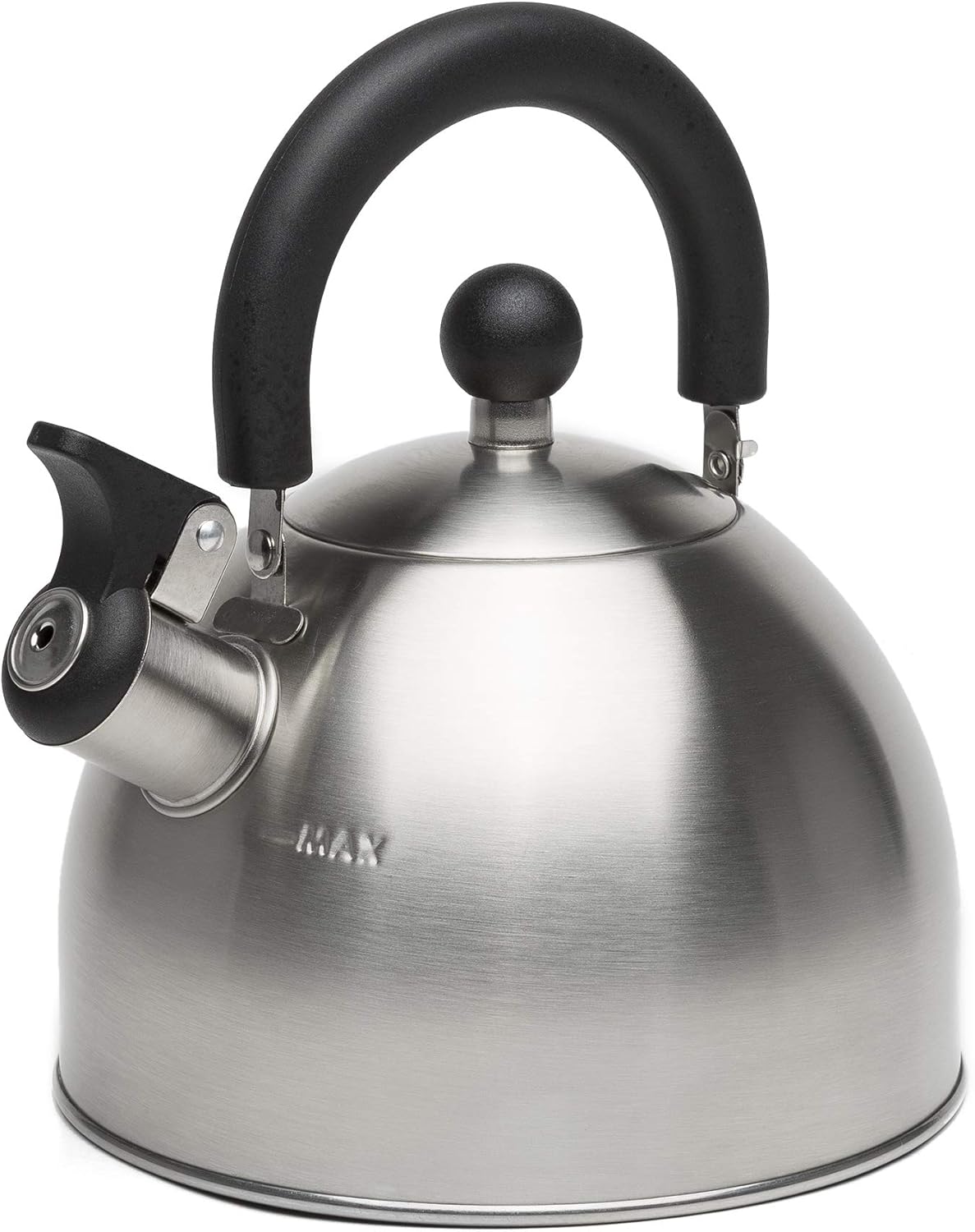
The Primula Stewart is constructed primarily from food-grade stainless steel across its body and lid, measuring 7.44 inches in diameter and 6.85 inches tall. This all-metal interior satisfies a core requirement for clean brewing by eliminating hot-water contact with plastics, thereby mitigating potential leaching and chemical off-tastes. Its 1.5-quart capacity occupies a modest footprint suited to smaller stove spaces and apartments, accommodating enough volume for roughly four standard mugs per boil. The kettle features a folding handle anchored to stainless steel brackets; while designed to collapse for compact vertical storage in low cabinets, the hinge assembly introduces a mechanical pivot point that demands careful handling over extended usage cycles. The brushed finish reduces surface fingerprinting relative to mirrored steel, though long-term exposure to high direct flames can cause exterior discoloration. Epoca incorporates a wide-mouth opening beneath the lid, facilitating interior access for descaling mineral deposits without requiring specialized brushes.
Boiling performance and spout function
When evaluated against rigorous tea preparation criteria, the Primula Stewart reveals the fundamental limitations of an analog stovetop design. The unit operates strictly as a binary boiling tool, sounding an acoustic whistle once water reaches a rolling 212 degrees Fahrenheit. For serious tea drinkers, the absence of degree-level temperature regulation is a severe functional deficit, as delicate green, white, and oolong varieties require stable water temperatures between 160 and 195 degrees to prevent extraction bitterness. While the kettle functions across gas, electric, and glass stovetop surfaces, users must rely on external thermometers or manual cooldown intervals to approach target brewing thresholds. The flip-up whistling cap operates via a lever mechanism intended to enable single-handed pouring; however, steam venting near the spout opening warrants caution during rapid pours. The water heats at a pace typical for thin-gauge stainless steel vessels, but thermal retention remains minimal once removed from the active burner.
Value for money
Priced at $17.99, the Primula Stewart sits firmly in the budget segment of stovetop utility hardware. Its overall aggregate rating of 4.3 out of 5 stars across more than 22,700 consumer reviews indicates consistent baseline functionality for general hot water duties. From a pure cost-per-ounce perspective, obtaining an all-stainless interior at this sub-twenty-dollar threshold is economically sound, especially when compared against basic electric kettles that frequently rely on plastic gauges, silicone gaskets, or synthetic filter housings inside the boiling reservoir. However, value is contingent upon application. As a barebones utility boiler for black tea, instant coffee, or kitchen prep, the investment risk is negligible. Conversely, purchasers seeking an engineered tea-making solution will find the return on investment diminished by the inevitable need to purchase separate gear, such as an instant-read probe thermometer or a standalone wide-basket infuser, to achieve proper leaf extraction.
Who should skip it
Dedicated loose-leaf tea enthusiasts should bypass this kettle entirely. The foundational rule of quality tea service requires precise thermal management, which this uncalibrated stovetop unit cannot deliver without secondary measurement equipment. Anyone preparing temperature-sensitive teas will find the whistle-to-boil mechanism counterproductive, as scorching delicate leaves destroys nuanced aroma profiles. Furthermore, the kettle includes no internal steeping basket, necessitating an external wide infuser so whole leaves can expand properly during infusion. Buyers utilizing magnetic induction cooktops should also pause and verify magnetic base responsiveness directly with the manufacturer, as basic stainless formulations can vary in induction efficiency unless a dedicated magnetic plate is specified. Finally, households requiring high-volume output will find the 1.5-quart capacity restrictive compared to standard two- or three-quart alternatives. Those seeking precise, degree-targeted temperature settings must look toward digital variable-temperature electric gooseneck models instead.