Design and build
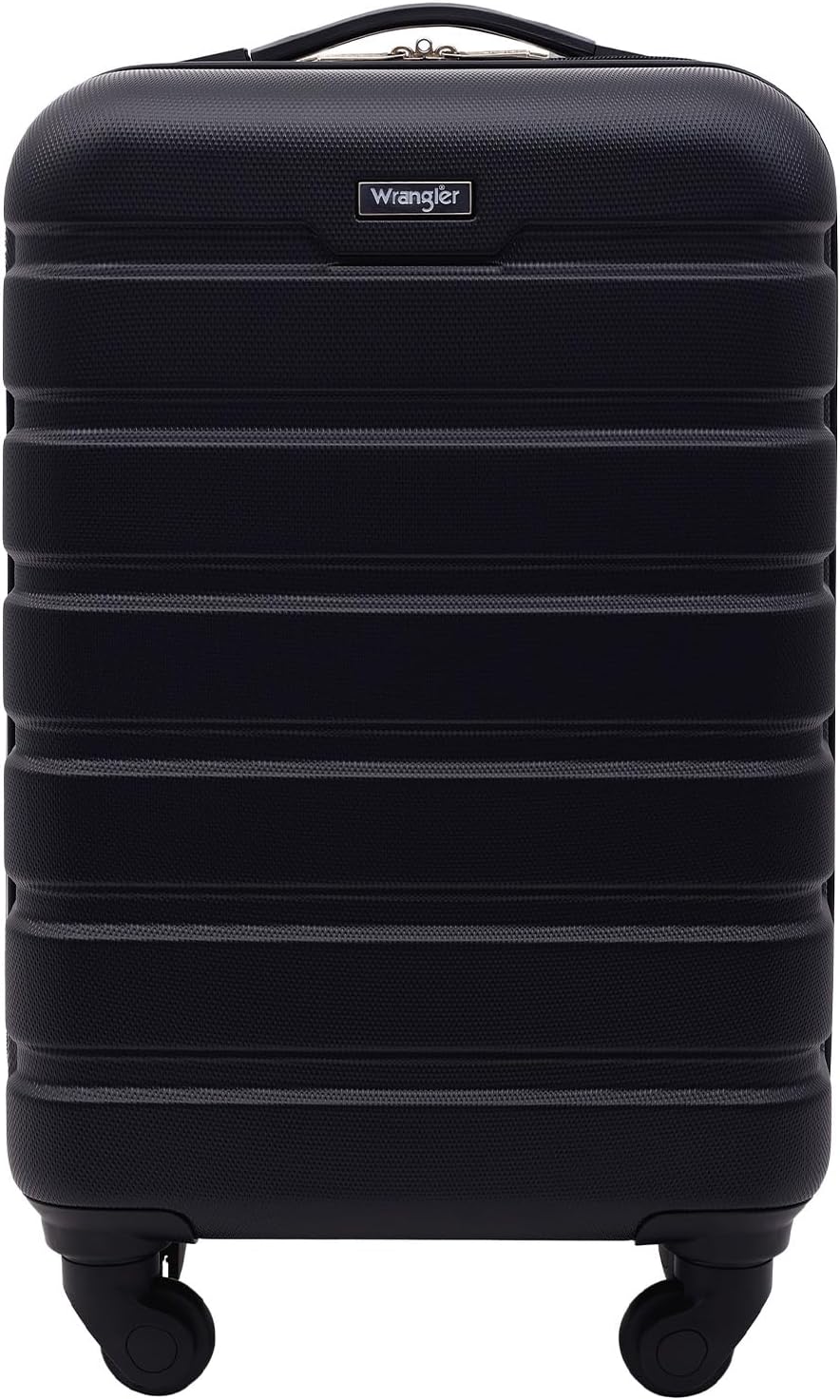
The case utilizes a 100% Acrylonitrile Butadiene Styrene (ABS) shell, resulting in an empty weight of 6.4 pounds. ABS keeps manufacturing costs down and limits baseline weight, but it behaves differently from polycarbonate under stress. Where polycarbonate flexes and recovers from heavy impacts, ABS is prone to brittle fracturing, particularly when exposed to low temperatures. The exterior dimensions measure 22.5 inches in height, 13.75 inches in length, and 8.5 inches in width, yielding an internal volume of 38 liters. The shell features molded horizontal ridges to enhance lateral rigidity across the panels. Hardware includes a recessed telescoping trolley handle, top and side padded haul handles, and an integrated combination lock. While adequate for cabin handling, the shell tolerances and exterior seams reflect entry-level mass production, meaning the structural integrity depends heavily on avoiding heavy external loads.
Real-world performance
Movement relies on four single spinner wheels described as in-line blade casters. On polished airport terminals, the 360-degree rotation permits straightforward upright pushing. However, on carpeted gates or rough asphalt, the small single-contact footprint increases rolling resistance significantly. The manufacturer does not specify modular, screw-mounted wheel assemblies, suggesting these casters are riveted and difficult to service if worn or snapped. The multi-stage telescoping handle engages with a push-button mechanism, though extended tolerances exhibit noticeable play when maneuvering a fully packed 38-liter load. Inside, the storage arrangement is utilitarian. It offers one main packing compartment secured by stretchable compression straps and two secondary pockets within the lining. The zipper tracks provide basic water resistance against light rain, but the absence of an expansion zipper means packing volume is strictly fixed to the designated capacity.
Value for money
Priced at $29.73, this suitcase occupies the lowest price tier for hard-sided luggage. With an aggregate rating of 4.4 out of 5 stars from over 9,700 reviews, it meets the baseline expectations of occasional travelers who require functional rolling storage without substantial capital outlay. For weekend trips or infrequent domestic flights, the low purchase cost offers a reasonable return on investment, provided the luggage remains in overhead compartments. Cost compromises are evident in the material choice and running gear. Competing mid-tier options utilize virgin polycarbonate and bolted, dual-wheel casters, but typically retail at four to five times this price. For travelers logging two or three domestic flights per year, the unit delivers straightforward utility, but buyers must recognize that longevity is compromised to achieve this sub-thirty-dollar retail point.
Who should skip it
Frequent flyers and international travelers should avoid this model. At 22.5 inches in total height, the case marginally exceeds the strict 22-inch limit enforced by several regional and international carriers, creating a risk of forced gate-checking. Travelers who anticipate checking their bags into cargo holds should also pass. When subjected to the sub-zero temperatures of aircraft bellies and aggressive baggage-handling machinery, ABS plastic frequently suffers structural cracking rather than yielding under impact. Additionally, business travelers who require robust modular hardware or silent dual-wheel maneuverability across uneven city sidewalks will find the single-wheel configuration insufficient. Those planning multi-leg journeys or operating in cold climates are better served by investing in a flexible polycarbonate shell equipped with user-serviceable wheels and compliant dimensions.