Design and build
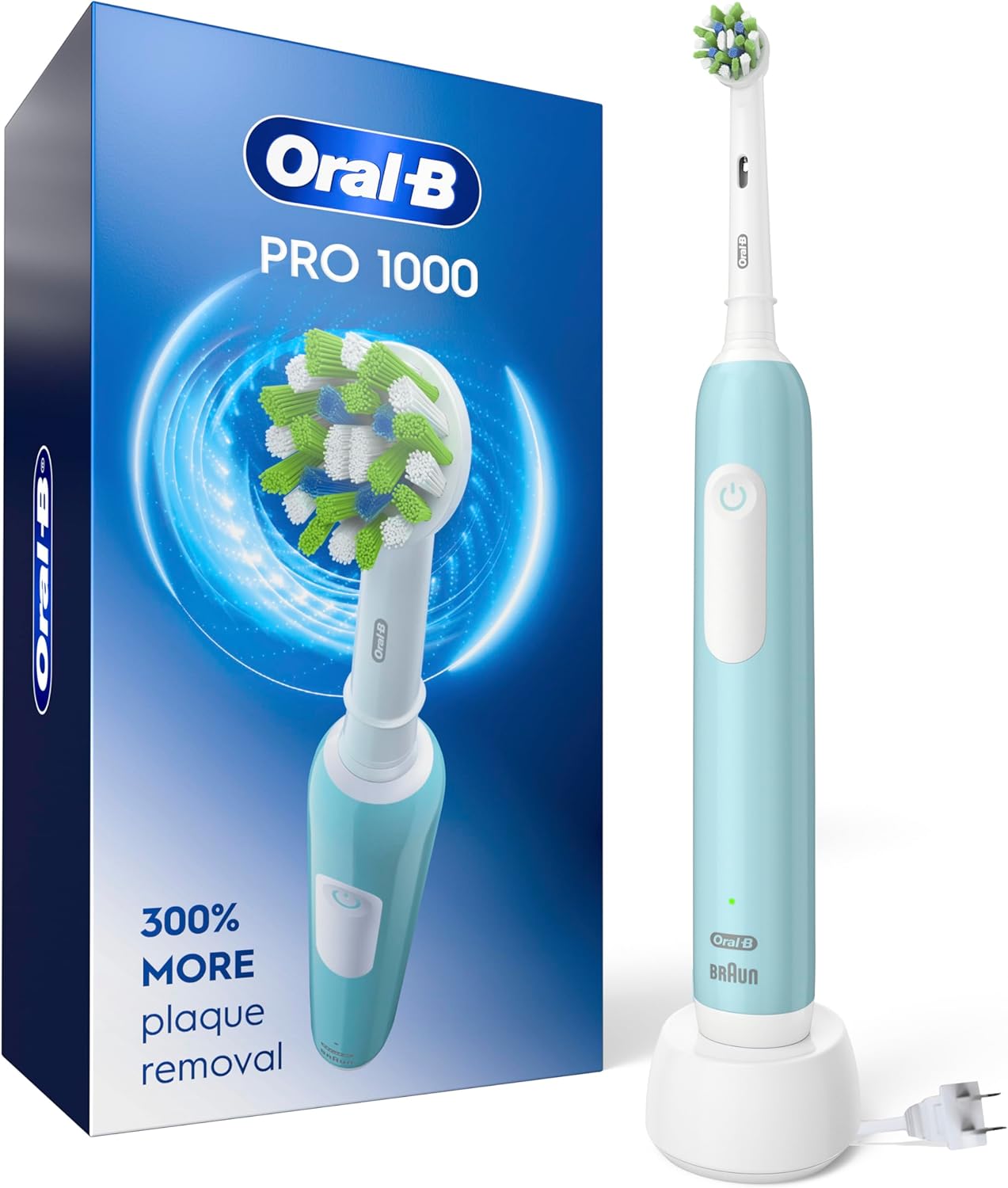
The Oral-B Pro 1000 presents a utilitarian aesthetic centered on mechanical function rather than superfluous design flourishes. Finished in green, the cylindrical handle houses a rechargeable battery alongside an LED indicator that signals low charge status and replenishment progress. However, a significant discrepancy exists within the manufacturer documentation: marketing text references three cleaning modes, whereas technical specifications explicitly designate a single Daily Clean setting. Buyers should verify packaging markings upon receipt to confirm exact configuration. The handle interfaces with standard Oral-B round brush heads via a solid metal drive shaft that delivers rotational and pulsating action. The physical profile offers sufficient grip for wet bathroom environments without excessive rubberized grooving that might trap grime. The power system relies on a corded electric inductive charging stand, meaning the handle remains sealed against water intrusion during routine sink usage.
Real-world performance
In line with established oral care principles, the Pro 1000 prioritizes gum safety through an integrated pressure sensor rather than relying on an array of secondary cleaning modes. When excessive force is detected against teeth or soft tissue, the handle automatically halts its pulsation mechanism, warning the user to ease pressure before tissue abrasion occurs. Navigation across dentition is managed by a quadrant timer that pulses every thirty seconds, systematically enforcing the standard two-minute brushing duration. Cleaning efficacy relies on the dentist-inspired round CrossAction head, engineered to wrap around individual teeth and clear plaque along the gumline. A point of caution lies in the technical specification listing the included head as hard firmness; prospective buyers with receding gums or sensitive dentin should evaluate swapping to softer bristle variants available in the ecosystem, as rigid bristles paired with oscillation can cause unnecessary irritation if handled improperly.
Value for money
Priced at $49.99, the handle represents a modest upfront barrier to entry for oscillating electric toothbrush technology. Over 105,000 consumer ratings averaging 4.5 out of 5 indicate broad satisfaction with this baseline investment. Nevertheless, financial evaluation must account for recurring brush head replacements over an extended lifecycle. Under standard dental guidance advocating head swaps every three months, a user consumes twelve heads over three years. Depending on multipack pricing, purchasing twelve genuine CrossAction or Sensitive heads will easily match or exceed the initial fifty-dollar purchase price of the handle itself. The Pro 1000 remains economically sensible precisely because it avoids charging premiums for Bluetooth tracking or redundant digital displays, directing capital entirely toward core motor mechanics. However, owners should factor recurring consumable costs into their three-year budget rather than assessing ownership value strictly by handle price.
Who should skip it
Shoppers seeking a guaranteed multi-program routine should bypass this unit until the single-mode versus three-mode listing conflict is resolved for their specific retailer batch. If your dental regimen necessitates a dedicated ultra-low-speed sensitive setting or dedicated tongue-cleaning frequencies, a model with verified discrete programming is preferable. Furthermore, users with compromised enamel or inflamed periodontal tissues should hesitate before using the included brush head if it ships with the listed hard firmness, as softer bristles are widely mandated for delicate tissue protection. Individuals requiring deep travel autonomy or universal USB-C charging interfaces will also find the proprietary corded inductive base inconvenient on the road. Finally, those who prioritize whisper-quiet operation should look elsewhere, as the mechanical oscillation and pulsation drive train generates a distinct, audible drone that is considerably louder than sonic-style alternatives.