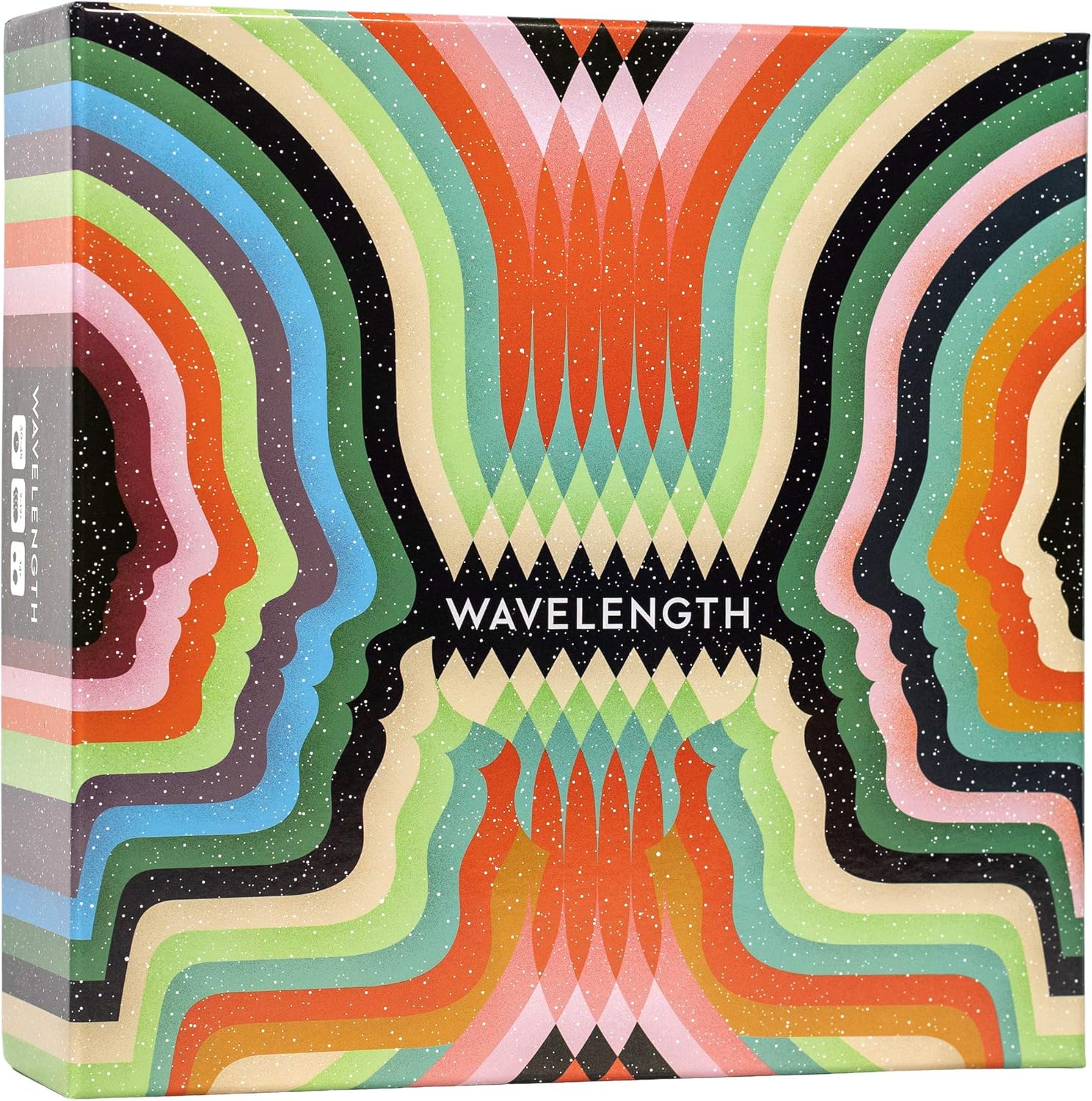
Design and physical build
The core of Wavelength is its proprietary mechanical wheel, constructed from plastic and acrylic components alongside 126 cardstock spectrum cards. The device houses a rotating dial and a sliding cover that conceals the target zone until scoring occurs. In practice, the plastic mechanism feels sufficiently rigid for standard tabletop sessions, though buyers should ensure the sliding shutter moves smoothly without binding against the plastic housing. The card stock is standard quality, divided between 84 standard spectrum cards and 42 advanced cards. Insert design is an asset here: rather than requiring complete removal and layout on a play surface, the device rests securely in the base tray during operation. This eliminates extensive organization during setup, matching the publisher's claim of near-instant deployment. Because the game relies entirely on physical alignment of the dial pointer against hidden colored wedges, component tolerances are central to accurate scoring, and the physical unit delivers adequate precision.
Real-world table performance
While the packaging suggests a functional player range of 2 to 12 or more participants, the true operational sweet spot sits strictly between 6 and 10 players. At two or three players, Wavelength uses an alternate cooperative variant that removes the competitive deduction and banter that define the experience. In that format, the game feels dry, reducing the experience to statistical guessing. When scaled beyond 10 people, individual input drops sharply, and peripheral participants often disengage while dominant voices dictate dial placement. In the 6-to-8 player band, split into two teams, the game achieves its intended pacing. Clue givers must balance specificity against ambiguity, and team deliberations last roughly two to three minutes per turn. Across typical sessions, total play time remains tightly constrained to the advertised 30 minutes, preventing downtime from stalling table momentum. Downtime between turns is low because opposing teams stay actively engaged trying to predict lateral outcomes.
Value and expansion necessity
Priced at $34.99, Wavelength offers fair value relative to its components, especially given the custom mechanical apparatus included alongside card stock. A primary consideration under our buying framework is whether expansions are required to sustain the experience. The core package provides 126 double-sided cards across standard and advanced tiers, yielding hundreds of spectrum prompts such as soft to hard or ethical to unethical. For gaming groups meeting once or twice a month, this baseline inventory offers months of distinct playthroughs before card familiarity sets in. Consequently, supplementary content is completely optional rather than mandatory for long-term viability. When prompt fatigue does eventually occur, it stems from team familiarity with each other's subjective reference points rather than a strict exhaustion of cards. The high market rating of 4.8 across more than 5,000 recorded customer reviews corroborates that the standalone retail box provides an entirely self-sufficient system.
Who should pass
Buyers seeking deterministic tactical gameplay or strategic depth should skip Wavelength entirely. The game offers zero resource management, engine building, or board positioning, meaning players who prefer mechanical mastery will find the open-ended semantic debates unrewarding. It is also unsuitable for dedicated two-player pairs who prioritize heads-up tactical play over party-style consensus building. Furthermore, social groups with low verbal engagement or players uncomfortable with subjective debate will struggle with the core mechanic, which requires defending arbitrary opinions in front of peers. If your table demands strict rule-enforced outcomes rather than interpretive arguments over whether a specific historical figure qualifies as a wizard, this title will feel unmoored. Lastly, collectors who prefer standard card-and-token profiles should note that the proprietary plastic console dominates shelf space compared to standard compact card games.