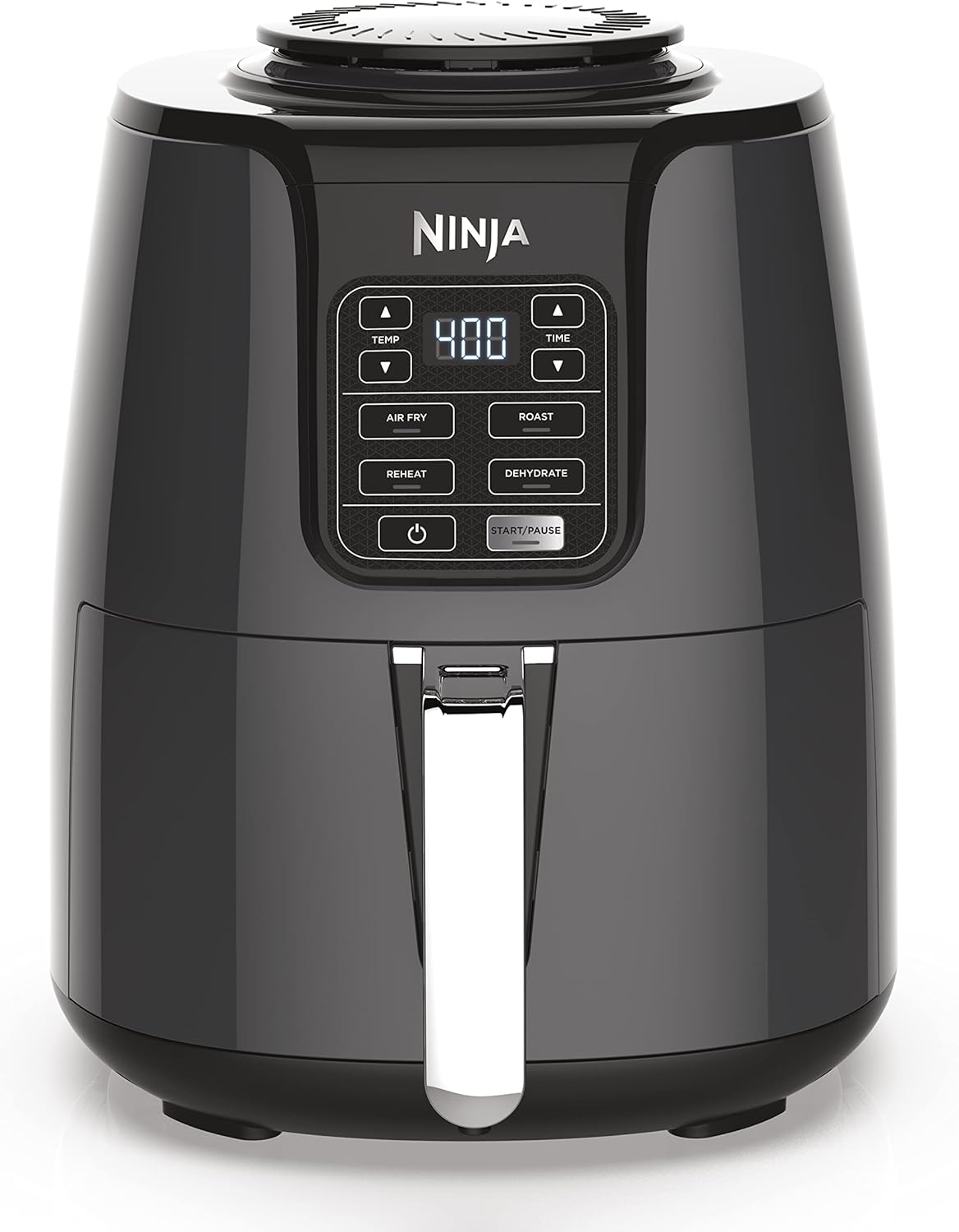
Design and Build Quality
The Ninja AF101 is built around a vertical cylindrical form factor measuring 13.6 inches deep, 11 inches wide, and 13.3 inches high, weighing 10.6 pounds. The exterior uses matte grey and black plastics that resist flex, while the main cooking chamber houses an aluminum basket and removable crisper plate coated in nonstick ceramic. Unlike traditional PTFE coatings that can degrade quickly under high heat, ceramic finishes offer respectable abrasion resistance, provided metal utensils are avoided. Ninja does not specify a quartz heating element here, relying instead on a conventional coiled metal element paired with a top-mounted convection fan. The control panel uses a flat membrane with dedicated push-button touch controls for time, temperature, and four cooking functions. Seating the basket into the housing requires firm, direct alignment, but the latching mechanism engages cleanly without excessive resistance or rattling.
Real-World Performance
With a 1550-watt power draw, the AF101 heats quickly despite lacking premium quartz elements. The internal operating range spans from 105°F to 400°F. The lower threshold is specifically calibrated for dehydrating tasks, operating the fan at low velocity to gently dry fruit or herbs without scorching. For standard high-heat air frying and roasting, airflow remains sufficiently aggressive to render fats and crisp surfaces. However, buyers must remember that usable interior capacity diverges substantially from the gross four-quart metric. While the manufacturer claims capacity for two pounds of fries, doing so stacks food several layers deep, requiring frequent manual basket shaking every few minutes to prevent uneven, soggy spots. For single-layer protein cooking, such as chicken breasts or salmon fillets, the bottom plate accommodates only two medium portions at a time before crowding impairs airflow.
Value for Money
Priced at $79.99, the AF101 operates in an aggressively competitive entry-level segment. Its high consumer rating across nearly sixty thousand reviews is backed up by sensible material choices. In this appliance category, long-term utility is almost entirely determined by cleanability; the removable basket and crisper plate withstand standard dishwasher cycles without immediate finish peeling, reducing the friction of daily use. While budget toaster ovens occasionally offer more absolute interior volume at this price point, they rarely match the concentrated convective velocity found in this standalone basket design. The inclusion of a 105°F low-end setting also expands functionality beyond basic frying into food dehydration, a feature often omitted in budget units. For small households seeking dependable convection performance without an excessive countertop footprint, the unit justifies its cost.
Who Should Skip It
Households cooking regularly for three or more individuals should bypass this model in favor of a six-quart basket or a wide-format countertop oven. The usable flat surface area on the crisper plate cannot accommodate family-sized protein batches without vertical stacking, which impedes hot air circulation and ruins crispness. Cooks prioritizing rapid browning and short preheats should note that this unit does not utilize quartz heating elements; buyers requiring that specific thermal speed will need to look elsewhere. Furthermore, if you plan to bake flat foods such as whole personal pizzas, the round, deep basket configuration is structurally unsuitable. Finally, those who require integrated smart connectivity or remote probe monitoring will find the AF101 too basic, as it relies strictly on manual, on-device digital time and temperature inputs.