Design and Hardware Construction
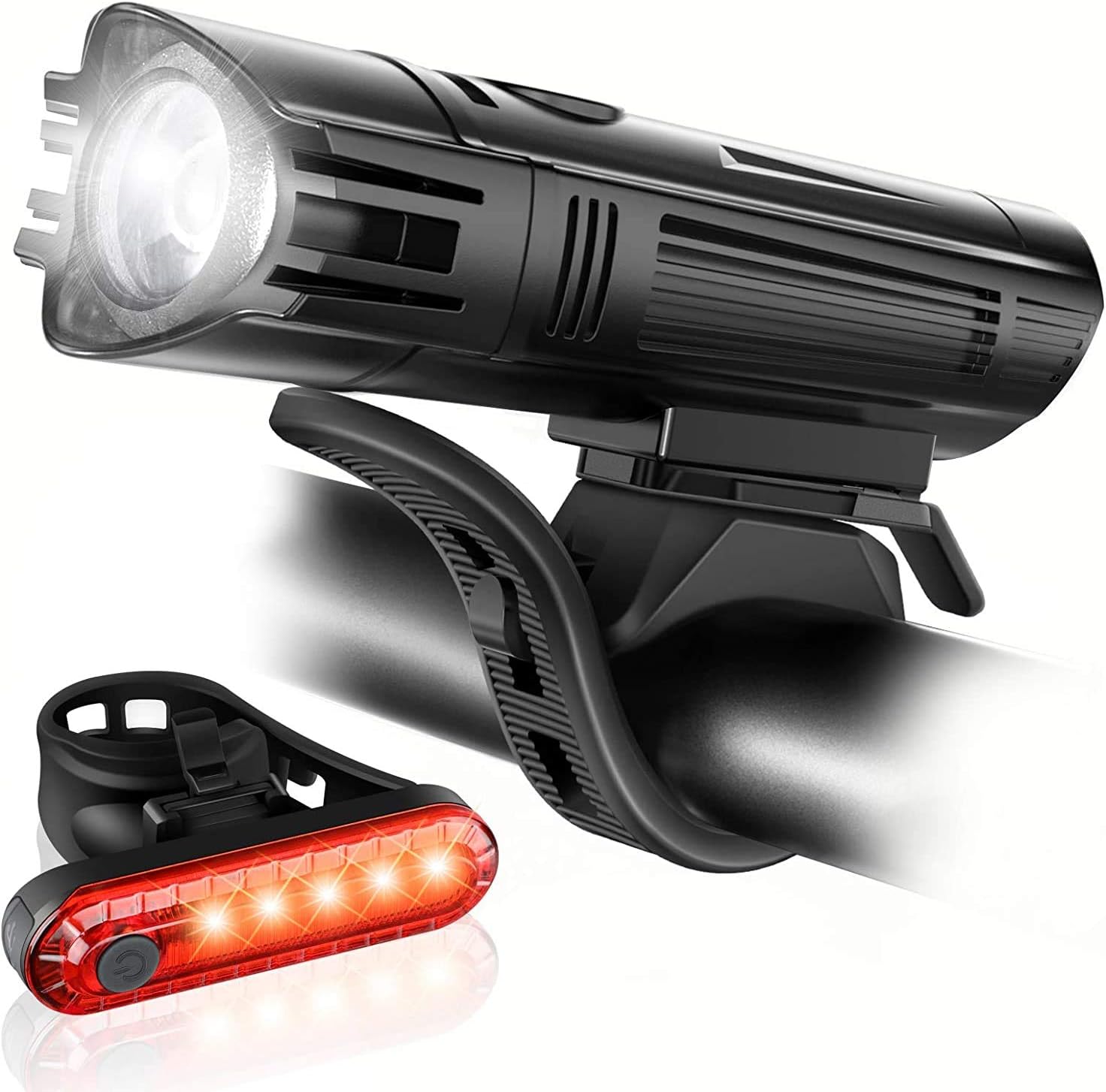
The Ascher HJ-040 combines plastic, aluminum, and silicone to keep overall system weight down to an aggregate 3.5 ounces. Mounting relies entirely on multi-slot silicone tension straps designed to wrap around standard handlebars and seat posts without requiring tools. While this design permits rapid removal to deter theft during urban lockups, stretchy silicone bands lack the rigid mechanical purchase of bolted alloy clamps over rough infrastructure. Angular adjustability is accommodated by a 360-degree horizontal swivel on the headlight bracket and a 45-degree vertical tilt on the tail mount, aiding correct beam positioning. Weather sealing earns an entry-level IPX4 designation, certifying the housings against direct water splashes from any direction. It does not provide submersion defense or total enclosure against fine dust ingress, so riders should ensure USB charging port rubber covers remain firmly seated during persistent wet-weather operations.
Illumination Output and Battery Operations
The lighting system relies on a maximum front output of 300 lumens, governed across four operational modes comprising full brightness, half brightness, slow flashing, and fast flashing. At 300 lumens, the headlight functions primarily as a conspicuity aid on illuminated urban corridors rather than a dedicated high-speed trail illuminator capable of casting long-range detail on dark pavement. The front unit carries a 2000 mAh internal lithium battery yielding manufacturer-stated runtimes between 5 and 12 hours depending on the chosen beam profile. The red rear light utilizes a smaller 330 mAh battery rated between 9 and 16 hours. Both devices recharge via standard USB inputs. Riders operating on mixed-traffic roads will extract the best battery conservation from the flashing profiles, though cyclists riding through pitch-black sectors will exhaust the higher-output steady setting much faster during sustained night commutes.
Value Assessment and Market Placement
While retail pricing fluctuates on online retail channels, the Ascher HJ-040 sits firmly in the entry-level budget cycling accessory tier. For urban riders, casual commuters, and younger cyclists operating across neighborhood pathways, the set provides functional front and rear coverage in a single purchase. The inclusion of internal rechargeable batteries eliminates the ongoing operational expense of disposable coin or AAA cells. However, long-term durability is constrained by the silicone mountings and non-replaceable internal lithium cells, which degrade over repeated charge cycles. Prospective buyers should verify current retail pricing to ensure it undercuts branded mid-range safety options. For strict urban transportation, it supplies the minimum legal illumination requirement at minimal mass, though heavy daily utility riders may desire sturdier bolted mounting systems and metal housings for extended durability in all seasons.
Limitations and Who Should Skip It
Riders with demanding night commutes, off-road cross-country routes, or fast unlit road descents should look elsewhere. An output cap of 300 lumens is inadequate for identifying high-speed road hazards, deep potholes, or loose gravel in total darkness, where lights producing 800 to 1,500 lumens are standard. Furthermore, mountain bikers will find the silicone strap mount susceptible to shifting and dipping under severe trail chatter. Riders seeking an integrated lighting solution directly wired into an e-bike battery bus will not benefit from these self-contained USB units, which require regular individual charging. The manufacturer provides no information regarding UL electrical system certifications for the charging circuits, which buyers should verify alongside basic electrical safety standards. Commuters facing torrential downpours should also bypass IPX4 units in favor of IPX6 or IPX7 waterproof standards.