Design and Build
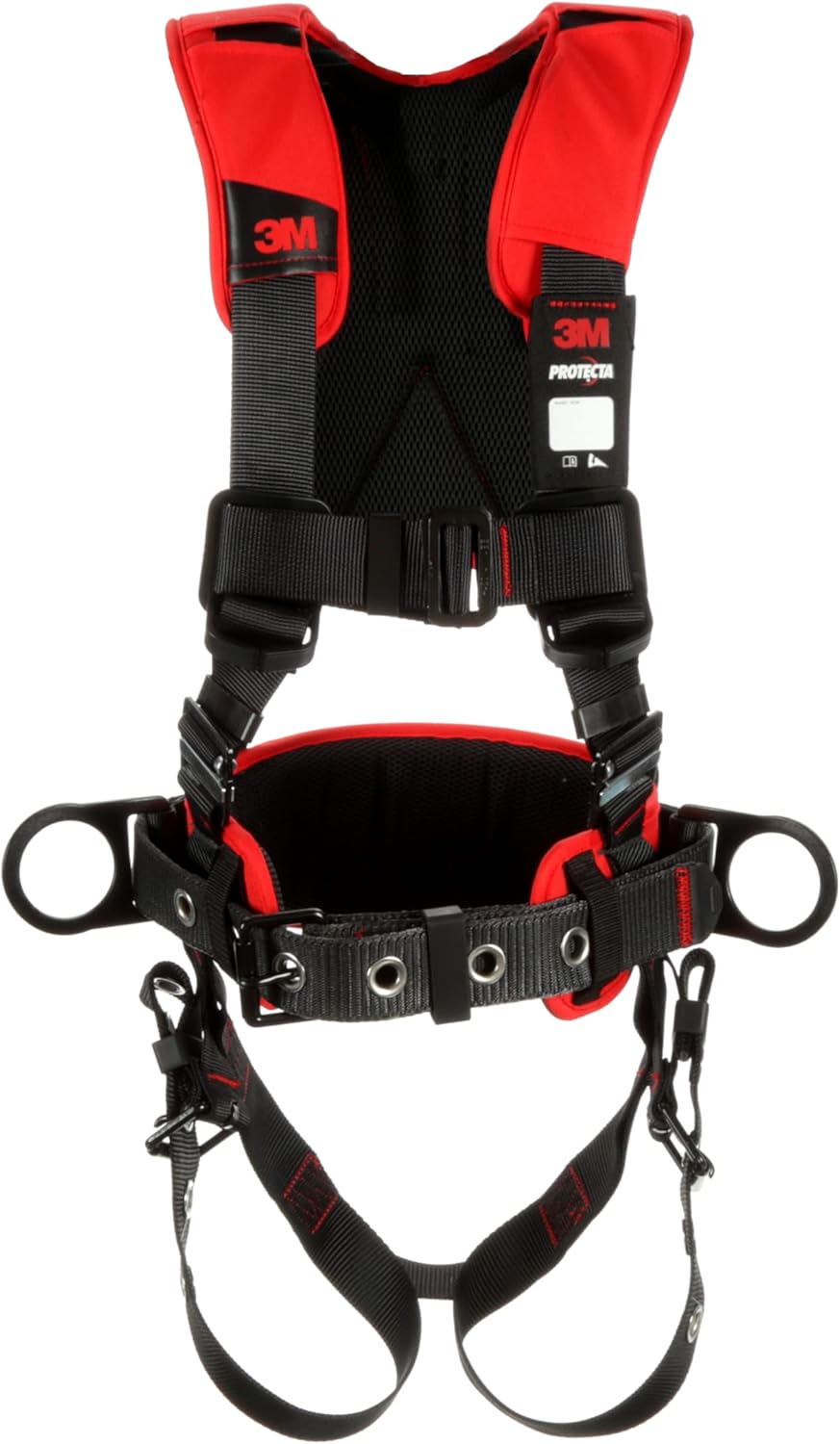
The 3M Protecta Comfort Construction Style Harness is engineered exclusively for occupational fall arrest and work positioning. Constructive elements center on heavy-gauge polyester webbing mated to zinc-plated steel hardware. The layout incorporates three D-rings—a dorsal point for fall arrest and dual hip points intended for work positioning—alongside traditional tongue-buckle leg straps. Total unit mass measures 5.3 pounds, reflecting substantial structural reinforcement required to achieve its 420-pound maximum working capacity. The medium/large sizing is shaped to accommodate layered workwear over job-site shifts. The material choices emphasize abrasion resistance and structural longevity under harsh environmental conditions, though maintenance instructions mandate hand washing to preserve fiber integrity and prevent chemical degradation of the synthetic polymers. In terms of construction quality, the stitching patterns are dense and consistent throughout load-bearing junctions. While ruggedly constructed for commercial trades, the architecture is entirely static-oriented, lacking the dynamic load distribution, low-profile tie-in loops, and low-mass requirements fundamental to recreational climbing hardware.
Real-World Performance
With a 4.6 out of 5-star rating across 595 recorded evaluations, the Protecta Comfort establishes a reliable baseline in commercial applications. On structural steel and scaffolding, the dorsal and lateral D-rings locate securely, enabling consistent lanyard attachment and stable hands-free leaning. The tongue-buckle leg interfaces provide repeatable, non-slip adjustment once set to the wearer's dimensions, avoiding the creeping slippage occasionally observed with standard pass-through friction plates. However, the 5.3-pound gross weight makes itself felt during prolonged ascents on fixed ladders. The integrated padding provides necessary pressure dissipation against heavy tool belts, but ventilation remains modest during high-output activity in warm climates. Mobility is intentionally constrained to keep the worker upright during an arrest sequence, which functions well for compliance but restricts radical leg movement. Users requiring rapid donning will find the tongue buckles slightly slower than quick-connect hardware, yet they provide unambiguous visual verification of proper mechanical engagement prior to working at height.
Value for Money
Retail pricing sits at $132.30, placing this full-body model in a competitive mid-tier position within industrial personal protective equipment. For safety managers and tradespeople, the unit delivers a viable combination of integrated comfort padding, a 420-pound weight ceiling, and triple D-ring configuration without reaching the elevated price brackets of premium tower-climbing rigs. The zinc-plated hardware and robust polyester weave suggest an extended operational lifespan under routine job-site wear, mitigating rapid turnover costs. Documentation and instruction guides are supplied in the package to aid regulatory compliance and inspection tracking. Given its performance metric of 4.6 stars over nearly 600 reviews, the harness offers measurable commercial utility for structural contractors. However, value is strictly non-existent for recreational climbers, as the equipment cannot fulfill dual-purpose roles across sports disciplines. Within its defined industrial scope, the Protecta Comfort represents a balanced expenditure between minimal bare-webbing harnesses and expensive specialized industrial gear.
Who Should Skip It
Recreational rock climbers, mountaineers, and gym climbers must entirely bypass this product. Our foundational purchasing criteria dictate that life-safety equipment must carry valid UIAA or CE mountaineering certifications, standards that this industrial fall-arrest harness does not claim or maintain. Furthermore, 3M explicitly designates this model for industrial and occupational use only, prohibiting consumer applications. At 5.3 pounds, the harness imposes severe weight penalties that hinder athletic movement, while the high dorsal attachment point is incompatible with standard lead belay techniques or standard recreational belay devices. Rope access technicians should also take note: without a certified sternal attachment point or dedicated low ventral sit-harness ring, this model cannot facilitate standard rope ascents or multi-rope maneuvers. Any user seeking equipment for crag use, sport routes, or traditional climbing must invest in a dedicated climbing sit harness rated under UIAA 105 or EN 12277 to ensure appropriate dynamic fall deceleration and safety compliance.