Design and build
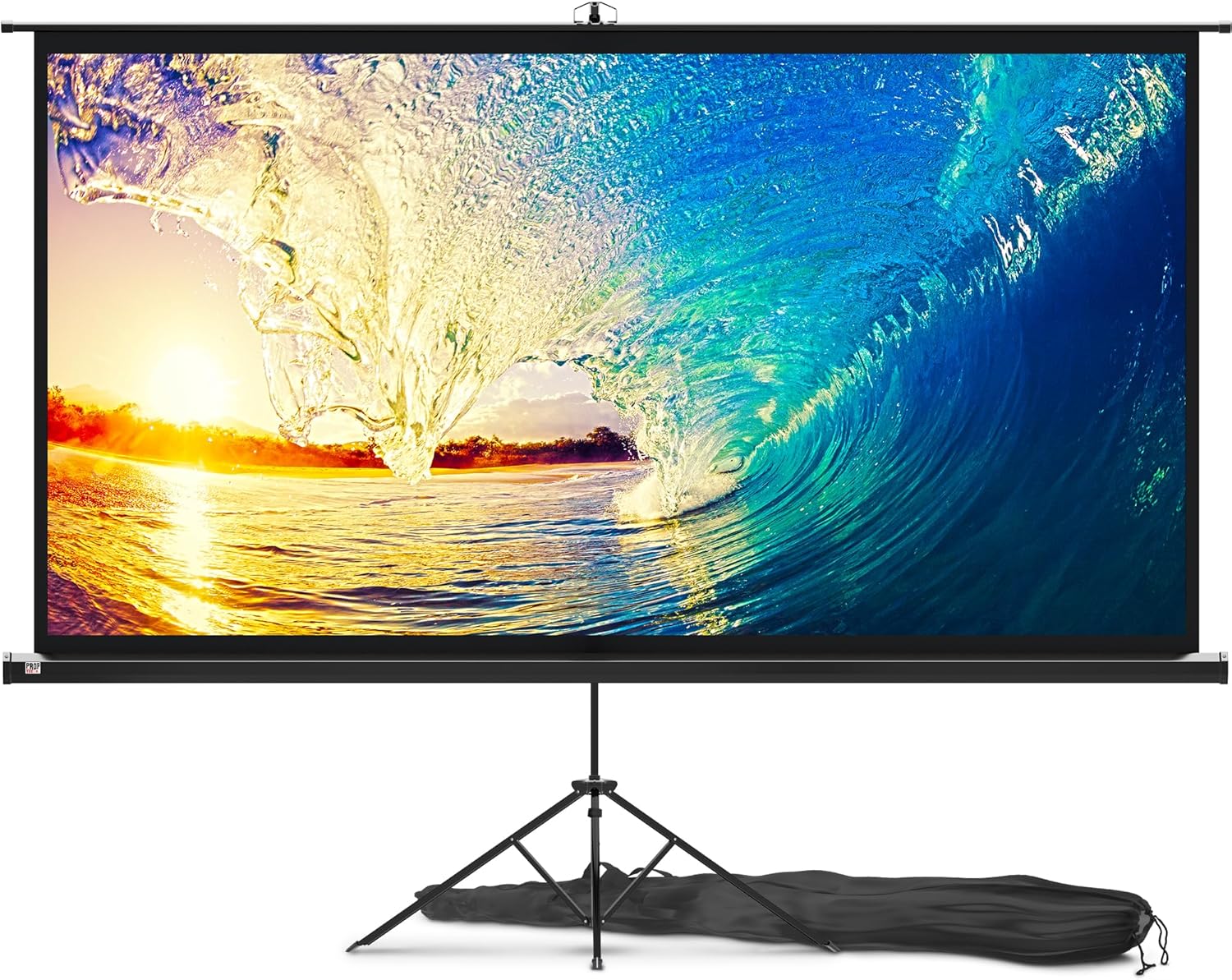
The PropVue screen relies on a mechanical tripod assembly that supports a 100-inch diagonal, 16:9 aspect ratio fabric. Weighing 17.6 pounds fully packed, the unit is engineered for mobility, folding into an included canvas transport bag with tightening straps. The frame uses a telescoping vertical pole to adjust viewing height, while a top crossbar and lower hook secure the screen material under mild spring tension. Material construction consists primarily of stamped sheet steel hardware and molded plastic adjustment collars. While functional for rapid three-step indoor assembly, the single-stem tripod architecture creates an inherent pivot point. In outdoor settings, even mild breezes can turn the broad 100-inch canvas into a sail, stressing the plastic locking latches. Buyers should verify floor clearance, as the tripod footprint requires broad leg extension to maintain center-of-gravity balance and prevent forward tipping when fully extended.
Real-world performance
The projection surface features a standard matte finish rated at 1.1 gain. In practice, this provides uniform light diffusion across a wide viewing cone, ensuring off-axis viewers see consistent image luminance without harsh center hot-spotting. However, a 1.1 gain white screen does not reject ambient light. In untreated rooms with daylight or overhead fixtures, light scatters across the white fabric, immediately elevating black levels and washing out perceived image contrast. To achieve satisfactory contrast and depth, the screen requires pairing with a projector outputting sufficient true ANSI lumens—not inflated light source metrics—inside a darkened environment. Furthermore, non-tensioned pull-up designs inevitably display subtle edge curling or horizontal ripples over time. While presentation slides and bright animated content mask minor surface irregularities, panning shots in cinematic films will reveal the lack of rigid tab-tensioning found in higher-grade projection surfaces.
Value for money
Retailing at $158.99, the PropVue package occupies a heavily contested budget bracket. Its primary advantage is completeness: buyers receive the screen, tripod stand, hanging brackets, and carry bag in a single purchase, avoiding the separate stand purchases often required by bare-canvas alternatives. A 4.4 out of 5 rating across nearly 6,000 recorded consumer reviews demonstrates consistent mechanical reliability relative to its price point. It undercuts motorized electric roll-down screens and tab-tensioned fixed frames by hundreds of dollars, making it an economical option for occasional backyard screenings or portable boardroom briefings. However, purchasers seeking performance upgrades such as grey contrast-enhancing fabrics or Ambient Light Rejecting (ALR) layers will need to spend considerably more. As an utilitarian mobile utility, the unit balances physical convenience against optical simplicity at a fair market price.
Who should skip it
Dedicated home theater enthusiasts seeking optimal contrast should pass on this model. Without ambient light rejecting properties, the white matte screen cannot produce deep black levels unless installed in a completely light-sealed room, and even then, videophiles will prefer a rigid, permanently tensioned wall-mounted frame that guarantees a perfectly flat plane. Those planning regular outdoor movie nights in open, breezy areas should also reconsider, as freestanding tripod screens lack the structural rigidity and anchoring points of truss-style or ground-staked frame kits. Additionally, ultra-short-throw (UST) projector owners must avoid this product entirely; UST optics project upward at steep angles, which exaggerates any tiny wave or wrinkle present in a non-tensioned screen into significant geometric image distortion. Such hardware requires dedicated, tensioned ALR screens engineered specifically for extreme focal angles.