Design and Build Quality
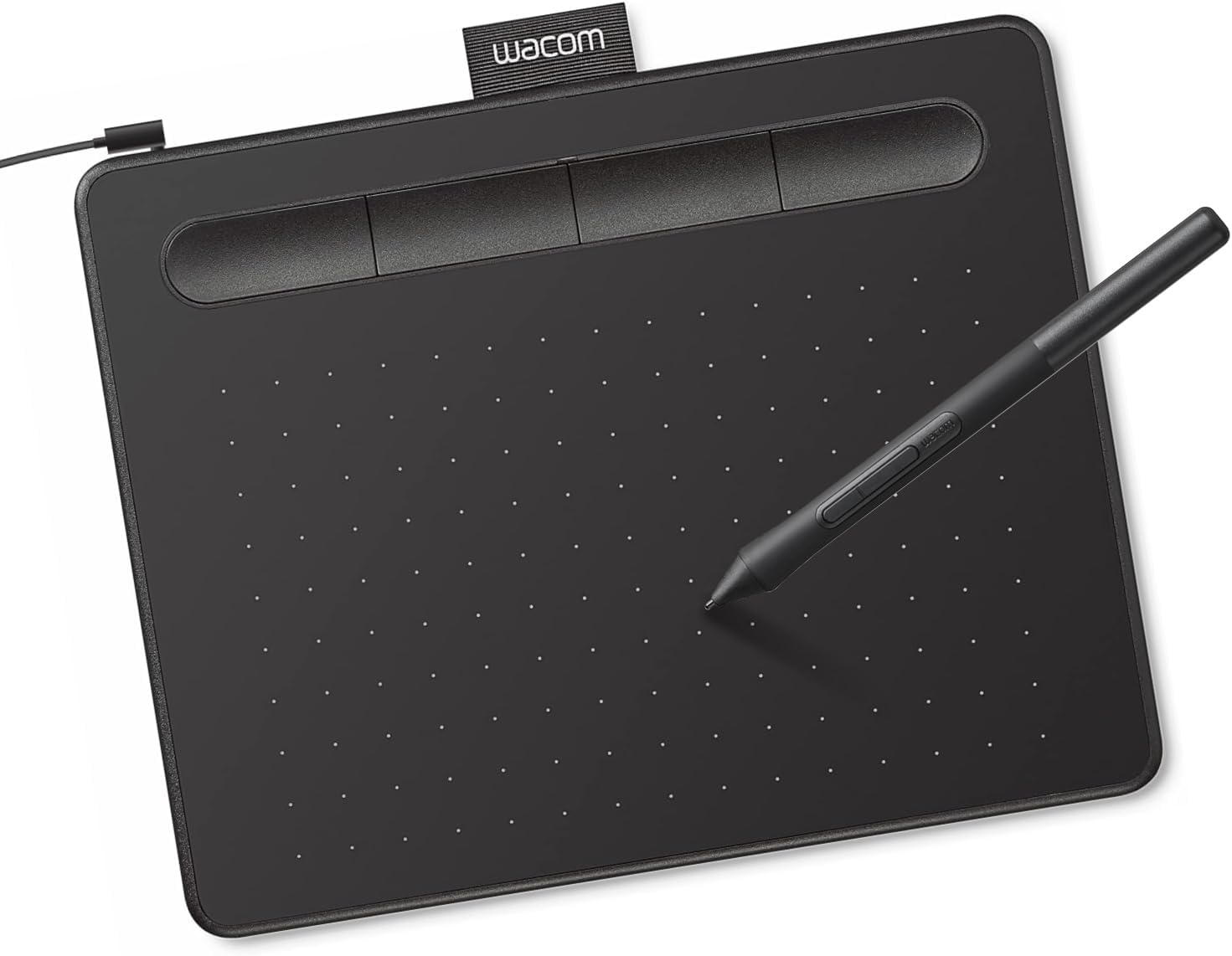
The Wacom Intuos Small (CTL4100) utilizes a utilitarian, compact plastic chassis engineered primarily for portability and minimal desk encroachment. Its upper edge integrates four recessed ExpressKeys configured in a slight shallow tray, serving simultaneously as shortcut triggers and a resting groove for the stylus. The wired connection relies on a detachable USB-A cable featuring a molded L-shaped connector, which reduces strain against the tablet port during prolonged desktop sessions. Because the manufacturer does not list exact physical exterior dimensions or active workspace boundaries in the primary technical specifications, prospective buyers should verify these millimeter metrics against their available desk real estate and monitor aspect ratios. Build integrity is rigid despite the entirely plastic construction, showing negligible chassis flex under normal downward palm pressure. The matte finish resists grease buildup, while the overall mechanical layout emphasizes functional restraint over aesthetic indulgence, aligning well with the requirements of classroom instruction and modest digital workstations.
Real-World Performance and Ergonomics
Digital drawing performance confirms the industry rule that pressure specifications matter far less than physical surface texture and tactile feedback. As a non-display graphics tablet, the CTL4100 completely bypasses optical parallax, mapping hand coordinates directly to an external monitor without glass refraction or cursor offset. The included Wacom Pen 4K operates via battery-free Electro-Magnetic Resonance technology, eliminating internal charging cells and keeping the handpiece lightweight and balanced. Tracking is immediate across supported operating systems, with the tablet registering fine line modulation smoothly. The drawing plane features a fine micro-texture engineered to simulate the mechanical drag of pencil against paper, avoiding the slick, uncontrolled glide typical of glossy glass screens. This tactile resistance naturally consumes nib material over time, making the inclusion of three replacement nibs and a dedicated extraction tool inside the stylus assembly an essential operational feature for ongoing maintenance.
Value for Money and Ecosystem
Retailing at $39.95, the wired Intuos Small delivers an exceptional cost-to-utility ratio backed by a 4.6 out of 5 rating across 23,907 user reviews. This pricing tier typically forces trade-offs with unbranded digitizers plagued by unstable drivers or pens requiring alkaline batteries. In contrast, Wacom pairs an established EMR hardware foundation with bundled creative software licenses and structured training modules accessible upon hardware registration. Cross-platform utility is extensive, extending certified compatibility to Chrome OS alongside standard Windows and macOS environments. The one-year manufacturer warranty establishes a baseline standard of reliability, while the inclusion of essential accessories—such as the L-shaped data cable and replacement nibs—ensures zero immediate hidden costs. For educators needing a digital whiteboard input device or beginning digital illustrators establishing core motor skills, the financial barrier to entry is virtually negligible relative to the hardware longevity provided.
Who Should Skip It
While capable within its designated scope, the Intuos Small is unsuitable for experienced illustrators who rely on broad, whole-arm gestures from the shoulder. The small active surface restricts wrist and finger range, making sweeping linework and expansive cross-hatching difficult without aggressive software zooming. Furthermore, users who demand the hand-eye immediacy of drawing directly on glass must look to dedicated interactive pen displays, though they will trade off portability and introduce parallax considerations. Anyone operating modern laptops equipped exclusively with USB-C ports should also note the supplied cable terminates in an older USB-A connector, requiring an external adapter or replacement cable to function. Finally, professional studio retouchers requiring physical touch rings, tilt recognition, or wireless Bluetooth freedom will find the CTL4100 overly spartan, as this wired model focuses strictly on essential coordinate input and core shortcut actuation.