Design and Build Quality
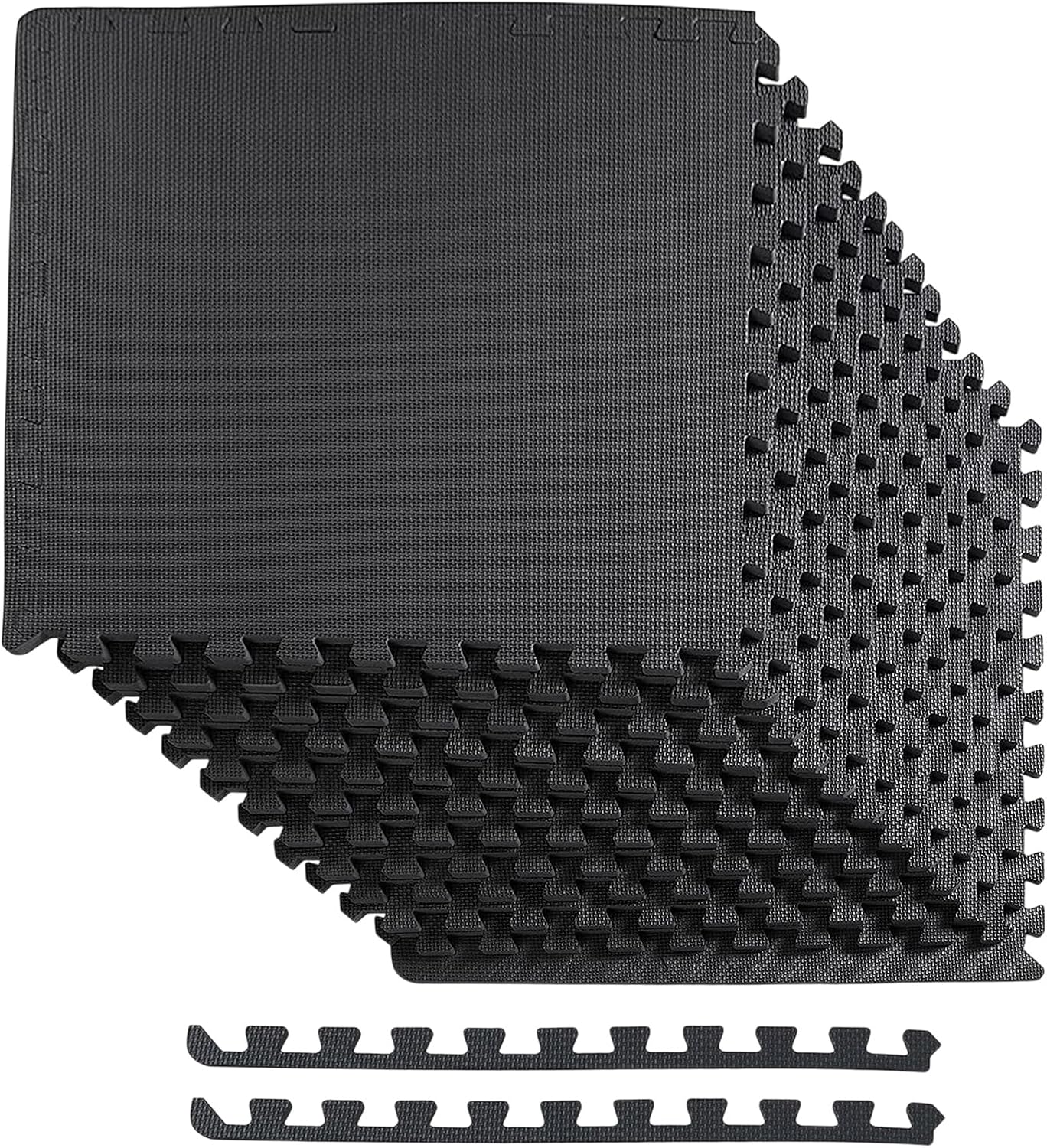
The BalanceFrom puzzle mat pack consists of 12 individual tiles and 24 border pieces, yielding 48 square feet of floor coverage. Each tile measures 24 by 24 inches with a nominal thickness of 0.5 inches. The material is ethylene vinyl acetate (EVA), a closed-cell foam known for cushioning rather than structural rigidity. The overall shipping weight is listed between 6 and 8 pounds across manufacturer documentation, indicating a very low material density compared to vulcanized rubber gym flooring. Each square incorporates precision puzzle edges engineered to interlock without adhesive, along with removable smooth borders that finish exposed edges. The surface utilizes a double-sided textured pattern intended to provide basic traction against shoes and the underlying floor. While adequate for surface-level protection, prospective buyers should recognize that EVA foam lacks the tensile strength and resilience found in commercial-grade rubber options.
Real-World Performance
In operational terms, the 1/2-inch EVA foam performs adequately for floor work, stretching, calisthenics, and light dumbbell exercises. The closed-cell construction effectively shields joints, hips, and knees from raw concrete or hardwood subfloors. Moisture resistance is an inherent strength of EVA; sweat and water spills pool on the surface rather than soaking in, allowing for basic hygiene maintenance using mild soap and water. The double-sided non-slip texture keeps the interlocking pieces seated reasonably well during lateral movements and bodyweight drills, though intense lateral footwork can cause interlocks to shift if the perimeter is unsecured. While the half-inch thickness minimally impacts overhead ceiling clearance, athletes performing overhead presses should always verify clearance beforehand in low-ceiling basements. For general floor cushioning and reducing scuffs on household floors, the material functions as claimed.
Value for Money
Retailing at $36.99 for 48 square feet, the BalanceFrom mat presents an entry-level cost profile of roughly $0.77 per square foot. This price point makes it an exceptionally accessible option for establishing dedicated stretching areas, yoga spaces, or kids' play zones on a budget. In contrast, commercial 3/4-inch vulcanized rubber mats routinely cost triple to quadruple this amount per square foot. The product holds a 4.6 out of 5-star rating across 60,512 consumer reviews, indicating that the vast majority of buyers find the utility aligns with the modest financial investment. It is not an alternative to heavy platform rubber, but for non-ballistic fitness activities, light exercise machines, and general basement utility, the cost-to-coverage ratio is difficult to beat.
Who Should Skip It
Lifting enthusiasts aiming to build a serious strength training environment should bypass EVA foam tiles. The standard baseline for home gym racks demands 11-gauge steel and 3x3 uprights, and such heavy structures will rapidly crush and deform 1/2-inch foam, creating an uneven and hazardous foundation. Dropping cast iron dumbbells, heavy kettlebells, or loaded barbells will puncture or permanently indent the tiles while transmitting impact directly into the concrete below. Similarly, machines with small, focused contact points will sink into the material over time. Buyers planning to deadlift, install bolted power racks, or perform heavy Olympic lifts require dense, high-durability rubber stall mats. For those users, EVA foam represents an unsuitable foundation that fails to provide the required structural integrity or equipment protection.