Design and build
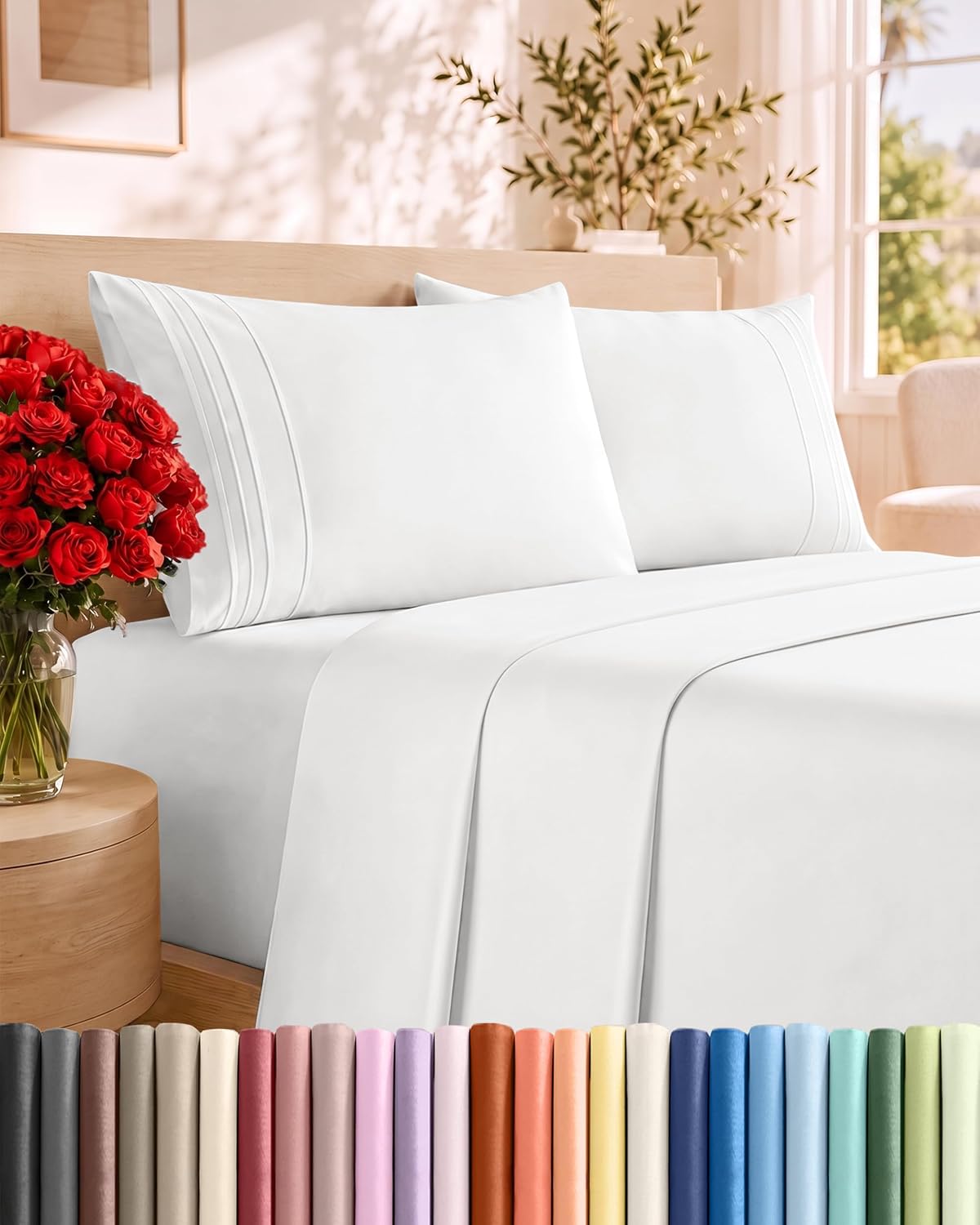
The CGK Unlimited Queen sheet set comprises four pieces: a 102 by 90-inch flat sheet, an 80 by 60-inch fitted sheet, and two standard pillowcases measuring 20 by 30 inches. The primary structural characteristic is its deep-pocket fitted sheet, engineered to secure mattresses up to 16 inches deep. Rather than woven plant fibers, the manufacturer constructs this set using double-brushed polyester microfiber. Microfiber yarn relies on finely spun synthetic filaments abraded across the surface to produce a soft tactile finish. The listing references Oeko-Tex certification, indicating baseline chemical safety testing during production. Traditional metrics like thread count are intentionally omitted here, as thread count functions as marketing noise and does not technically apply to synthetic microfiber fabrics in the same structural manner it does to woven cotton. The stitching along the hems is standard industrial single-needle work, designed for mass-production efficiency rather than heirloom-level endurance.
Real-world performance
Thermal regulation is the primary variable to consider when evaluating brushed synthetic textiles against natural weaves. While the manufacturer claims cooling and breathable performance, material physics dictates that tightly spun brushed polyester does not ventilate like long-staple cotton percale. Percale weaves sleep cool by allowing ambient airflow through a matte structure; brushed microfiber behaves more like sateen, trapping ambient body heat close to the sleeper. For neutral sleepers, the immediate surface comfort provides a smooth, non-abrasive barrier that resists immediate wrinkling straight out of the wash. The fitted sheet's perimeter elastic maintains reasonable tension on mattresses between 10 and 14 inches, though lower-profile mattresses under 9 inches may see excess fabric pooling. Friction resistance over extended wash cycles is lower than that of woven flax or cotton, meaning pill formation at high-contact zones remains an inherent vulnerability over prolonged daily use.
Value for money
At $24.99, the barrier to acquisition is minimal. With a recorded 4.5 out of 5-star rating drawn from more than 457,000 customer reviews, consumer satisfaction is demonstrably solid for the price bracket. The financial value here resides in utility. Outfitting a guest room, rental property, camper, or student residence with a full four-piece Queen arrangement for under twenty-five dollars presents clear cost advantages over entry-level cotton sets, which typically retail at double or triple this cost. However, long-term economic calculations must account for the shorter replacement cadence typical of lightweight synthetic microfiber compared to durable single-ply cotton weaves. Buyers are not paying for structural longevity, hand-stitched detailing, or organic sustainability credentials. Instead, the purchase represents a low-risk, utilitarian transaction suited to immediate, short-term, or infrequent bedding requirements where replacement cost outweighs fiber provenance.
Who should skip it
Warm sleepers and those prone to nighttime sweating should avoid this set. Despite marketing copy asserting cooling properties, double-brushed microfiber traps warm air far more readily than crisp, porous percale cotton or open-weave linen. Sleepers who prioritize natural fibers against their skin will find the synthetic polyester composition unappealing. Additionally, buyers who insist on extended, risk-free in-home sleep trials—a critical rule of thumb when purchasing high-end sleep goods—will find no direct manufacturer guarantee beyond standard 30-day marketplace return terms. Those using ultra-deep mattresses exceeding 16 inches should also look elsewhere, as the elastic corners will struggle to stay anchored. Finally, anyone looking for substantial, heavy textile drape should bypass lightweight microfiber in favor of medium-to-heavy cotton or hemp options.