Design and build
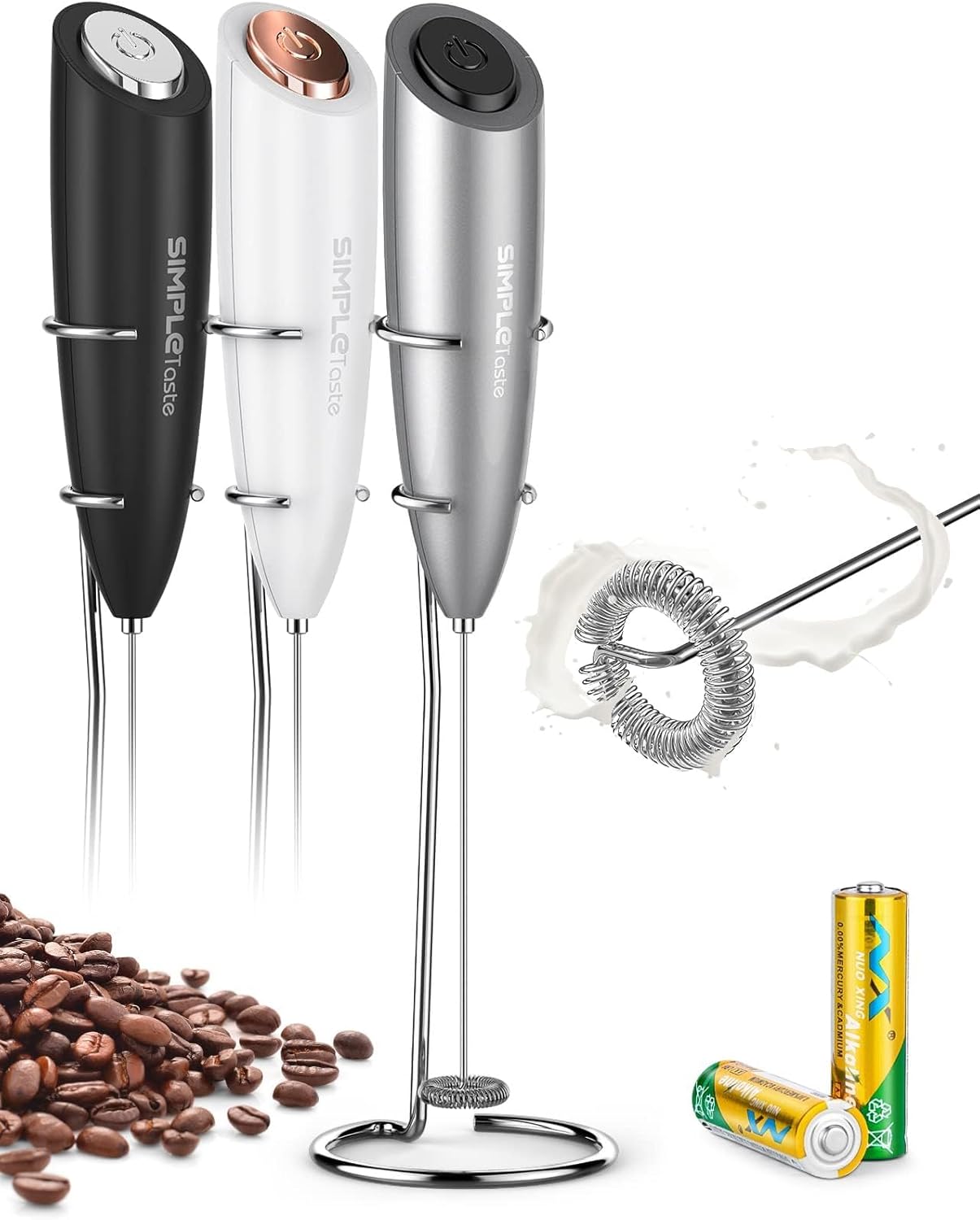
The SIMPLETASTE 706-0001 measures 1.38 inches wide by 9.6 inches high, adopting the standard vertical wand silhouette common to budget drink mixers. Construction centers around an injection-molded plastic handle paired with a 304 stainless steel stem and whisk coil. The 304 alloy offers baseline resistance to corrosion and bending during routine use, though the plastic chassis feels predictably light and lacks water seals around the battery door. Controls are straightforward: a single click of the toggle switch activates the motor continuously, eliminating the need to maintain thumb pressure throughout the frothing cycle. A bent-wire countertop stand is bundled in the package, providing stable vertical storage that protects the whisk shaft from accidental lateral deflection when parked on the counter. The technical specifications cite a 15-volt rating, but this is a clear documentation discrepancy given that the unit runs entirely on two standard 1.5-volt AA alkaline cells. Buyers should expect typical low-voltage build tolerances without premium weight or tactile dampening.
Real-world performance
Powered by two AA batteries, the mixer operates by spinning a coiled perimeter wire at high rotational velocity, drawing air into liquid via a central vortex. For dairy milk, whole or skim, the device generates noticeable volume within the stated 15 to 30 seconds. However, this mechanical shearing introduces macro-bubbles rather than the dense, velvety microfoam required for intricate latte art, which traditionally demands steam-driven texturing. Beyond coffee, the motor demonstrates sufficient torque to blend matcha tea, dissolve powdered dietary supplements, and homogenize hot chocolate or light dressings. Viscous liquids or thick batters will quickly stall the small electric motor, and performance steadily drops as battery voltage declines over weeks of regular duty. Because there is no internal temperature adjustment or integrated heating mechanism, milk must be preheated separately if a warm beverage is desired. For straightforward aerated foam on an everyday morning cappuccino, it executes its primary mechanical task predictably and without technical fuss.
Value for money
At a retail price of $5.99, the SIMPLETASTE frother sits at the lowest tier of kitchen accessory pricing. What distinguishes this offering is the package completeness: alongside the mixer itself, the manufacturer supplies both a tailored countertop stand and two AA batteries. In an era where even budget appliances routinely omit starter cells, this lowers the total cost of ownership to zero out of the box. Backed by an aggregate rating of 4.5 out of 5 stars across more than 68,000 recorded consumer evaluations, the product has demonstrated broad statistical dependability within its intended operational scope. It carries a standard manufacturer warranty, though long-term support at this price point remains nominal. Provided expectations are kept in line with disposable consumer electronics, the unit delivers unquestionable utility per dollar spent, making it an accessible addition for budget-conscious home beverage bars.
Who should skip it
Espresso enthusiasts seeking genuine microfoam for pouring latte art should look elsewhere. While this tool incorporates air into milk rapidly, mechanical whisking cannot replicate the emulsified texture created by a high-pressure steam wand or specialized dual-mesh plungers. The resulting foam remains predominantly stiff and airy, separating quickly into liquid and foam layers. Serious home baristas who prioritize texture consistency and workflow refinement will find the lack of variable speed control limiting. Furthermore, users preparing dense protein shakes, thick batters, or multiple consecutive drinks will exceed the thermal and torque limits of the small motor, leading to stalls and premature battery depletion. Eco-conscious buyers who prefer USB-C rechargeable internal cells may also find the ongoing disposal of AA alkaline batteries inconvenient. If your daily drink routine demands professional mouthfeel, tactile durability, or commercial-level output, investing in dedicated steam gear or an automated induction frother is the correct path.