Design and build
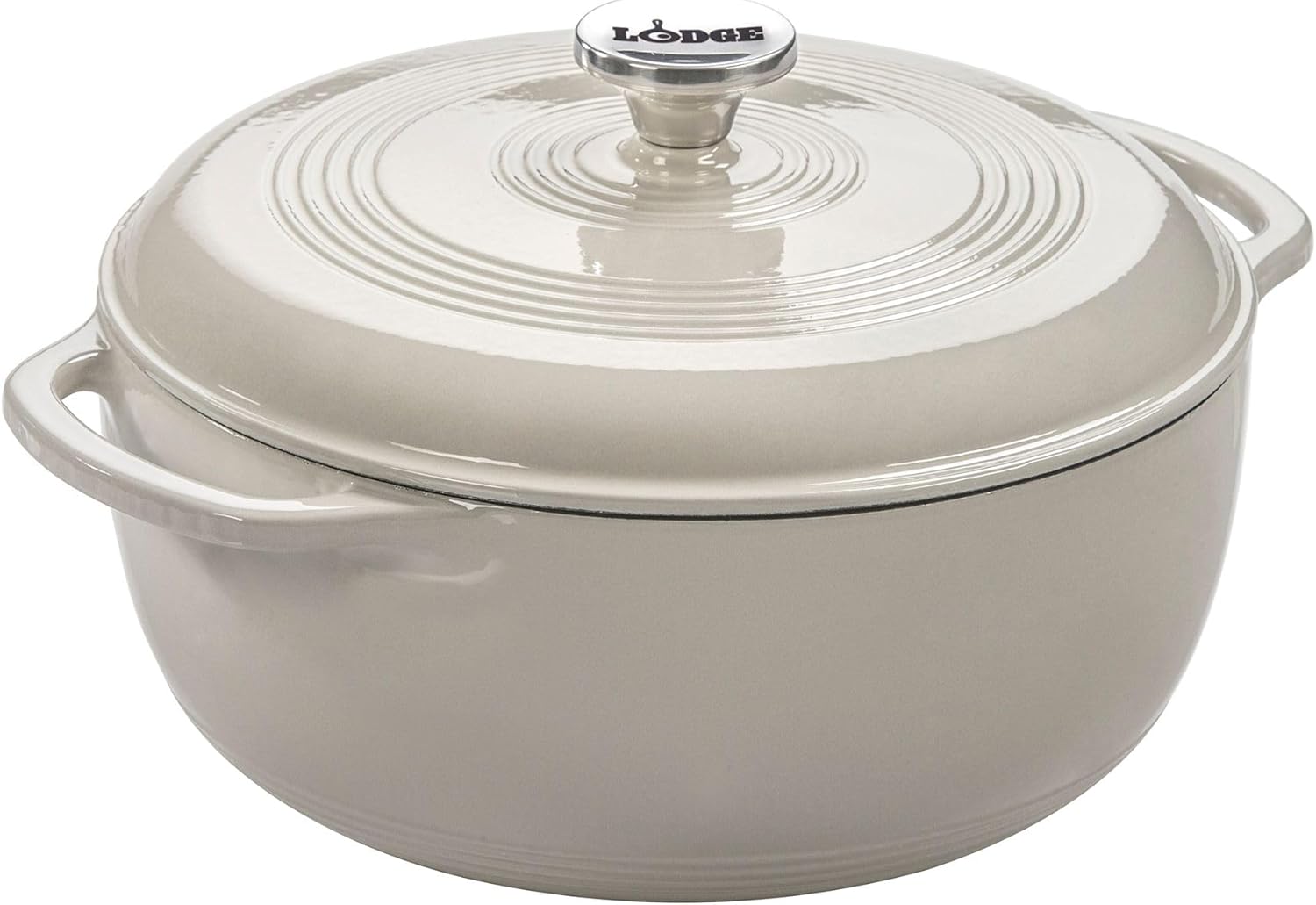
The Lodge EC6D13 relies on conventional cast iron core engineering protected by an oyster white porcelain enamel coating. At a six-quart capacity, the unit features integrated loop handles and a matching cast iron lid designed to sit flush against the vessel rim. Unlike bare iron vessels that require routine oil seasoning to prevent oxidation, the non-reactive enamel interior eliminates rust vulnerability and permits non-baking uses such as braising acidic ingredients. The vessel is certified PFAS-free and engineered to remain structurally stable up to 500 degrees Fahrenheit. The construction prioritizes functional wall thickness rather than ornate finishes, yielding substantial heft that requires dual-handed maneuvering. The manufacturer lists the unit as hand-wash only in primary specifications, despite secondary mentions of dishwasher tolerance; abrasive cleaners or rapid thermal cycles risk fracturing the glass matrix. While the exterior porcelain resists superficial staining, buyers should verify clearance inside smaller ovens, as the wide fixed loop handles extend the total footprint considerably beyond standard six-quart dimensions.
Real-world performance
In bread production, cast iron mass, not brand name, governs thermal performance and oven spring. The physical density of this six-quart vessel functions as an effective heat battery, minimizing temperature drop when cold dough enters the preheated cavity. Once seated inside at typical 450 to 500-degree baking temperatures, the tight-fitting cast iron lid seals moisture evaporating from the wet loaf, creating a saturated steam environment without external steam injectors. This trapped humidity delays crust gelatinization and starch setting, allowing bread dough to expand fully before the exterior hardens. The interior enamel offers a smooth surface that releases parchment-lined boules cleanly, while avoiding the smoke generation associated with burnt oil on seasoned cast iron. Users must respect the 500-degree ceiling, meaning recipes requiring sustained 525-degree preheats exceed manufacturer tolerances. For standard rustic sourdough boules up to 900 grams, the pot provides sufficient vertical headroom and horizontal thermal radiation to produce an open crumb and deeply blistered crust.
Value for money
Priced at $89.90, this Dutch oven occupies a cost-efficient position in the enameled cookware category. European alternatives frequently retail for three to four times this amount while delivering identical thermal physics to the loaf. Because crust development relies strictly on conductive mass and ambient vapor retention rather than artisanal finishing, the Lodge delivers comparable bake performance to high-cost competitors. The aggregate rating of 4.7 out of 5 across 39,197 evaluations indicates consistent manufacturing quality over large production volumes. Buyers should note that economy enameled vessels may show micro-crazing or chips along the lip over years of dry, high-temperature preheating, which bare cast iron absorbs without consequence. Nevertheless, the initial purchase price amortizes well across multi-use kitchen applications, moving directly from 500-degree bread duty to standard stovetop simmering across induction, electric, and gas burners. Given the replacement cost relative to luxury cookware, it offers strong utility per dollar.
Who should skip it
Bakers who prioritize specialized bread equipment should consider dedicated alternatives before selecting this standard vessel. Deep Dutch ovens require lowering loose dough deep into hot, narrow walls, which increases the likelihood of accidental contact burns; a shallow base bread cloche or inverted combo cooker provides superior loading ergonomics. Additionally, bakers seeking batard or oval loaves will find the circular six-quart floor restrictive, forcing dough shaping into round boules. Cooks with wrist limitations or reduced grip strength may struggle with the combined mass of the vessel and cast iron lid during 500-degree handling. Those running commercial or high-heat hearth recipes requiring temperatures above 500 degrees Fahrenheit should skip enameled cookware altogether and opt for bare, uncoated cast iron, which lacks temperature ceilings and avoids enamel failure under intense thermal shock. Finally, individuals who prefer fully dishwasher-safe cleanups should bypass enameled iron, as mechanical washing dulls the finish over time.