Design and build
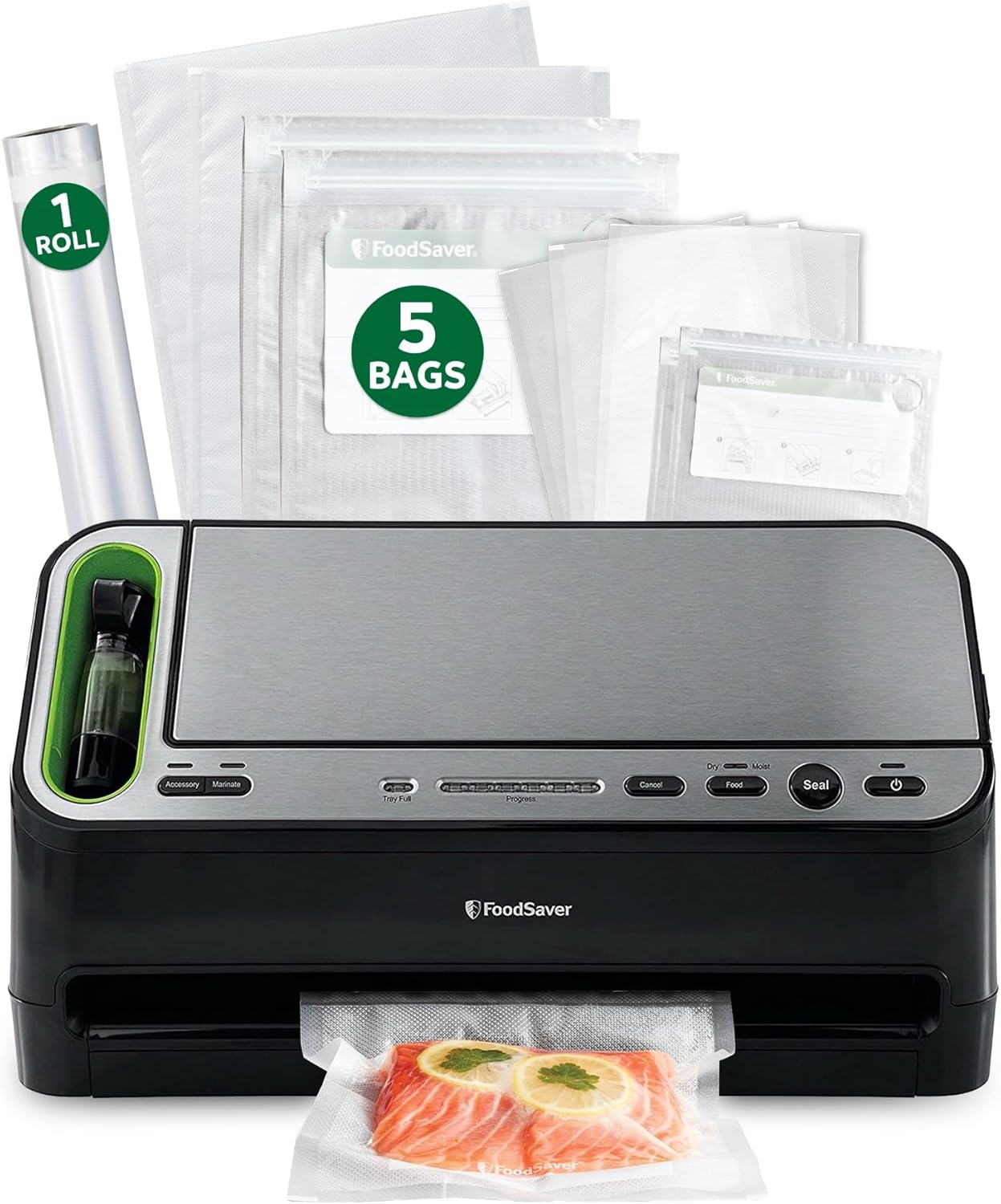
Constructed primarily from molded plastic in a two-tone silver and black finish, the FoodSaver V4400 takes up substantial counter real estate to house its internal mechanics. The chassis integrates an 11-inch roll storage compartment, an internal slide cutter, and a retractable handheld vacuum wand designed for zipper bags and canisters. Automatic bag detection initiates the clamp and suction cycle once the bag edge meets the internal sensors, eliminating manual locking levers. The unit includes a removable, dishwasher-safe drip tray to catch fluid overflow. Buyers should note an inconsistency in documentation regarding coverage: promotional text claims a five-year limited warranty, while the specification table lists a standard one-year manufacturer warranty. Verification with the vendor prior to purchase is advised. The assembly carries NRTL certification through UL or ETL standards. While the exterior plastic panels feel utilitarian rather than industrial, the fit and finish align with consumer benchtop expectations for domestic meal prep and standard sous vide duty.
Real-world performance
Operating at a listed 800 watts, the V4400 generates ample heat for rapid thermal seals, but its core vacuum mechanism remains an edge sealer. A standard rule of sous vide prep is that chamber sealers handle liquids, whereas edge sealers do not. The V4400 incorporates automatic moisture detection to alter heat dwell times, and the catch tray protects the motor from accidental intake. However, wet marinades, broths, and un-emulsified fats will still pull upward into the seal area under suction, which compromises the bond integrity. For dry steaks, firm vegetables, and frozen items, the automated evacuation runs predictably. The retractable secondary nozzle works reliably with compatible valve-equipped zipper bags for shorter, low-temperature water bath sessions. However, long-duration cooks demand the continuous thermal welds of heat-seal roll stock. Thermal recovery between seals is adequate for batch packaging a few portions, but repeated consecutive cycles will eventually slow down the process to prevent the sealing bar from overheating.
Value for money
Priced at $169.99, the V4400 sits in the intermediate bracket of consumer food preservers. Its consumer rating averages 4.6 out of 5 stars across more than 11,000 reviews, indicating broad satisfaction with standard food storage operations. The initial retail package adds measurable baseline value by including an 11-inch by 10-foot roll along with five standard heat-seal bags and five vacuum zipper bags. In the context of sous vide cooking, the convenience of the onboard roll cutter and automated bag feed justifies the premium over basic $50 clamp sealers. Conversely, true commercial chamber vacuum sealers start at roughly four times this price point. For home cooks who primarily process dry-rubbed meats and solid cuts, the machine delivers functional convenience and consistent heat strips without requiring commercial-grade capital expenditure. Long-term cost is dictated primarily by continuous purchases of replacement roll stock and zipper bags, so operating costs scale directly with overall culinary volume.
Who should skip it
Cooks who specialize in heavily liquid-based sous vide preparations should bypass the FoodSaver V4400. Because edge sealers evacuate air by drawing from the bag opening, liquids are inherently pulled toward the thermal wire, preventing a clean bond unless proteins are pre-frozen or fluids are meticulously kept below the suction line. Anyone preparing large batches of braised dishes, stocks, or wet marinades will be better served by investing in a true chamber machine. Furthermore, users with minimal kitchen counter space will find the bulky vertical footprint intrusive, especially compared to slim, tuck-away clamp sealers. Commercial operations or home cooks processing full primal cuts or hunting yields will also outpace the duty cycle of the plastic pump and thermal element. Finally, those who prefer complete manual control over seal timing and vacuum pressure will find the automated bag detection restrictive when handling irregular or fragile foodstuffs.